Апр 24, 2026
Choose electric if: You operate primarily indoors, have access to charging infrastructure, run single or multi‑shift operations, and want lower long‑term operating costs. Electric forklifts now account for over 70% of new sales, driven by lithium‑ion technology that allows opportunity charging and zero emissions.
Choose diesel if: You work in remote outdoor locations with no grid connection, operate in extreme terrain, or need 24/7 continuous operation without charging breaks. Diesel remains viable for heavy‑duty outdoor applications, but its advantages are shrinking as electric technology improves.
Key fact: Electric forklifts are roughly 70% cheaper to run per hour than diesel models, thanks to rising fuel costs and stable electricity rates.
Electric forklifts have become the default choice for warehouses, distribution centers, and manufacturing facilities. They are quiet, produce zero emissions, and have lower operating costs.
Lithium‑ion vs lead‑acid batteries:
| Характеристика | Lead‑Acid | Lithium‑Ion |
|---|---|---|
| Upfront cost | Lower | 2‑3× higher |
| Lifespan | 1,500 cycles (3‑5 years) | 3,000+ cycles (8‑10 years) |
| Charge time | 8+ hours | 1‑2 hours |
| Opportunity charging | Damages battery | Safe and recommended |
| Maintenance | Weekly watering, equalization | None |
| Best for | Single shift, occasional use | Multi‑shift, high utilization |
Why lithium‑ion is winning: A 30‑minute lunch break can add 2‑3 hours of runtime. Multi‑shift operations can share one battery with opportunity charging between shifts.
Operating costs: Electricity costs about $0.30‑$0.50 per hour, compared to $2.80‑$3.50 for diesel. That’s a 10× difference – saving $5,000‑$8,000 annually for multi‑shift operations.
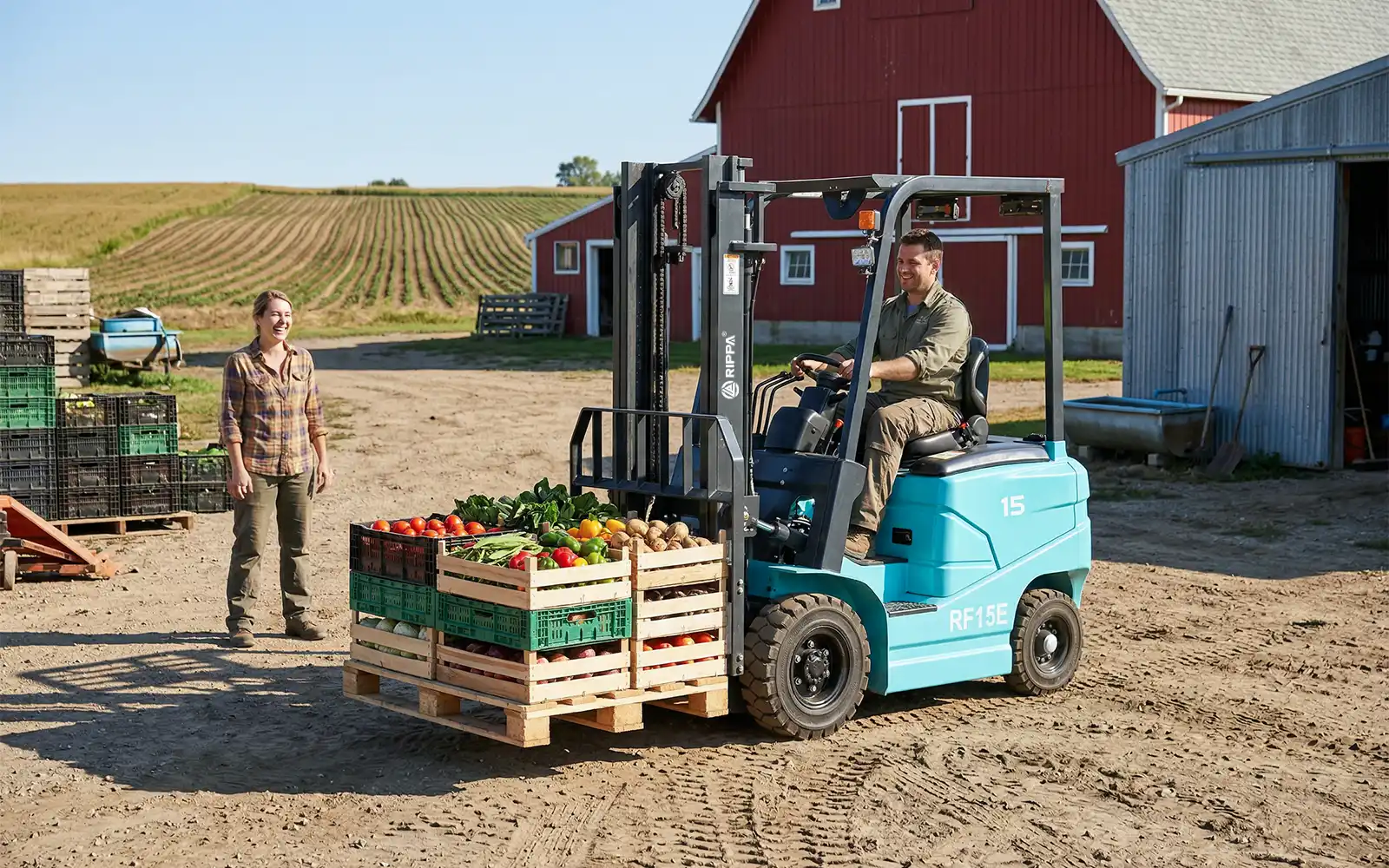
Diesel forklifts remain essential for outdoor applications where charging infrastructure is impractical. They are powerful, durable, and can run continuously.
Strengths:
Unlimited runtime – refuel in minutes, work all day
Higher power for heavy loads (5+ tons) and steep grades
Rugged construction for rough terrain
Lower upfront cost than electric (but higher operating cost)
Weaknesses:
Emissions require ventilation – indoor use limited
Loud operation – hearing protection often needed
Higher fuel & maintenance costs
Stage V emissions complexity (DPF, AdBlue)
Fuel cost example: At $1.20/L, a diesel forklift consuming 3.5 L/h costs $4.20 per hour – over 10 times more than electric.
Single‑shift operation (1,500 hours/year):
| Cost Factor | Lead‑Acid | Lithium‑Ion | Diesel |
|---|---|---|---|
| Purchase price (3t forklift) | $30,000 | $38,000 | $28,000 |
| Fuel/electricity (5 years) | $3,750 | $3,000 | $21,000 |
| Maintenance (5 years) | $4,000 | $2,500 | $10,500 |
| Battery replacement (once) | $4,000 | $0 | N/A |
| 5‑Year Total | $41,750 | $43,500 | $59,500 |
Multi‑shift operation (3,000 hours/year):
| Cost Factor | Lead‑Acid | Lithium‑Ion | Diesel |
|---|---|---|---|
| Purchase price | $30,000 | $38,000 | $28,000 |
| Fuel/electricity (5 years) | $7,500 | $6,000 | $42,000 |
| Maintenance | $8,000 | $5,000 | $21,000 |
| Battery replacement (2x) | $8,000 | $0 | N/A |
| 5‑Year Total | $53,500 | $49,000 | $91,000 |
Key insight: For multi‑shift operations, lithium‑ion electric forklifts save over $40,000 compared to diesel – enough to buy another forklift.
| Application | Recommended Power | Why |
|---|---|---|
| Indoor warehouse, single shift | Lead‑acid electric | Lowest entry cost |
| Indoor warehouse, multi‑shift | Lithium‑ion electric | Opportunity charging, zero maintenance |
| Outdoor lumber yard | Diesel | Continuous operation, rough terrain |
| Mixed indoor/outdoor with ventilation | Diesel or LP gas | Flexibility |
| Cold storage (-20°C) | Electric with heated battery | Lithium requires heated compartment |
| Food/pharma (emission‑sensitive) | Electric | Zero emissions |
Hybrid approach: Some operations use diesel for outdoor heavy lifting and electric for indoor warehousing – best of both worlds.
Q: Can I retrofit lithium into my existing lead‑acid forklift?
A: Yes, with considerations: voltage matching, new charger, and possible counterweight adjustment. Cost is $8,000‑$15,000.
Q: How long does a forklift battery last on a single charge?
A: Lead‑acid: 6‑8 hours. Lithium‑ion: 8‑10 hours, plus opportunity charging during breaks.
Q: Are diesel forklifts banned indoors?
A: Not banned, but emissions require adequate ventilation. Many facilities restrict diesel to outdoor use due to air quality and safety concerns.
Q: What is the payback period for switching from diesel to electric?
A: For multi‑shift operations, payback is typically 1‑2 years through fuel and maintenance savings alone.
Q: Do electric forklifts have enough power for heavy loads?
A: Yes. Modern electric forklifts are available up to 18 tons capacity – matching diesel performance for most applications.
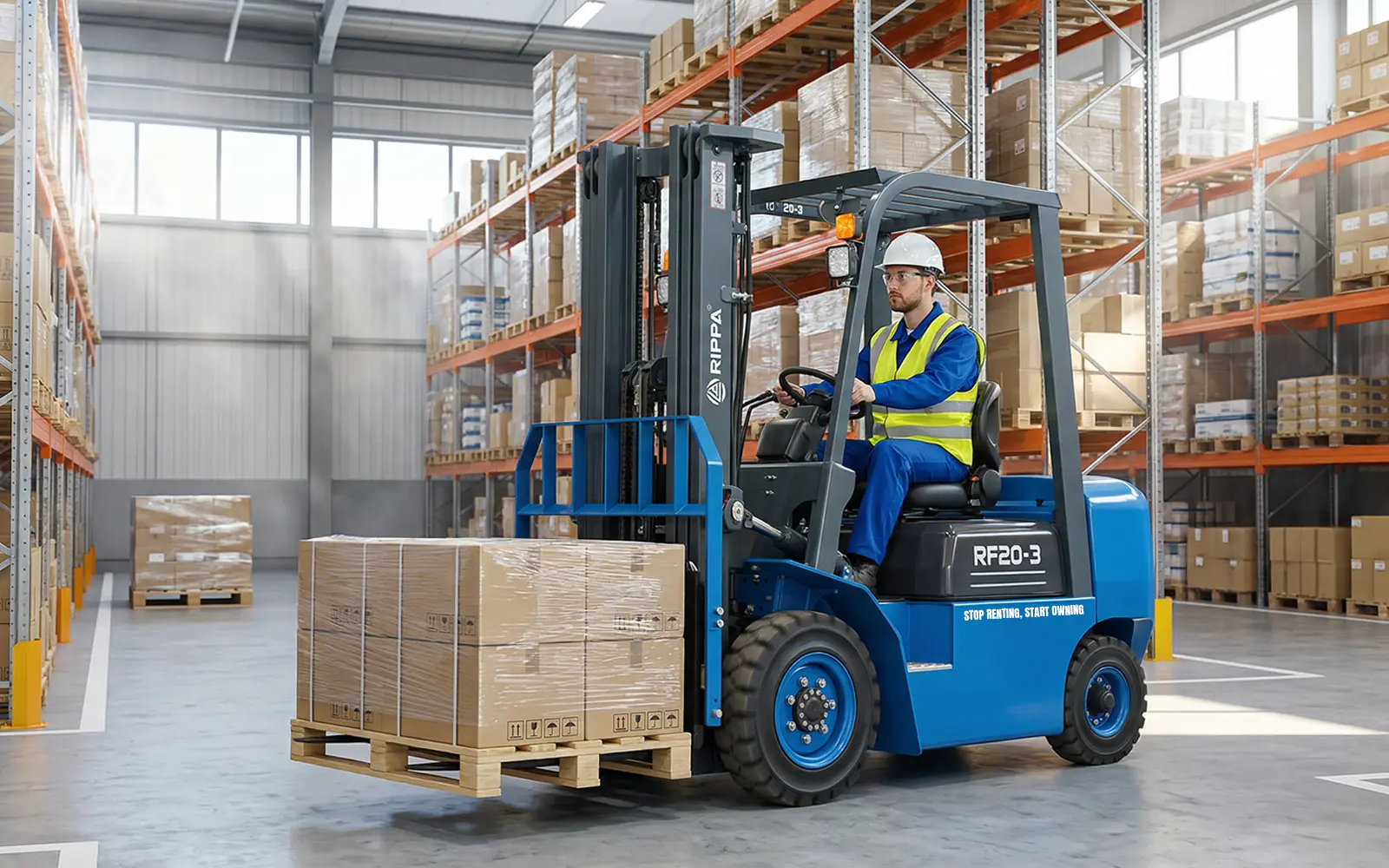
The choice between diesel and electric forklifts has become clear for most applications. Electric forklifts offer dramatically lower operating costs, zero emissions, and quiet operation. Diesel remains a niche solution for remote outdoor sites and extreme duty cycles. For the majority of warehouses and distribution centers, electric – especially with lithium‑ion batteries – is the smarter financial and operational choice.
Next step: Calculate your specific savings using an online TCO calculator or consult with a forklift supplier to evaluate your operation’s unique needs.

Авторские права: Shandong Rippa Machinery Group Co., Ltd.
Юридический представитель: Ян Хуайго | Номер лицензии: 913708000509206491
Адрес: ул. Гуанъань, д. 39, микрорайон Люхан, Зона высоких технологий, г. Цзинин, провинция Шаньдун

 Главная
 Продукция
 Электронная почта
 WhatsApp