Jul 24, 2026
Forklifts are essential machines for businesses that need to move, lift, stack, and organize materials. From warehouses and logistics centers to farms, factories, retail storage areas, and rental fleets, forklifts help improve daily work efficiency and reduce manual handling pressure.
For customers who move palletized goods or heavy materials regularly, choosing the right forklift can make operations more organized and efficient.
RIPPA forklifts are designed for practical material handling needs. They can support warehouses, logistics businesses, manufacturing sites, farms, retail operations, rental companies, and regional equipment dealers.
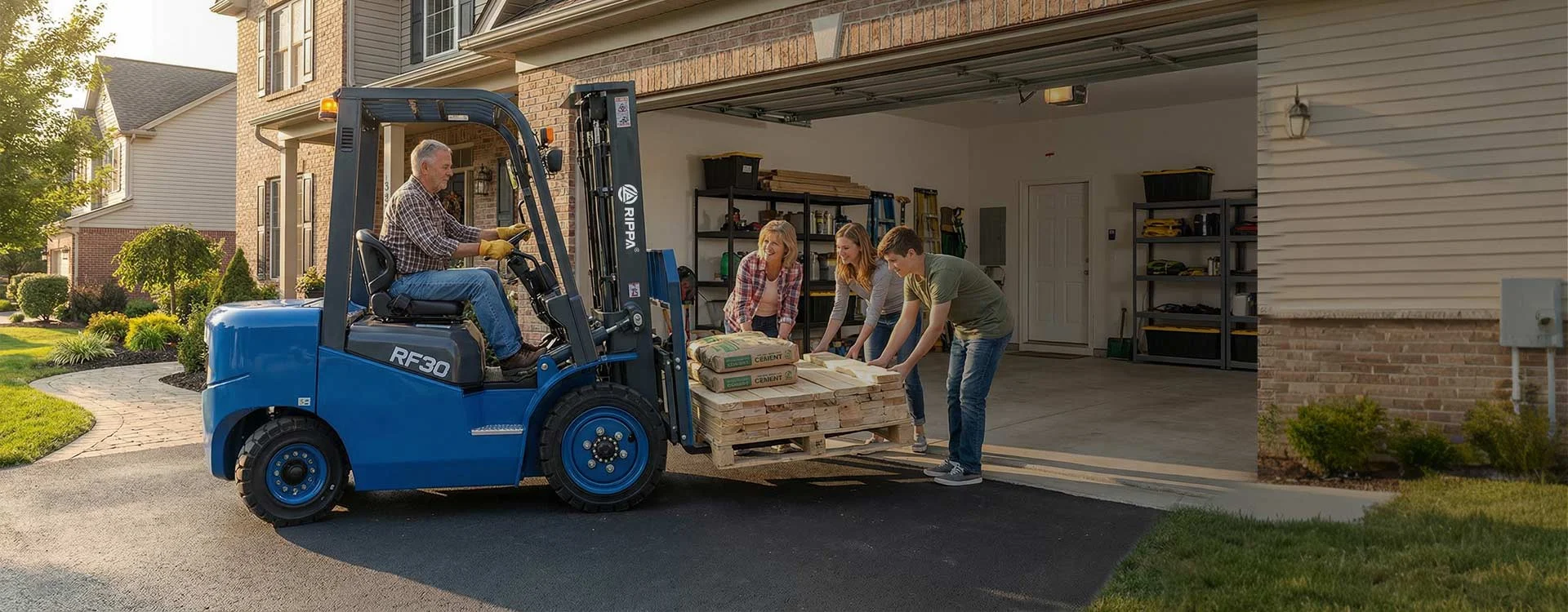
A forklift is used to lift, move, stack, and transport goods over short distances. It is especially useful for palletized materials, warehouse inventory, factory supplies, retail stock, and logistics operations.
Common forklift applications include:
For businesses with repeated material handling needs, a forklift is often a core daily-use machine.
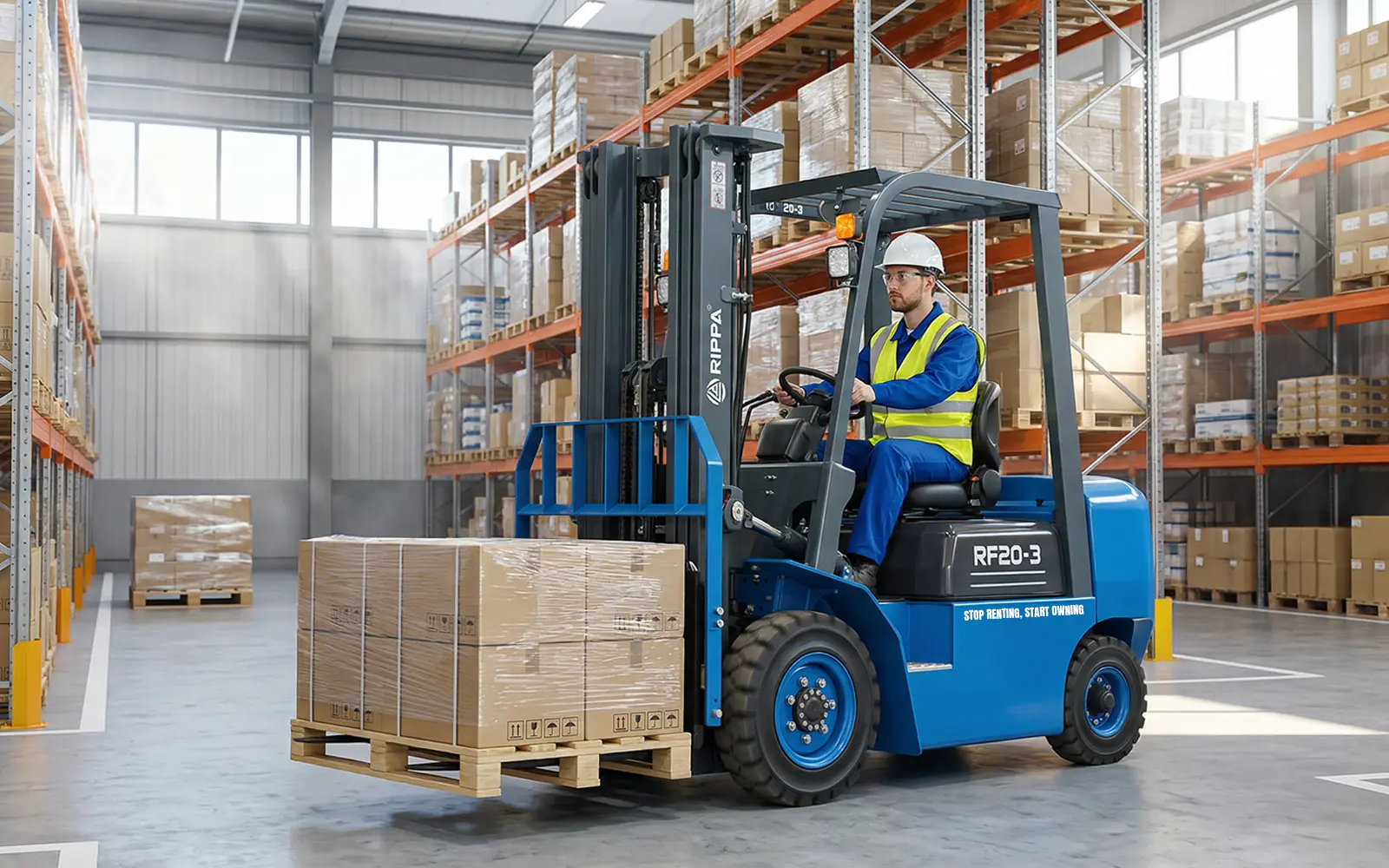
Warehouses need equipment that can move goods efficiently and keep storage areas organized. A RIPPA forklift can support common warehouse tasks such as pallet movement, stock transfer, loading, unloading, and inventory handling.
| Warehouse Task | How a Forklift Helps |
|---|---|
| Pallet movement | Moves goods between storage and work areas |
| Loading and unloading | Helps transfer goods from trucks or containers |
| Inventory organization | Supports stacking and storage planning |
| Material transfer | Moves products across warehouse zones |
| Daily operations | Reduces manual handling pressure |
For warehouse users, forklift selection should consider working environment, material type, aisle conditions, lifting needs, and usage frequency.
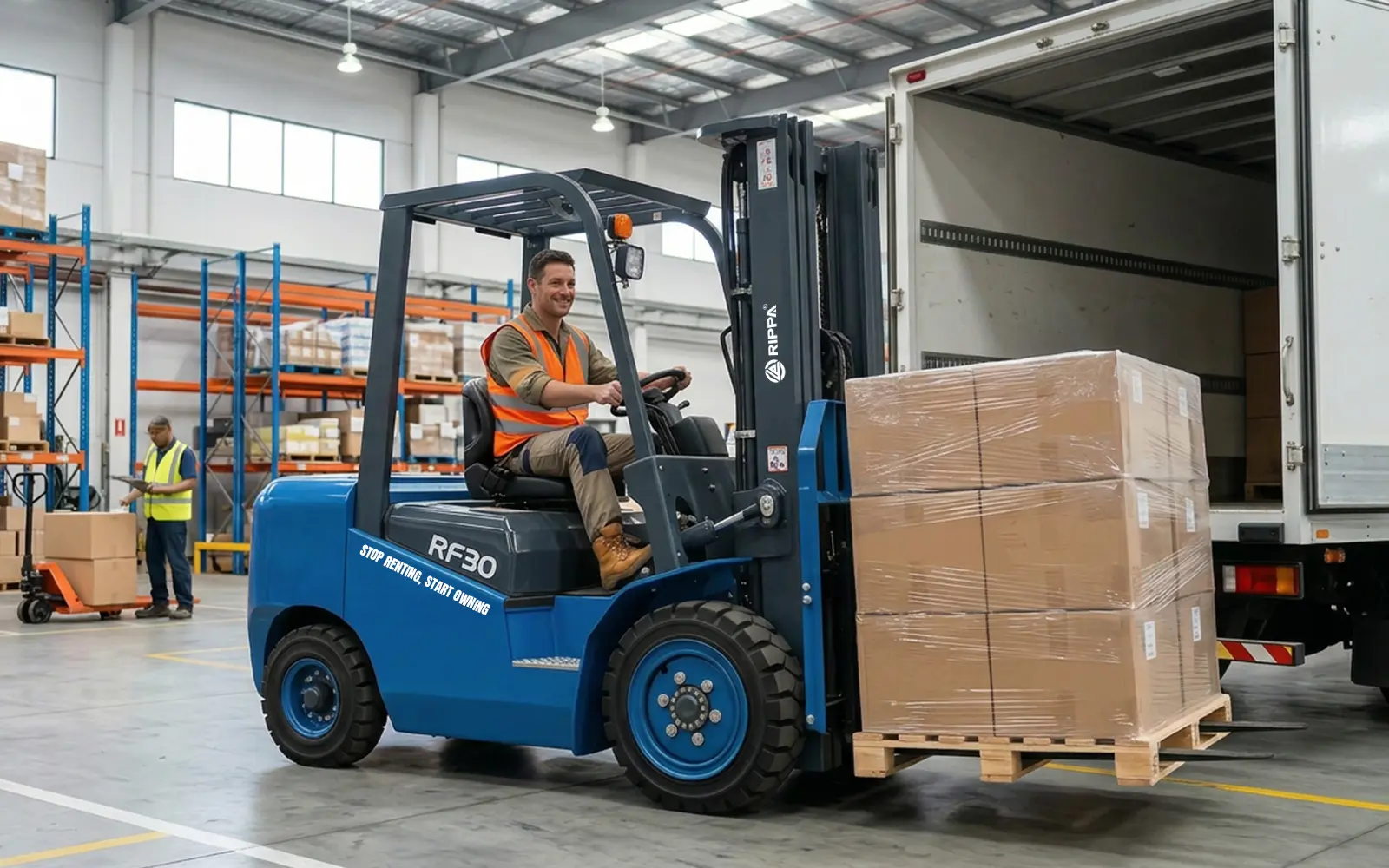
Logistics businesses need reliable material handling equipment to keep goods moving. A forklift can help improve workflow in loading areas, distribution centers, transport yards, and storage facilities.
Common logistics uses include:
For logistics users, uptime, operation guidance, service support, and parts availability are important considerations.
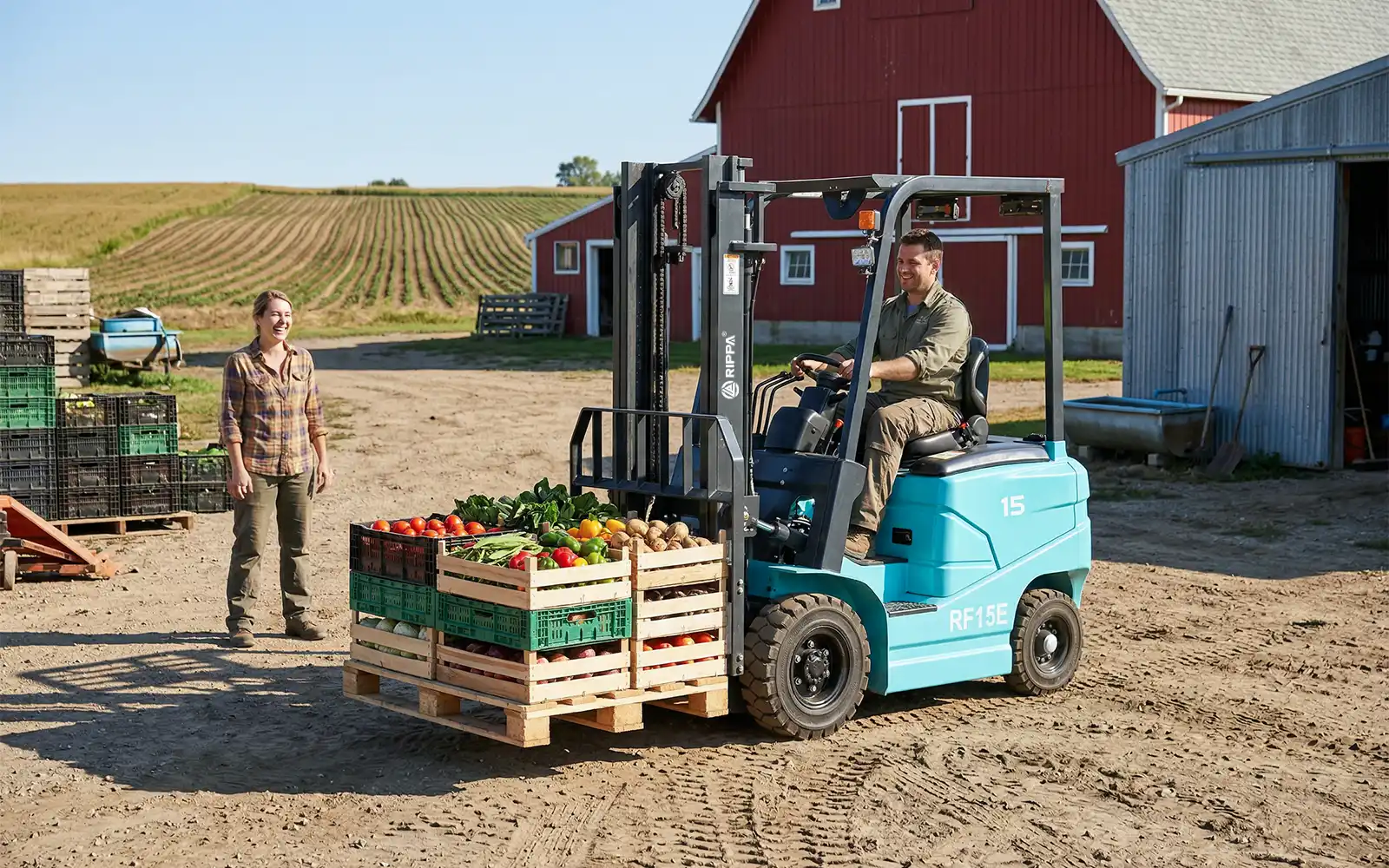
Farms may also need forklifts for handling packaged goods, feed, supplies, pallets, and materials. Depending on work conditions, a forklift can help reduce manual labor and improve material movement efficiency.
Common farm-related uses include:
Farm users should confirm whether the forklift configuration fits the ground condition, material type, and working environment.
Rental companies can offer forklifts to customers who need short-term material handling support. Forklift rental demand may come from warehouses, event sites, logistics companies, retail storage areas, construction support work, and temporary storage projects.
Rental companies should consider:
A clear rental process helps customers use the machine more confidently and safely.
For equipment dealers, forklifts can serve many local customer groups, including warehouses, logistics companies, farms, factories, retail businesses, rental companies, and material handling operators.
| Dealer Opportunity | Business Value |
|---|---|
| Forklift sales | Serves warehouses, logistics, farms, and businesses |
| Parts support | Builds long-term ownership confidence |
| Local demonstrations | Shows practical handling performance |
| Rental cooperation | Supports temporary customer demand |
| Customer education | Helps buyers choose suitable equipment |
| Service coordination | Strengthens dealer trust |
Dealers should promote forklifts through real customer tasks, such as pallet handling, loading, unloading, warehouse movement, and material transfer.
Before choosing a forklift, buyers should understand their actual material handling needs.
Important questions include:
This process helps buyers choose a forklift based on real working conditions.
Because forklift configurations, policies, and support terms may change, buyers should confirm current information before purchase or quotation.
| Item to Confirm | Why It Matters |
|---|---|
| Current forklift configuration | Ensures the machine matches material handling needs |
| Working environment suitability | Helps confirm indoor, outdoor, or site use |
| Warranty policy | Terms may vary by market and purchase channel |
| Parts support | Important for long-term ownership |
| Service support | Helps reduce downtime concerns |
| Delivery arrangement | Should be confirmed before payment |
| Operation guidance | Helps users work safely |
A safe public statement is: “Please confirm the latest forklift configuration, warranty policy, delivery arrangement, operation guidance, and service terms with an authorized RIPPA representative before purchase.”
A RIPPA forklift can be used for pallet movement, warehouse handling, logistics operations, loading, unloading, factory material transfer, retail storage, farm supply movement, and rental applications.
Yes. Forklifts are commonly used in warehouses for moving pallets, loading and unloading goods, organizing inventory, and transferring materials.
Yes. Farms can use forklifts for palletized supplies, packaged materials, feed handling, and movement between storage areas.
Yes. Rental companies can offer forklifts to customers who need temporary material handling support.
Buyers should consider material type, working environment, lifting needs, usage frequency, operation guidance, parts support, and current configuration.
Buyers should confirm the latest forklift configuration with an authorized RIPPA representative before purchase because product details may change over time.
RIPPA forklifts help warehouses, logistics businesses, farms, factories, retail storage areas, rental companies, and equipment dealers improve material handling efficiency.
They can support pallet movement, loading, unloading, storage organization, material transfer, and daily business operations. For buyers, the value is more efficient handling. For dealers, the value is a practical product category that serves many local industries.
Before purchase or promotion, buyers and dealers should always confirm current forklift configuration, warranty policy, service support, delivery arrangement, and operation guidance through official RIPPA channels.

Copyright: Shandong Rippa Machinery Group Co., Ltd.
Legal Representative: Yan Huaiguo | License No.: 913708000509206491
Address: No. 39 Guangan Road, Liuhang Subdistrict, High-tech Zone, Jining City, Shandong Province

 Home
Home
 Products
 Email
Email
 WhatsApp