Juni 12, 2026
Choose Kubota for the quietest, smoothest operation and highest reliability in a compact package. Choose Changchai for the lowest purchase price, simplest maintenance, and tolerance of poor fuel quality. Choose Yuchai for the most power, highest torque, and best performance in heavy-duty applications. Each engine is best for different users and applications.
Rippa RL series loaders use three engine brands across four models.
RL06 uses Kubota D1105. This is the only engine available for RL06. If you need the telescopic boom RL06, you get Kubota.
RL10 uses Changchai 390. You have a choice of Euro V or National II emissions standards.
RL15 uses either Yuchai 490 for National II or Changchai for Euro V. You choose between two different engine brands.
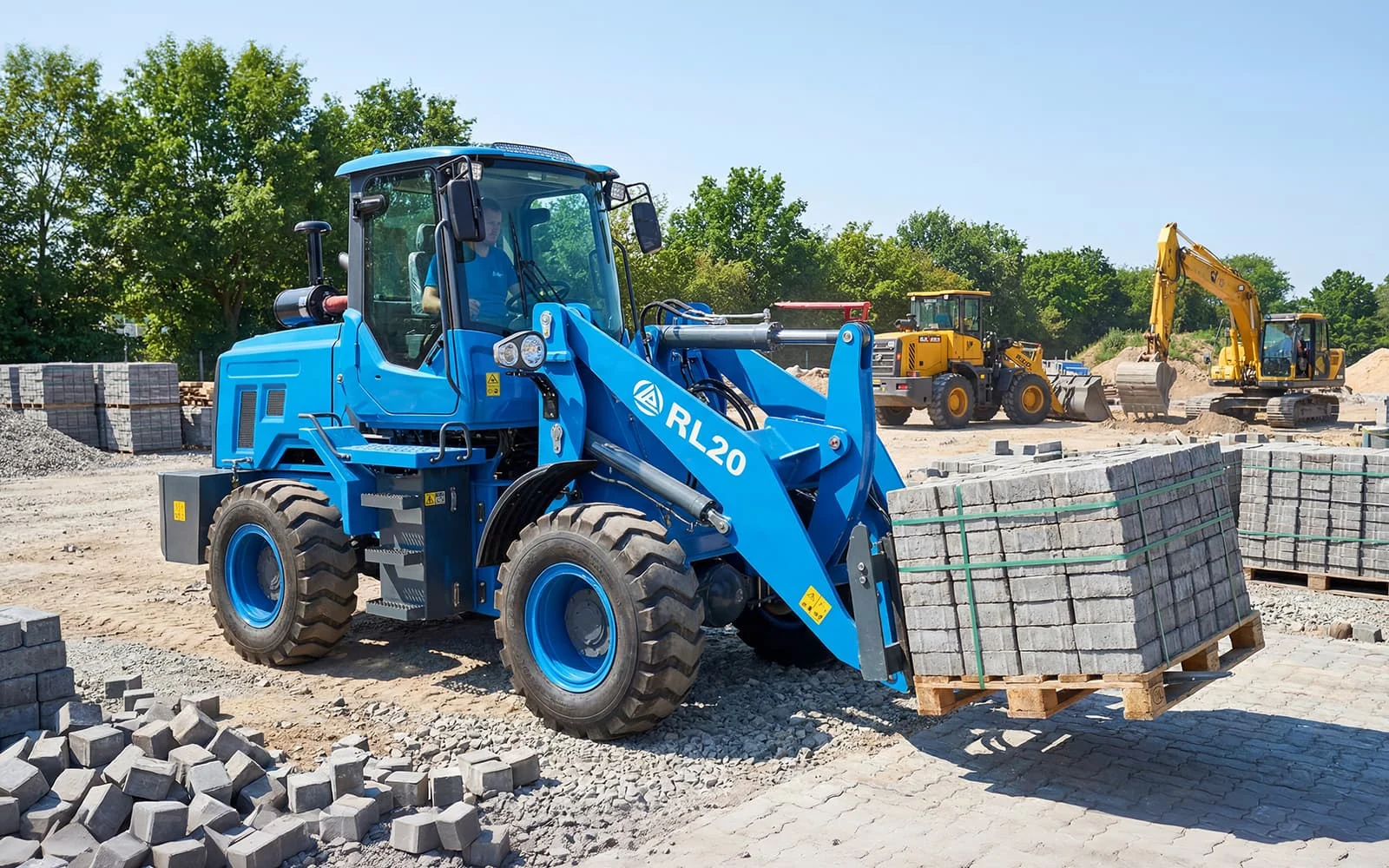
RL20 uses Yuchai 4105 Turbocharged. This is the only engine available for RL20. If you need the RL20’s capacity and speed, you get Yuchai.
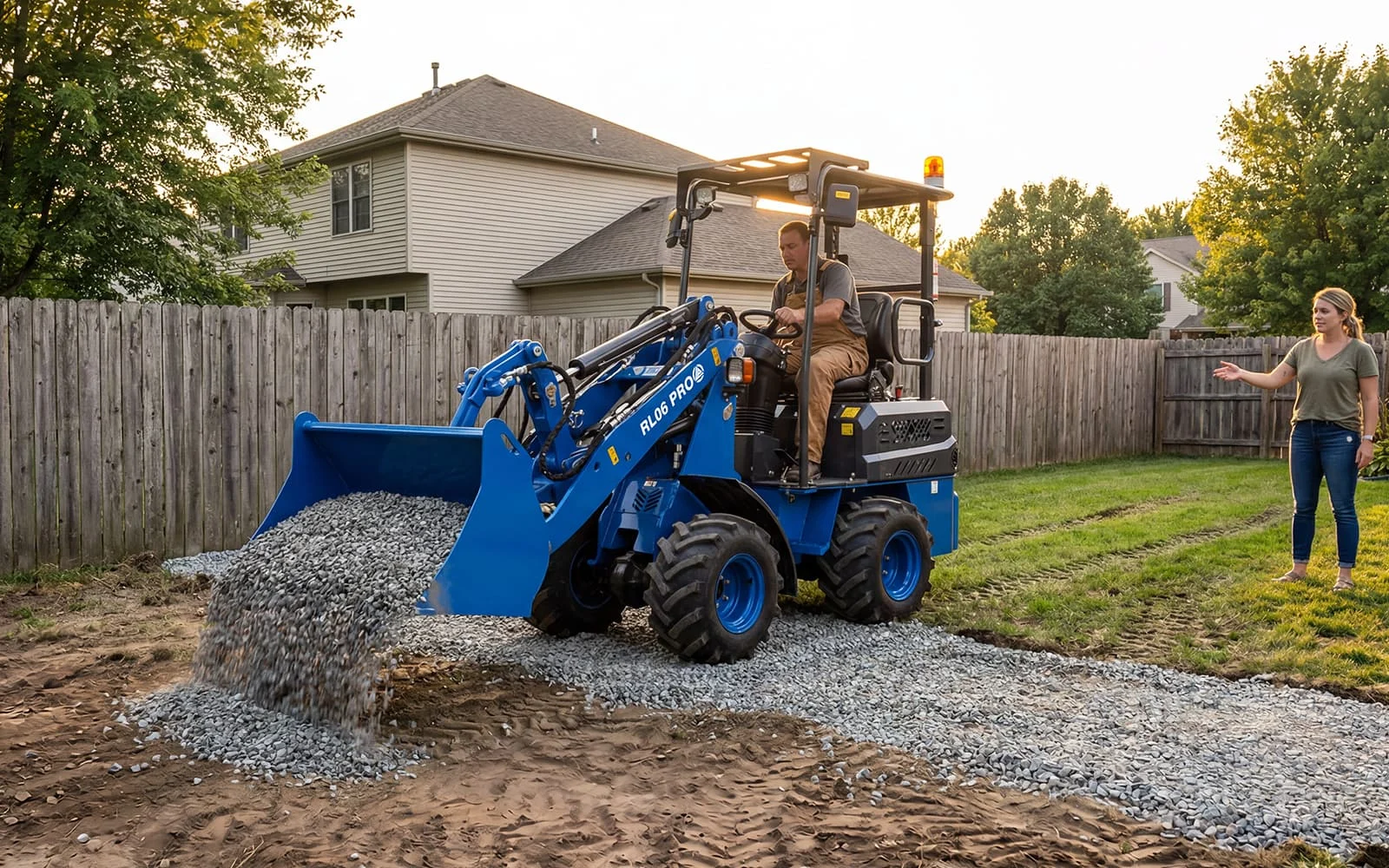
Engine type: 3-cylinder diesel
Displacement: 1.123 liters
Aspiration: Naturally aspirated
Emissions: Euro V and US Stage IV
Fuel system: High-pressure common rail
Power: Approximately 18 to 20 kW or 24 to 27 hp
Quiet operation: The Kubota D1105 is famous for low noise. Rippa documentation describes it as soft roar and elegant start.
Low vibration: The 3-cylinder design is naturally balanced. Operator fatigue is reduced.
Reliability: Kubota is the market leader in small diesel engines. They routinely run 10,000 to 15,000 hours with proper maintenance.
Cold starting: Glow plugs and electronic control provide excellent cold start performance.
Fuel efficiency: Common rail injection provides complete combustion and low fuel consumption.
Higher cost: Kubota engines cost significantly more than Chinese alternatives.
Parts availability: Outside of Japan, North America, and Europe, Kubota parts can be harder to find.
Specialized service: Not every mechanic is trained on Kubota common rail systems.
The Kubota D1105 is best for users who value operator comfort, low noise, and reliability above purchase price. It is ideal for:
Farms where the loader works near livestock or residences
Rental businesses where customers expect a premium machine
Operators who spend 8 hours per day in the cab
Regions with good parts and service support
Engine type: 3-cylinder diesel
Displacement: Approximately 1.7 liters
Aspiration: Naturally aspirated
Emissions: Euro V with common rail or National II with mechanical injection
Power: 27 kW or 36.72 hp for RL10
Low cost: Changchai engines are the most affordable option. The RL10 is the value champion largely because of the Changchai engine.
Simple maintenance: The National II version uses mechanical injection. Any diesel mechanic can work on it. No special tools or computers are required.
Fuel tolerance: National II Changchai engines run on diesel fuel with high sulfur content. This is critical in developing regions.
Parts everywhere: Changchai engines are extremely common in China and many developing countries. Parts are widely available.
Higher noise and vibration: Compared to Kubota, the Changchai is louder and rougher.
Lower power density: The Changchai 390 produces 27 kW from 1.7 liters. The Kubota produces similar power from 1.1 liters.
Lower resale value: In regulated markets, Changchai-powered machines sell for less than Kubota-powered machines.
The Changchai 390 is best for users who need the lowest possible purchase price and operate where fuel quality is uncertain. It is ideal for:
Budget-conscious buyers in developing regions
Applications where the machine sits outside and runs intermittently
Users with existing Changchai engines in their fleet
Regions without Kubota service infrastructure
Engine type: 4-cylinder diesel
Displacement: Approximately 2.9 liters
Aspiration: Naturally aspirated
Emissions: National II
Power: 42 to 44.5 kW or 56.28 to 59.63 hp for RL15
Engine type: 4-cylinder diesel
Displacement: Approximately 4.0 liters
Aspiration: Turbocharged
Emissions: Euro V
Power: 85 kW or 115.6 hp for RL20
High power: The Yuchai 4105 turbo produces 85 kW, more than three times the power of the Kubota D1105.
High torque: Large displacement and turbocharging provide high torque at low RPM. The engine pulls strongly when pushing into a pile.
Durability: Yuchai engines are designed for heavy-duty applications. They are common in construction and agricultural machinery.
Parts availability: Yuchai has an extensive dealer network in China and many developing countries.
Cost: Yuchai costs less than Kubota but more than Changchai.
Larger and heavier: Yuchai engines are physically larger. They require larger machine frames like the RL15 and RL20.
Higher fuel consumption: More power means more fuel. The RL20 consumes more per hour than smaller models.
Turbo complexity: The turbocharged 4105 has more parts that can fail compared to naturally aspirated engines.
Yuchai engines are best for users who need maximum power for heavy-duty applications. They are ideal for:
Large material yards where every ton per hour matters
Mining and quarry applications
Ports and container handling
Users who value power above noise and vibration
Operations with good fuel quality for the Euro V version
| Characteristic | Kubota D1105 | Changchai 390 | Yuchai 490 | Yuchai 4105 Turbo |
|---|---|---|---|---|
| Cylinders | 3 | 3 | 4 | 4 |
| Verdrängung | 1.1 liters | 1.7 liters | 2.9 liters | 4.0 liters |
| Power | 18-20 kW | 27 kW | 42-44 kW | 85 kW |
| Aspiration | Natural | Natural | Natural | Turbocharged |
| Emissions | Euro V | Euro V or National II | National II | Euro V |
| Noise level | Very low | Moderate | Moderate to high | High |
| Vibration | Very low | Moderate | Moderate | Moderate |
| Fuel system | Common rail | Common rail or mechanical | Mechanical | Common rail |
| Purchase price | Highest | Lowest | Moderate | High |
| Parts availability | Good in developed regions | Good worldwide | Good in developing regions | Good in developing regions |
| Service complexity | High | Low for National II | Moderate | High |
| Best application | Premium, low noise | Budget, poor fuel | Heavy duty | Maximum power |
You need the telescopic boom capability of RL06. There is no engine choice for RL06. You get Kubota.
You value low noise and low vibration above all else.
You operate in a region with good Kubota dealer support.
You have access to low-sulfur diesel fuel.
You plan to keep the machine for many years and want the best long-term reliability.
You want the lowest possible purchase price.
You operate in a region where fuel quality is uncertain.
You have mechanics who are not trained on electronic common rail systems.
You need a simple, rugged engine for harsh conditions.
You are buying the RL10 as an entry-level machine.
You need maximum power for heavy-duty applications.
You are buying the RL20 and have no choice. The RL20 only comes with Yuchai 4105 Turbo.
You are buying the RL15 for continuous heavy operation and want the National II simplicity of Yuchai 490.
You operate in a region with Yuchai dealer support.
You value torque and pulling power over noise and vibration.
For a 5-year, 10,000-hour ownership period:
Kubota D1105: Higher initial purchase cost. Lower fuel consumption. Lower noise-related operator fatigue. Higher parts and service cost in some regions. Highest resale value.
Changchai 390: Lowest initial purchase cost. Higher fuel consumption. Lowest parts and service cost. Lowest resale value.
Yuchai 4105 Turbo: High initial purchase cost. Highest fuel consumption due to high power. Moderate parts and service cost. Moderate resale value.
Question 1: Which engine lasts the longest?
Answer: All three brands can achieve 10,000 to 15,000 hours with proper maintenance. Kubota has the reputation for highest long-term reliability, but Yuchai engines in heavy-duty applications also demonstrate good durability.
Question 2: Can I get a Kubota engine in an RL20?
Answer: No. The RL20 is designed around the Yuchai 4105 Turbo. The engine mounts, cooling system, and transmission are matched to this engine.
Question 3: Which engine is easiest to fix in the field?
Answer: The National II Changchai 390. It uses mechanical injection with no electronics. Any diesel mechanic can diagnose and repair it.
Question 4: Which engine has the best fuel economy?
Answer: The Kubota D1105 has the best fuel economy per hour due to its small displacement and common rail injection. However, the RL20 moves more material per hour, so fuel economy per ton may be better with Yuchai.
Question 5: Are parts for Changchai and Yuchai available outside China?
Answer: In developing regions, yes. In North America and Europe, Kubota parts are more readily available. Check local dealer support before purchasing.


 Startseite
 Produkte
 E-Mail
 WhatsApp