Apr. 21, 2026
Choosing the right forklift depends on five key factors: 1) Load capacity – your heaviest pallet plus 25% margin; 2) Lift height – tallest rack plus 6 inches; 3) Operating environment – indoor/outdoor, smooth floor or rough terrain; 4) Shift pattern – single or multi‑shift determines battery type; 5) Aisle width – ensure the forklift can turn in your space. Match the machine to your hardest daily task, not your easiest.
Key insight: 70% of new forklift sales are electric, with lithium‑ion becoming the standard for multi‑shift operations. The choice between electric and diesel is now primarily about operating environment, not capability.
Rated capacity is the maximum weight the forklift can lift at a specified load center (typically 24 inches from the back of the forks). Never exceed rated capacity.
| Load Capacity | Typical Applications |
|---|---|
| 2,000‑3,000 lb | Light warehousing, small parts |
| 3,000‑5,000 lb | Most common – standard pallets |
| 5,000‑8,000 lb | Heavy manufacturing, lumber |
| 10,000+ lb | Industrial, ports, heavy equipment |
The load center effect: A 5,000 lb forklift rated at 24‑inch load center can only lift about 3,300 lbs if the load center is 36 inches. Always calculate actual capacity for odd‑sized loads.
Rule of thumb: Choose a forklift with capacity at least 25% higher than your heaviest expected load. 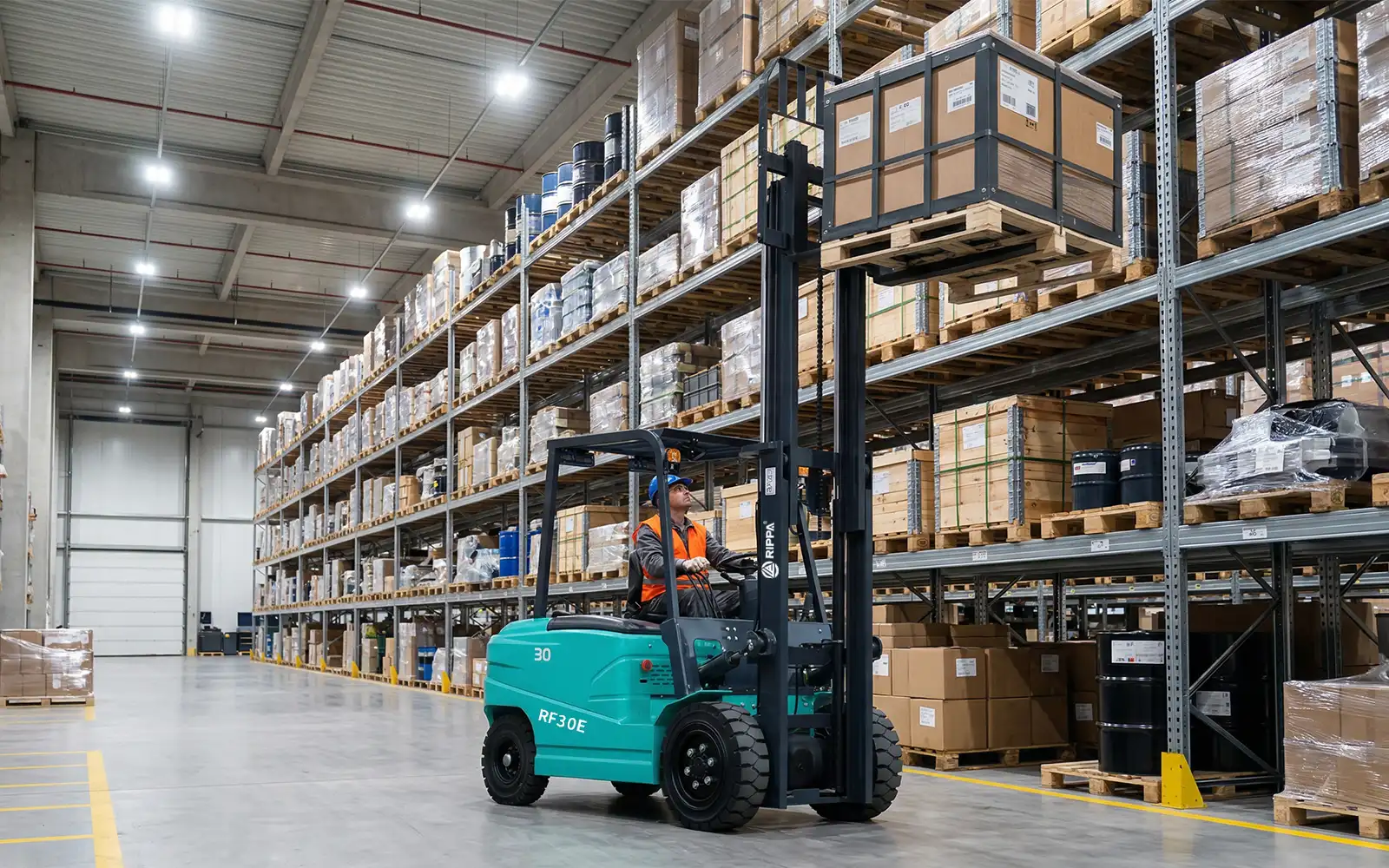
| Mast Type | Stages | Am besten geeignet für |
|---|---|---|
| Simplex | 1 stage | Low clearance, simple lifting |
| Duplex | 2 stages | Most warehouse applications |
| Triplex | 3 stages | High stacking in low‑clearance facilities |
| Quad | 4 stages | Very high stacking (over 20 feet) |
Rule of thumb: Choose a mast at least 6 inches higher than your tallest rack. Collapsed height must clear all doorways and loading docks.
Free lift: The height the forks can rise before the mast extends. Essential for container loading and low overhead clearance.
| Stromquelle | Am besten geeignet für | Vorteile | Nachteile |
|---|---|---|---|
| Electric (lead‑acid) | Indoor, single shift | Lowest operating cost, zero emissions | 8+ hour charge, weekly watering |
| Electric (lithium‑ion) | Indoor, multi‑shift | Fast charging, zero maintenance | Higher upfront cost |
| Diesel | Im Freien, unwegsames Gelände | Unlimited runtime, high power | Emissions, noise, higher fuel cost |
| Flüssiggas | Gemischte Nutzung (drinnen und draußen) | Cleaner than diesel, quick refuel | Kraftstoffkosten höher als bei Elektrofahrzeugen |
Fuel cost comparison per hour:
Electric: $0.30‑$0.50
LP gas: $2.50‑$3.00
Diesel: $2.80‑$3.50
| Tire Type | Am besten geeignet für | Vorteile | Nachteile |
|---|---|---|---|
| Cushion (solid rubber) | Smooth indoor floors | Stable, no flats, lower cost | Poor outdoors, marks floors |
| Pneumatic (air‑filled) | Outdoor rough terrain | Excellent traction, shock absorption | Flats possible |
| Solid pneumatic | Mixed use, debris‑prone | No flats, good traction | Harder ride |
Choose cushion tires if: You operate exclusively indoors on smooth concrete.
Choose pneumatic tires if: You work outdoors or on uneven surfaces.
A forklift that doesn’t fit your warehouse is useless. Measure your tightest aisle before buying.
| Forklift Type | Typical Aisle Width |
|---|---|
| 3‑wheel electric | 10‑12 ft |
| 4‑wheel counterbalance | 12‑14 ft |
| Reach truck | 8‑10 ft |
| Narrow aisle (turret truck) | 5‑6 ft |
Right‑angle stack: The space needed to turn 90 degrees into a rack aisle. This is the critical measurement for warehouse layout.
| Faktor | New | Used |
|---|---|---|
| Preis | Höher | 30‑50% lower |
| Warranty | 1‑3 years | Typically none |
| Hours | Null | 2,000‑10,000+ |
| Technology | Latest features | Older design |
| Am besten geeignet für | Daily use, critical operations | Backup, light duty, budget |
Used inspection checklist:
Check hour meter – verify against wear (pedals, seat, controls)
Look for fluid leaks
Test all functions (lift, tilt, travel, brakes)
Inspect tires – should have 50%+ life remaining
Ask for service records – a machine with complete records is worth 10‑20% more
For a 3,000 lb capacity forklift used 1,500 hours/year:
| Kostenkomponente | Electric (Lithium) | Diesel |
|---|---|---|
| Kaufpreis | $35,000 | $25,000 |
| Fuel/electricity (5 years) | $2,250 | $15,750 |
| Maintenance (5 years) | $3,000 | $10,000 |
| Battery replacement (once) | $0 | N/A |
| Wiederverkaufswert | –$15,000 | –$8,000 |
| Nettokosten über 5 Jahre | $25,250 | $42,750 |
Electric saves $17,500 over 5 years despite higher upfront cost.
F: Was ist die gängigste Tragkraft bei Gabelstaplern?
A: 3,000‑5,000 lb (1.5‑2.5 tons) – handles standard pallets and most warehouse applications.
Q: How long do forklifts last?
A: Electric: 10‑15 years (battery replacement every 5‑8 years). Diesel: 8‑12 years before major overhauls.
Q: Do I need a special license to operate a forklift?
A: Yes, for commercial use. OSHA requires operator training and certification. For personal use on private property, rules vary by state.
Q: What attachments are most useful?
A: Side shifter (10‑15% efficiency gain), hydraulic quick coupler (30‑second changes), fork positioner (varied pallet sizes).
F: Wie viel kostet ein Gabelstapler?
A: New electric: $20,000‑$45,000. New diesel: $18,000‑$40,000. Used: 30‑50% less depending on hours and condition.
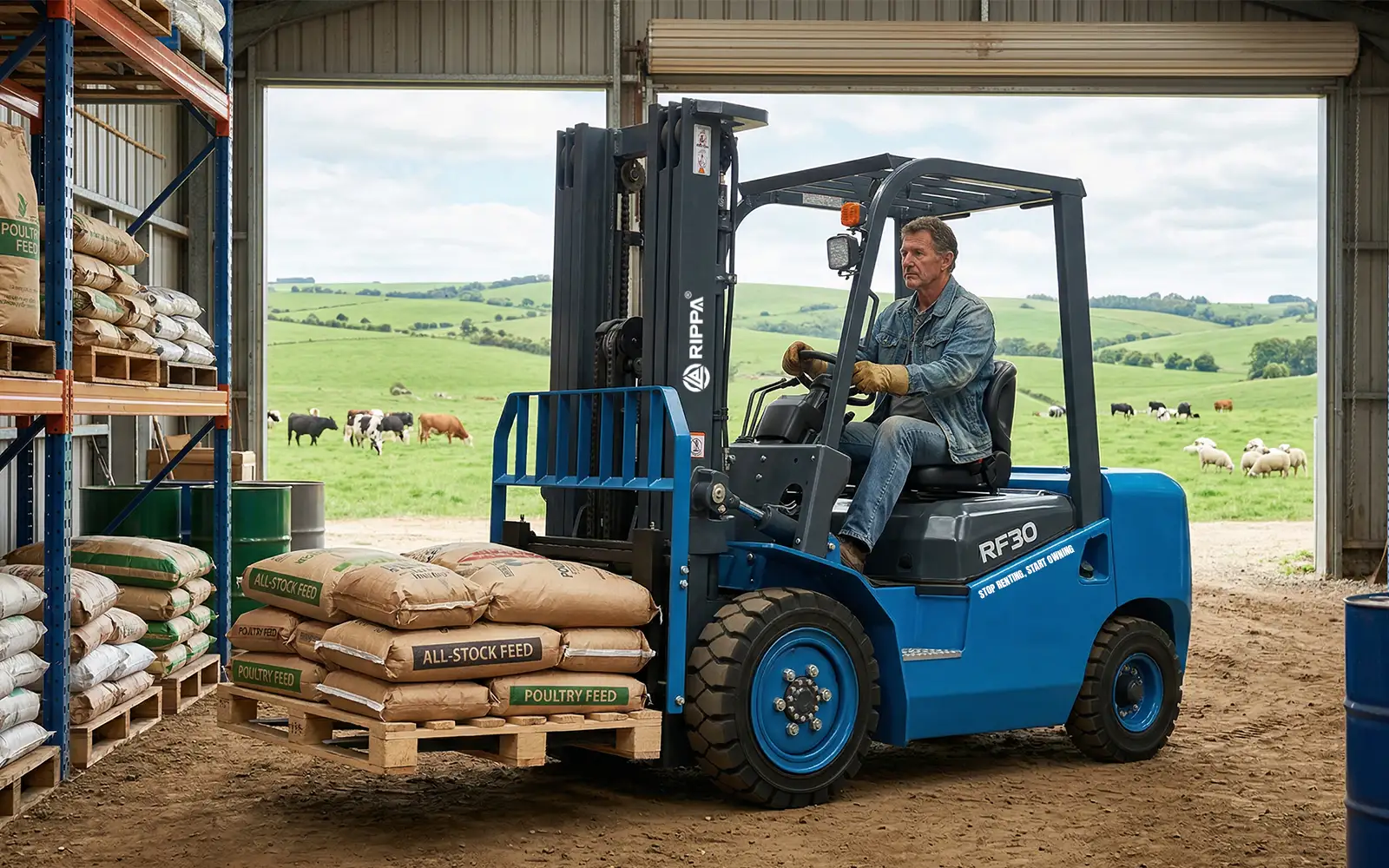
Choosing the right forklift comes down to matching the machine to your application. Start with load capacity and lift height, then consider power source, tires, and aisle width. For most indoor warehouses, electric with lithium‑ion battery offers the lowest total cost of ownership. For outdoor or continuous operation, diesel remains a viable option.
Next step: Create a specification sheet with your requirements and request quotes from multiple suppliers. Compare total cost of ownership, not just purchase price.

Urheberrecht: Shandong Rippa Machinery Group Co., Ltd.
Gesetzlicher Vertreter: Yan Huaiguo | Lizenz-Nr.: 913708000509206491
Adresse: Nr. 39, Guangan Road, Stadtteil Liuhang, High-Tech-Zone, Stadt Jining, Provinz Shandong

 Startseite
 Produkte
 E-Mail
 WhatsApp