Апр 23, 2026
Every forklift needs to be inspected before each shift. A thorough pre‑operation check takes 5 to 10 minutes and can prevent breakdowns that cost thousands in downtime and repairs. OSHA requires that all powered industrial trucks be examined before being placed in service – and when used round‑the‑clock, after each shift.
What a 5‑minute daily check prevents:
$2,000+ emergency repair bills
Days of lost productivity
OSHA citations and fines
Workplace accidents and injuries
A forklift is one of the most significant equipment investments a business makes – typically $20,000 to $60,000 for a new machine. Regular inspections catch early warning signs of failure: hydraulic performance issues, fork wear, and battery condition. That intelligence prevents downtime and informs what parts to order, when to order them, and when to schedule follow-up work.
Cost of neglect:
| Neglected Maintenance | Typical Consequence | Repair Cost |
|---|---|---|
| Skipping daily checks | Brake or steering failure | $2,000‑$5,000 |
| Ignoring hydraulic leaks | Pump failure | $3,000‑$6,000 |
| Clogged air filter | Engine damage | $5,000‑$10,000 |
| Low coolant | Overheating, head gasket | $2,000‑$4,000 |
| Worn tire neglect | Drive motor failure | $3,500‑$7,000 |
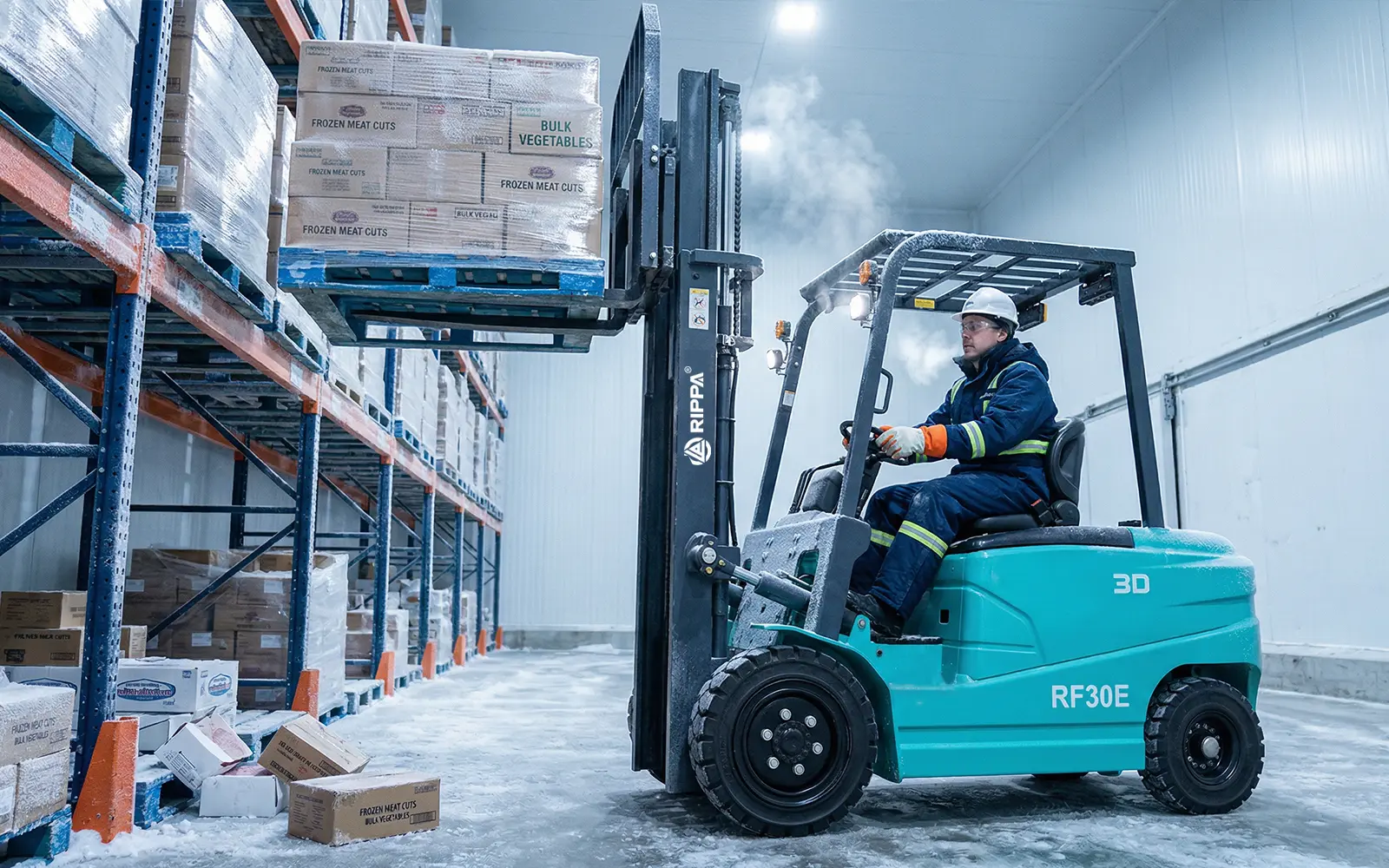
Electric forklift inspection follows a strict sequence:
PHASE 1: Power‑Off Visual
Key off, main disconnect open
Safe to inspect HV‑adjacent components visually
PHASE 2: Power‑On Systems
Key on, verify all indicators, gauges, warning lights
Check electronic safety systems before moving
PHASE 3: Operational Test
Move slowly in open area
Test steering, brakes, lift, tilt, and all operational functions under load
Battery Pack & Power System (12 items)
Battery compartment cover – secure, undamaged
Battery cables and terminals – no corrosion, fraying
Main disconnect/emergency cutoff – accessible, functional
Electrolyte levels (lead‑acid) – check each cell, top up AFTER charging only
Cell caps/vents – present, not clogged (hydrogen venting)
Battery case – no cracks, leaks, bulging, or acid residue
Battery enclosure (lithium) – sealed, no damage or swelling
BMS indicator light – check fault codes, thermal alerts
Cooling system vents/fans (lithium) – unobstructed
Battery charge indicator/SoC display – verify reading
Voltage reading – within normal range for pack size
Battery restraint/hold‑down – secure, no shifting
Electric Motor & Controller (7 items)
13. Motor housing – no damage, cracks, blocked ventilation
14. Motor cables/wiring – no chafing, exposed conductors, burn marks
15. Controller/inverter unit – secure, ventilation clear
16. Motor response – smooth acceleration, no hesitation/jerking
17. Unusual sounds – no grinding, whining, clicking
18. Regenerative braking – engages when throttle released
19. Motor performance under load – no power loss, overheating odor
Charging System & Port (8 items)
20. Charging port/connector – no damage, corrosion, bent pins
21. Charging cable – no cuts, kinks, exposed wiring
22. Charging port cover/cap – present and functional
23. Charger interlock – verify truck cannot drive while connected
24. Charger‑to‑BMS communication (lithium) – proper handshake
25. Charging area ventilation (lead‑acid) – adequate for hydrogen gas
26. Eyewash station – within 25 feet of charging area
27. Charge completion indicator – normal completion
Mast, Forks & Hydraulics (10 items)
28. Forks – no cracks, bending, excessive wear (10% wear = replace)
29. Fork positioning latch/pin – functional and engaged
30. Mast channels and rollers – no excessive wear, debris
31. Hydraulic cylinders – no leaks, scoring, rod damage
32. Hydraulic hoses and fittings – no leaks, chafing, bulging
33. Hydraulic fluid level – check sight glass or dipstick
34. Lift function – smooth operation through full travel
35. Tilt function – smooth, holds position when released
36. Side‑shift (if equipped) – smooth operation both directions
37. Load backrest extension – secure, not cracked/bent
Brakes & Steering (7 items)
38. Service brake pedal – proper feel, no sponginess
39. Parking brake – engages and holds on grade
40. Regenerative braking – smooth deceleration
41. Brake test – stops straight without pulling
42. Steering response – full lock, smooth, no dead spots
43. Power steering operation – no unusual noise
44. Inching control (if equipped) – smooth operation
Tires, Wheels & Chassis (6 items)
45. Tire condition – no chunks missing, exposed cords
46. Tire inflation (pneumatic) – correct pressure
47. Wheel lug nuts – all present and tight
48. Chassis and frame – no cracks, structural damage
49. Counterweight – secure, mounting bolts tight
50. Floor/ground under truck – check for fluid puddles
Safety Devices & Operator Controls (8 items)
51. Overhead guard – no cracks, bending, missing hardware
52. Horn – audible and functional
53. Lights – headlights, tail lights, warning strobes
54. Backup alarm – sounds when reverse selected
55. Seat belt – functions, retracts, buckle clicks
56. Operator presence sensing – truck stops when operator leaves seat
57. Emergency stop button – press and verify power cutoff
58. Mirrors and camera system – clean, adjusted, functional
Data Plate & Documentation (4 items)
59. Data plate – legible, shows capacity, attachments allowed
60. Load capacity chart – legible, current
61. Warning labels – present, legible (HV warnings for electric)
62. Operator manual – on truck or readily accessible
| Frequency | Scope | Responsible |
|---|---|---|
| Daily (pre‑shift) | Visual checks, fluid levels, safety devices, operational test | Operator |
| Weekly/Monthly | Deeper checks of hydraulic systems, battery health, chain tension | Maintenance tech |
| Annual | Comprehensive testing, third‑party certification (if required) | Specialist |
OSHA requirements:
29 CFR 1910.178(q)(7): Daily inspection before placing in service. Round‑the‑clock operations: inspect after each shift.
29 CFR 1910.178(q)(1): Any PIT not in safe operating condition removed from service. All repairs by authorized personnel.
Remove from service immediately if:
Brake or steering problems
Hydraulic leaks near heat sources
Visible structural damage
Any condition that could compromise safety
Create work order (may continue operation) if:
Minor fluid leaks
Worn tires with acceptable tread
Slow battery charging
Q: How long should a daily forklift inspection take?
A: A thorough pre‑operation inspection typically takes 5 to 10 minutes. The time investment pays off; identifying a worn brake line takes minutes, while an unplanned breakdown costs hours.
Q: Do I need different checklists for electric vs. propane forklifts?
A: Yes. Electric forklifts require battery and charger checks, while propane units need fuel system and tank inspections. Core safety items overlap, but power system differences demand tailored inspection points.
Q: How often should batteries be replaced?
A: Lead‑acid batteries typically last 1,500 cycles (3‑5 years). Lithium‑ion batteries last 3,000+ cycles (8‑10 years).
Q: What are the five most important inspection items?
A: Brakes, steering, hydraulic systems, fork condition, and mast/chain integrity. Each signals a distinct failure mode.
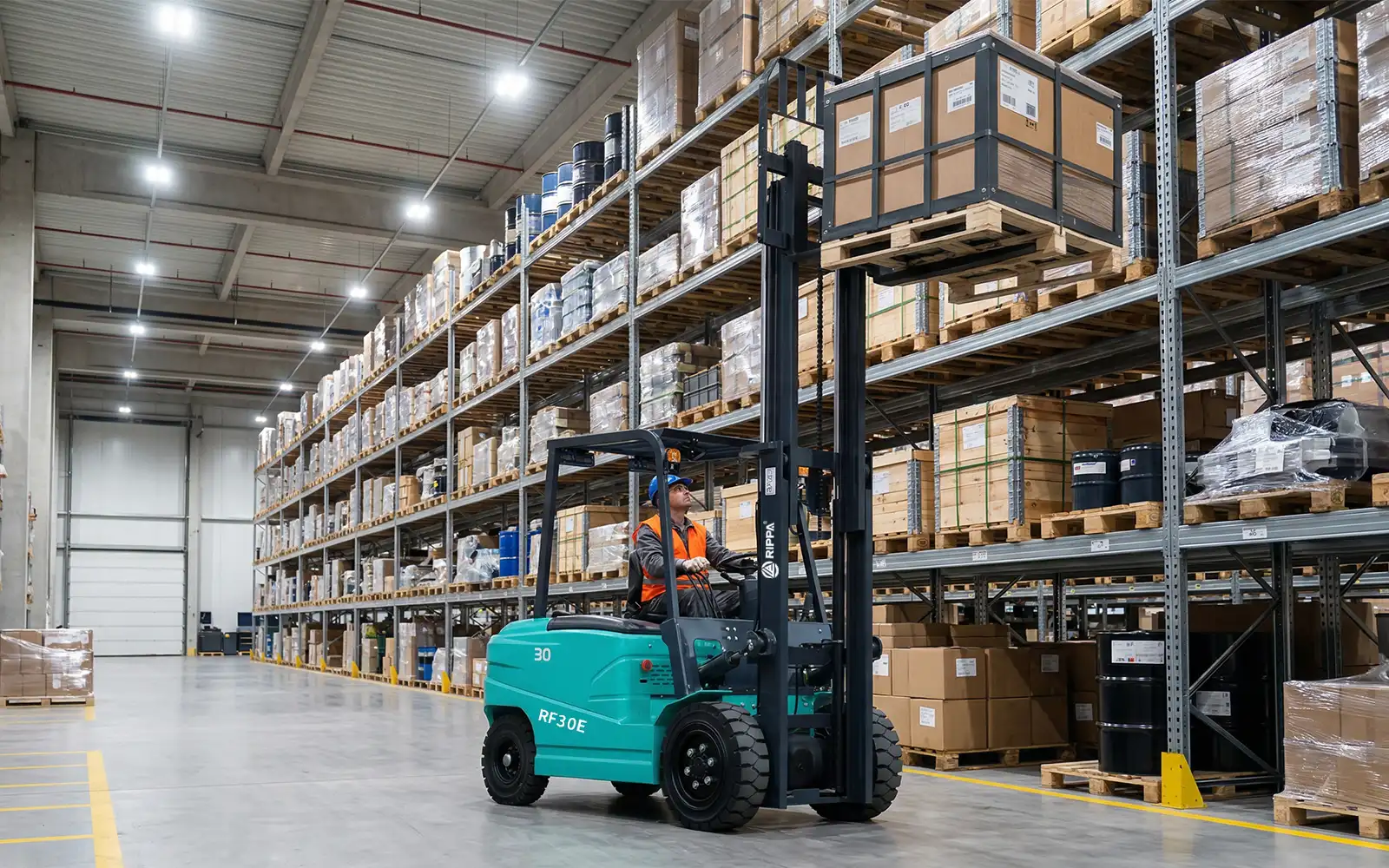
Regular forklift inspections aren’t just about compliance – they’re about protecting your investment, your operators, and your productivity. The 5‑10 minutes spent on daily checks can prevent catastrophic failures that cost thousands in repairs and days of downtime.
Download a free inspection checklist template from your forklift supplier or create your own. Consistent records help you spot trends and schedule maintenance before failures occur.

Авторские права: Shandong Rippa Machinery Group Co., Ltd.
Юридический представитель: Ян Хуайго | Номер лицензии: 913708000509206491
Адрес: ул. Гуанъань, д. 39, микрорайон Люхан, Зона высоких технологий, г. Цзинин, провинция Шаньдун

 Главная
 Продукция
 Электронная почта
 WhatsApp