Июн 07, 2026
Choose Euro V if you operate in regions with strict emissions regulations such as the European Union, China’s major cities, or North America, and if you have access to high-quality, low-sulfur diesel fuel. Choose National II if you operate in regions with relaxed emissions standards, if fuel quality is inconsistent, or if you want a lower purchase price and simpler maintenance.
Euro V is a European emissions standard for non-road mobile machinery. It requires significantly lower levels of particulate matter and nitrogen oxides compared to older standards.
Rippa RL series loaders with Euro V engines use electronically controlled high-pressure common rail fuel systems. This technology achieves precise combustion control and meets the final version of Euro V and US Stage IV emission standards.
From Rippa documentation: In addition to its outstanding horsepower and performance, the engine also has extremely low noise and vibration levels, excellent fuel efficiency, and meets the final version of Euro V and US Stage IV emission standards, contributing to environmental protection and reducing air pollution.
National II is a Chinese emissions standard for non-road machinery. It is roughly equivalent to Euro II or Tier 2 standards. It does not require the advanced fuel systems or after-treatment devices that Euro V requires.
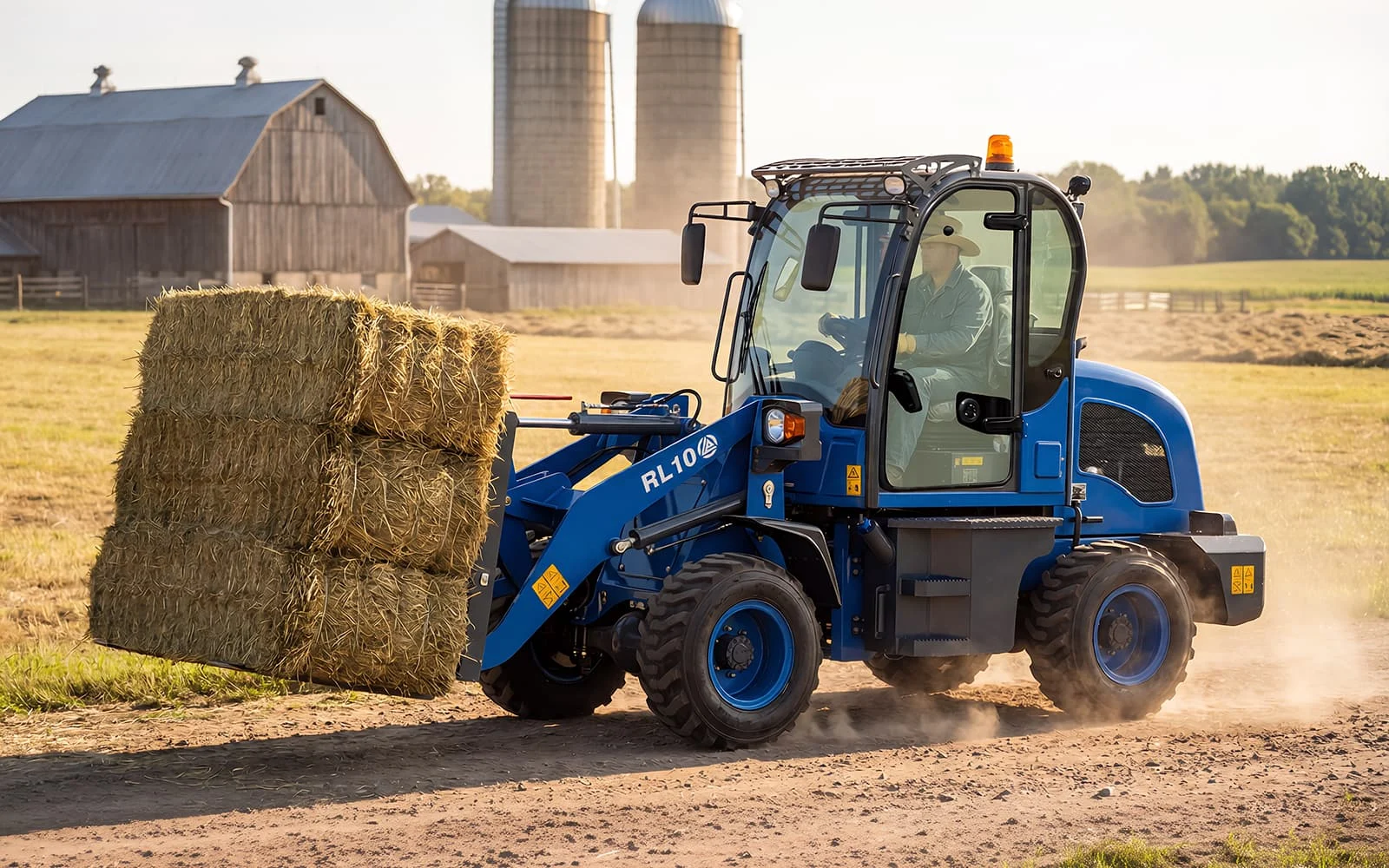
Rippa offers National II engine options on the RL10 with Changchai 390 and the RL15 with Yuchai 490.
| Характеристика | Euro V | National II |
|---|---|---|
| Fuel system | Electronically controlled high-pressure common rail | Mechanical or basic electronic injection |
| After-treatment | Requires DPF and sometimes DEF | None required |
| Fuel quality requirement | Low-sulfur diesel, typically below 15 ppm | Standard diesel, up to 500 ppm acceptable |
| Noise and vibration | Very low | Moderate |
| Emissions compliance | Strict regions | Relaxed regions |
| Purchase price | Higher | Lower |
| Maintenance cost | Higher due to after-treatment | Lower |
| Fuel efficiency | Better, up to 15 percent savings | Standard |
| Cold start performance | Excellent | Good |
| Complexity | High | Low |
If you work in cities, near residential areas, or in countries with strict enforcement, a Euro V engine is often legally required. You may face fines or operating bans with a National II engine.
The high-pressure common rail system injects fuel at extremely high pressures in multiple pulses per cycle. This results in more complete combustion. Rippa documentation states that the power is optimized and matched with high fuel efficiency, large low-speed torque, strong power, and high operating efficiency.
Expected fuel savings: 10 to 15 percent compared to National II engines.
Rippa documentation describes the engine as having extremely low noise and vibration levels with soft roar and elegant start. For operators spending 8 hours per day in the cab, this reduction in fatigue is significant.
Electronic control systems optimize fuel timing and glow plug operation in cold weather. National II mechanical engines can be harder to start below freezing.
Euro V common rail engines produce more torque at low RPM. This means better lugging power when you push into a pile. The engine does not stall as easily.
A National II engine typically costs 15 to 25 percent less than a comparable Euro V engine. For a 20,000 USD loader, this is a savings of 3,000 to 5,000 USD.
National II engines tolerate diesel fuel with higher sulfur content. In many developing regions, low-sulfur diesel is not available or is significantly more expensive. A Euro V engine can be damaged by high-sulfur fuel.
No diesel particulate filter means no filter cleaning or regeneration cycles. No diesel exhaust fluid means no fluid to buy or store. No complex sensors mean fewer electronic failures.
Mechanics in rural or developing areas are more familiar with mechanical injection systems. Electronic common rail systems require specialized diagnostic tools and training.
While Euro V engines burn less fuel, the fuel cost savings may be offset by higher-priced low-sulfur diesel and the cost of diesel exhaust fluid. National II engines use cheaper fuel and have no fluid costs.
You operate in the European Union. Euro V is required by law.
You operate in major Chinese cities such as Beijing, Shanghai, or Guangzhou. Local regulations ban lower-emission engines.
You operate in North America. US Stage IV is equivalent to Euro V.
You have guaranteed access to low-sulfur diesel fuel with 15 ppm sulfur or less.
You want the lowest possible noise and vibration levels.
You keep machines for many years and want to avoid future emissions restrictions.
You care about environmental impact and corporate sustainability goals.
You operate in regions with relaxed emissions enforcement such as Africa, South America, Southeast Asia, or rural China.
Fuel quality is uncertain. You cannot guarantee low-sulfur diesel availability.
You want the lowest possible purchase price.
You have access to mechanics who are not trained on electronic common rail systems.
You operate intermittently. DPF filters on Euro V engines can clog if the machine only runs short cycles.
You need a simple, rugged machine for harsh conditions where electronics might fail.
Assume 2,000 operating hours per year and diesel at 1.00 USD per liter.
For a Euro V engine consuming 5 liters per hour: Annual fuel cost is 5 liters times 2,000 hours times 1.00 USD equals 10,000 USD. Annual diesel exhaust fluid cost is approximately 300 USD. Annual DPF maintenance is approximately 200 USD. Total annual operating cost is 10,500 USD.
For a National II engine consuming 6 liters per hour: Annual fuel cost is 6 liters times 2,000 hours times 1.00 USD equals 12,000 USD. No diesel exhaust fluid or DPF costs. Total annual operating cost is 12,000 USD.
The Euro V engine saves 1,500 USD per year in operating costs.
However, if low-sulfur diesel costs 20 percent more at 1.20 USD per liter, the Euro V annual fuel cost becomes 5 liters times 2,000 hours times 1.20 USD equals 12,000 USD, plus 500 USD for diesel exhaust fluid and DPF, totaling 12,500 USD. The National II remains at 12,000 USD. The National II becomes cheaper.
The payback period for the higher Euro V purchase price ranges from 1 to 4 years depending on fuel prices.
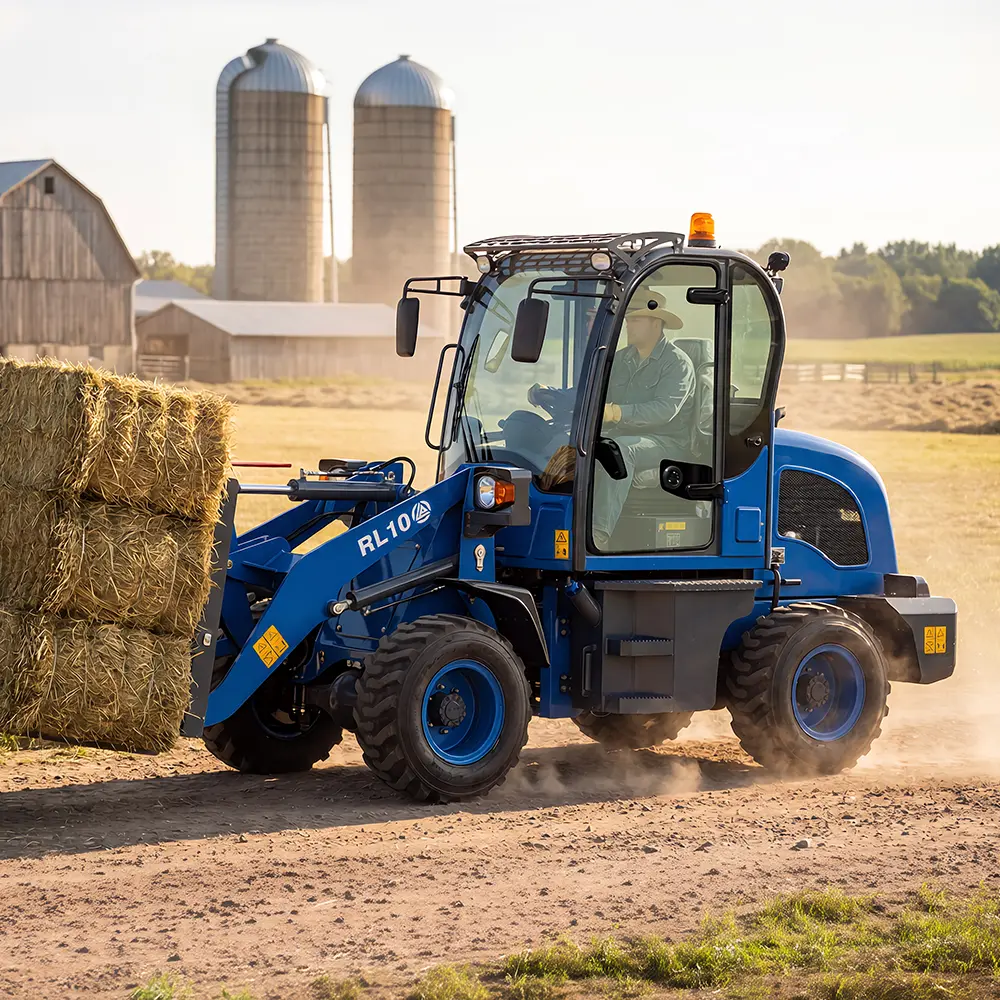
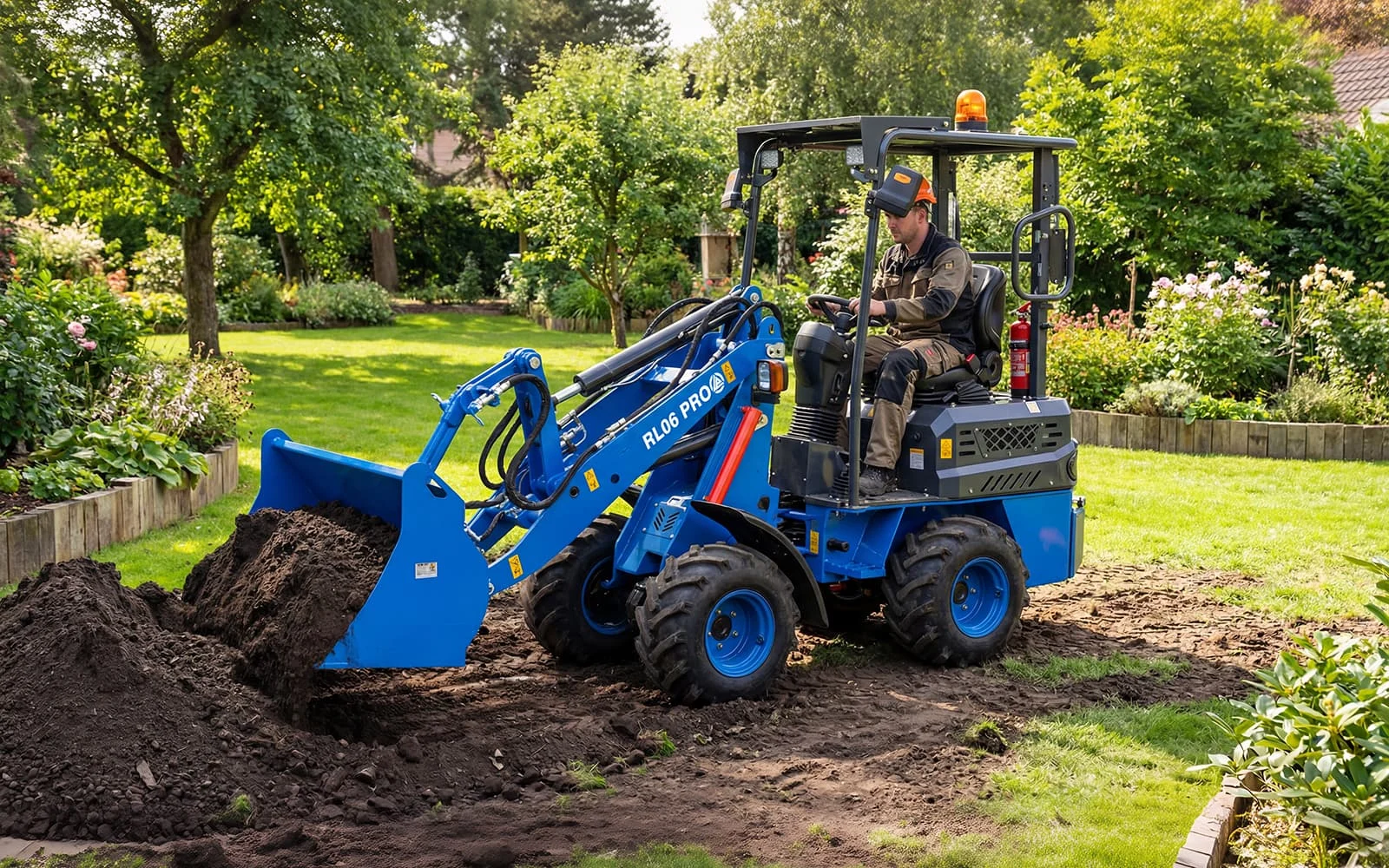
RL06: The engine is Kubota D1105. This is a premium Japanese engine that meets Euro V and US Stage IV standards. No National II option is available for RL06. If you need RL06’s telescopic boom, you must accept Euro V.
RL10: The engine is Changchai 390. You have a choice between Euro V and National II. This is the only Rippa model offering both options on the same engine platform.
RL15: The engine is Yuchai 490 for National II or Changchai for Euro V. You have a choice between two different engine brands.
RL20: The engine is Yuchai 4105 Turbocharged. This meets Euro V and US Stage IV standards. No National II option is available for RL20.
| Your Situation | Recommended Engine |
|---|---|
| Operating in Europe, North America, or major Chinese cities | Euro V |
| Operating in Africa, South America, Southeast Asia, or rural areas | National II |
| Low-sulfur diesel is reliably available | Euro V |
| Fuel quality is uncertain | National II |
| Lowest purchase price is the priority | National II |
| Lowest noise and vibration is the priority | Euro V |
| Simple maintenance with local mechanics | National II |
| Environmental compliance for government contracts | Euro V |
| Intermittent use with short duty cycles | National II |
| Continuous daily use | Either, but Euro V saves fuel |
Question 1: Can I use a National II engine in Europe?
Answer: No. National II engines do not meet European emissions regulations and cannot be sold or operated legally in EU countries.
Question 2: Will a Euro V engine run on regular diesel?
Answer: It will run, but high-sulfur diesel will damage the diesel particulate filter and the exhaust system over time. Use only low-sulfur diesel.
Question 3: Which engine lasts longer?
Answer: Both engines can last 10,000 to 15,000 hours with proper maintenance. The Euro V engine has more components that can fail, but it runs cleaner and puts less soot in the oil.
Question 4: Can I convert a National II engine to Euro V?
Answer: No. The differences are fundamental to the engine design. You cannot add common rail injection and after-treatment to a National II engine.
Question 5: Which engine has better resale value?
Answer: In regulated markets, Euro V machines hold value better. In unregulated markets, National II machines are easier to sell because any buyer can run them on available fuel.


 Главная
 Продукция
 Электронная почта
 WhatsApp