maj 15, 2026
A skid steer loader (also called a skid steer) is a small, rigid‑frame machine with lift arms and a bucket or other attachment. It is called a “skid steer” because it steers by skidding or dragging its wheels or tracks – left wheels drive independently from right wheels. Skid steers are used for digging, loading, grading, backfilling, clearing brush, snow removal, and demolition. They are popular on construction sites, farms, and landscaping projects because they are highly maneuverable and can use dozens of different attachments.
Key feature: Skid steers can turn within their own length (zero radius turn), making them ideal for tight spaces.
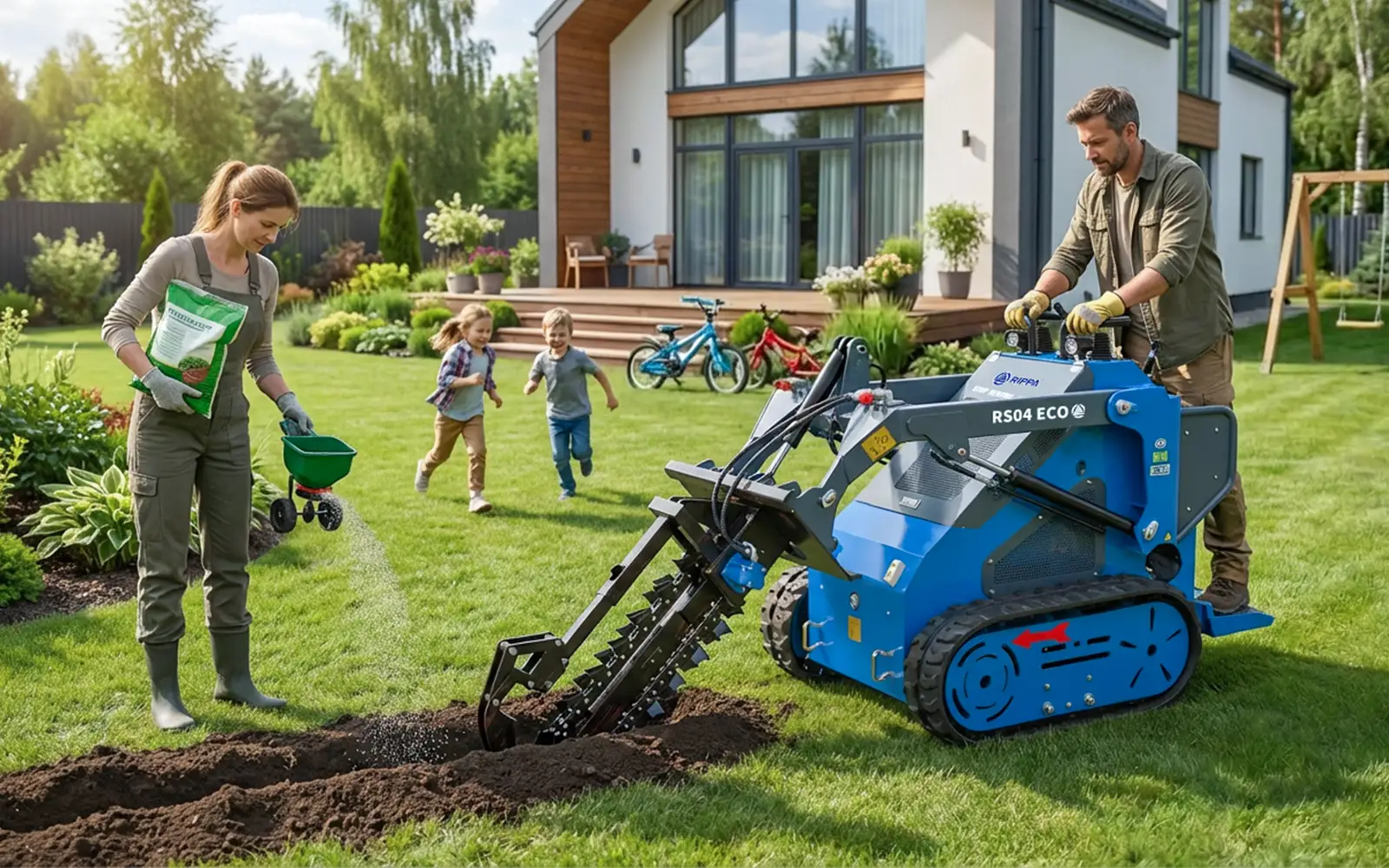
Steering mechanism: Unlike cars or tractors that turn front wheels, skid steers turn by driving left and right wheels at different speeds. To turn left, the right wheels drive forward while the left wheels slow or stop (or drive backward). This “skidding” action gives the machine its name.
Lift arm designs:
| Lift Type | Best For | Examples |
|---|---|---|
| Radial lift | Digging, grading, level ground | Dirt work, backfilling |
| Vertical lift | Loading trucks, high stacking | Pallet handling, dump trucks |
Radial lift follows an arc path – good breakout force at ground level. Vertical lift keeps the load close to the machine as it rises – better reach at full height.
| Component | Function |
|---|---|
| Lift arms | Raise and lower the bucket or attachment |
| Bucket/attachment | Digs, scoops, grabs, or pushes material |
| Cab | Operator station with joysticks, pedals, and controls |
| Wheels or tracks | Provide mobility. Tracks offer better traction on soft ground |
| Engine | Powers the hydraulic system. Diesel or gasoline options |
| Hydraulic system | Powers lift arms, bucket tilt, and attachments |
| Quick coupler | Allows fast attachment changes (manual or hydraulic) |
Skid steers are classified by rated operating capacity (ROC) – the maximum load the machine can safely lift.
| Size Class | ROC | Typical Weight | Best For |
|---|---|---|---|
| Small | Under 500 kg | 1,500‑2,500 kg | Light landscaping, gardening |
| Medium | 500‑1,000 kg | 2,500‑3,500 kg | General construction, rental yards |
| Large | 1,000‑1,500 kg | 3,500‑4,500 kg | Heavy excavation, land clearing |
| Extreme | Over 1,500 kg | 4,500+ kg | Mining, heavy demolition |
RIPPA skid steer models: RS03 (725 kg, light), RS04 (981 kg), RS06 (1,201 kg), RS07 (1,230 kg), RS20 (4,225 kg, large).
| Task | Attachment | Time Savings vs Manual |
|---|---|---|
| Loading material | Standard bucket | 90% |
| Grading | Grading blade | 90% |
| Post holes | Auger | 95% |
| Stump removal | Stump grinder or bucket | 85% |
| Brush clearing | Grapple | 85% |
| Snow removal | Snow blade or blower | 80% |
| Pallet handling | Pallet forks | 90% |
| Rozbiórka | Hydraulic breaker | 85% |
Real savings: A contractor charging 800‑1,200 per day for excavation can recover a skid steer cost in 30‑45 billable days – roughly 2‑3 months of steady work.
| Feature | Skid Steer | koparka |
|---|---|---|
| Primary function | Loading, grading, digging | Digging, trenching, demolition |
| Digging depth | Limited (bucket depth) | Deep (2‑5+ meters) |
| Maneuverability | Zero radius turn | Swing radius |
| Załączniki | Dozens available | Fewer, but specialized |
| Best for | Material handling, grading | Trenching, deep excavation |
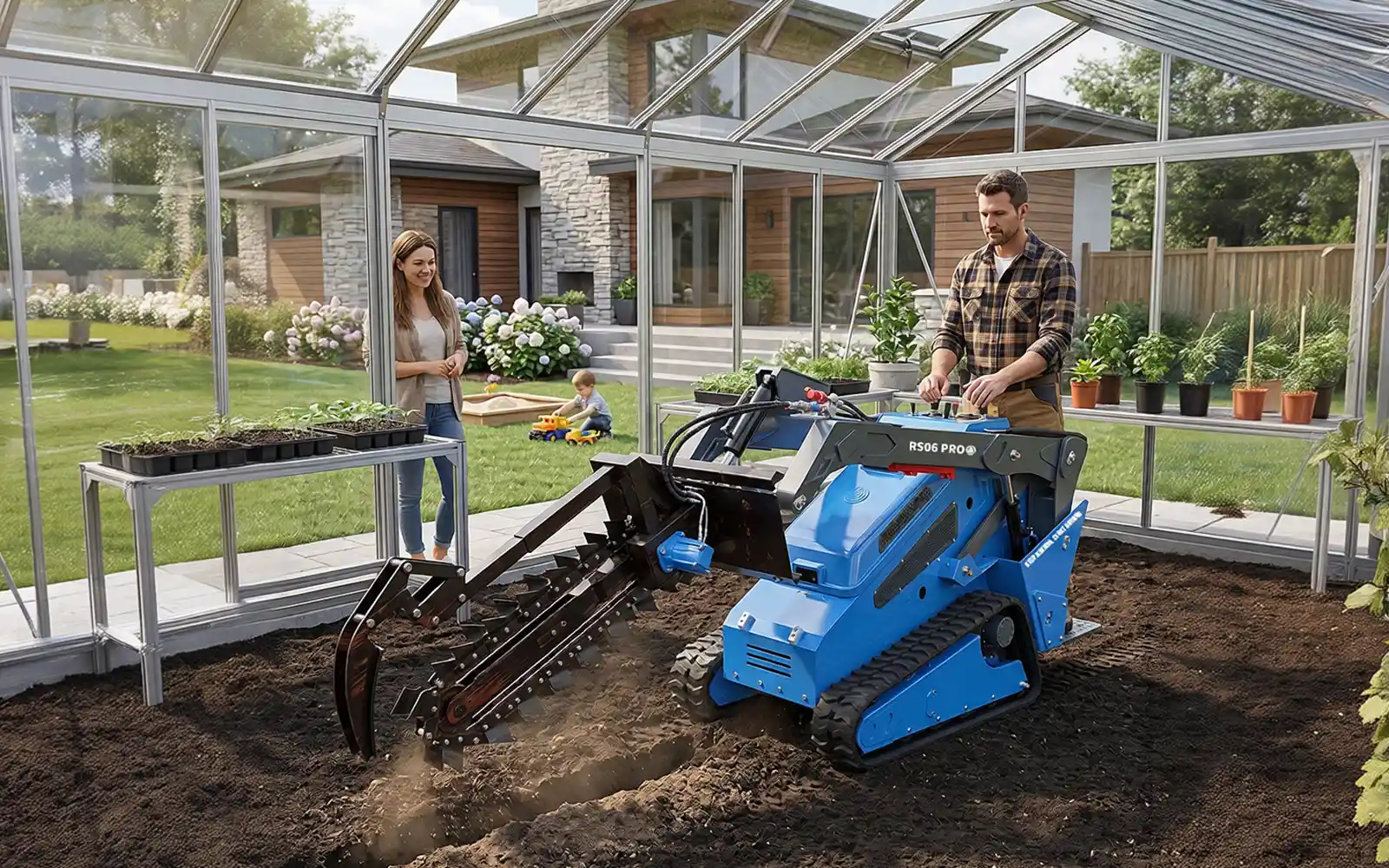
Which to choose? If you need to dig deep trenches or foundations, choose an koparka. If you need to load trucks, grade surfaces, or use many attachments, choose a skid steer.
| Feature | Wheeled Skid Steer | Tracked Skid Steer (CTL) |
|---|---|---|
| Best surface | Hard surfaces (concrete, asphalt) | Soft ground (mud, snow, turf) |
| Travel speed | Faster (8‑12 mph) | Slower (5‑8 mph) |
| Ground pressure | Higher (can damage turf) | Lower (lawn‑friendly) |
| Ride quality | Rougher | Smoother |
| Maintenance | Tires (flats, wear) | Tracks (tension, wear) |
| Cost | Lower | 15‑25% higher |
Choose wheeled if: You work mainly on pavement or concrete. Choose tracked if: You work on soft ground, mud, snow, or turf.
| Attachment | Purpose | Typical Cost |
|---|---|---|
| Standard bucket | Digging, loading | Included |
| Pallet forks | Lifting pallets, materials | 800‑1,500 |
| Grapple | Brush, logs, debris | 2,000‑4,000 |
| Snow blade | Plowing | 1,500‑3,000 |
| Auger | Post holes | 1,200‑2,500 |
| Hydraulic breaker | Rozbiórka | 3,000‑8,000 |
| Sweeper broom | Cleaning | 2,000‑4,000 |
Quick coupler: A hydraulic quick coupler (standard on many RIPPA models) allows 30‑second attachment changes from the cab – essential for efficient multi‑tasking.
Q: How much does a skid steer cost?
A: New skid steers cost 25,000‑55,000 depending on size and features. Used machines cost 30‑50% less.
Q: Can a skid steer fit through a standard gate?
A: Small skid steers (under 1,000 kg) can be as narrow as 1,000 mm (39 inches) – too wide for a standard 36‑inch gate. For backyard access, a mini excavator is usually a better choice.
Q: Do I need a license to operate a skid steer?
A: For personal use on your own property, no license is required. Commercial work requires OSHA training and certification.
Q: How long does a skid steer last?
A: With proper maintenance, 5,000‑8,000 hours. Rubber tracks last 1,000‑2,000 hours depending on terrain.
Q: What is the most popular skid steer size?
A: 700‑1,000 lb ROC (rated operating capacity) – the sweet spot for versatility and cost.
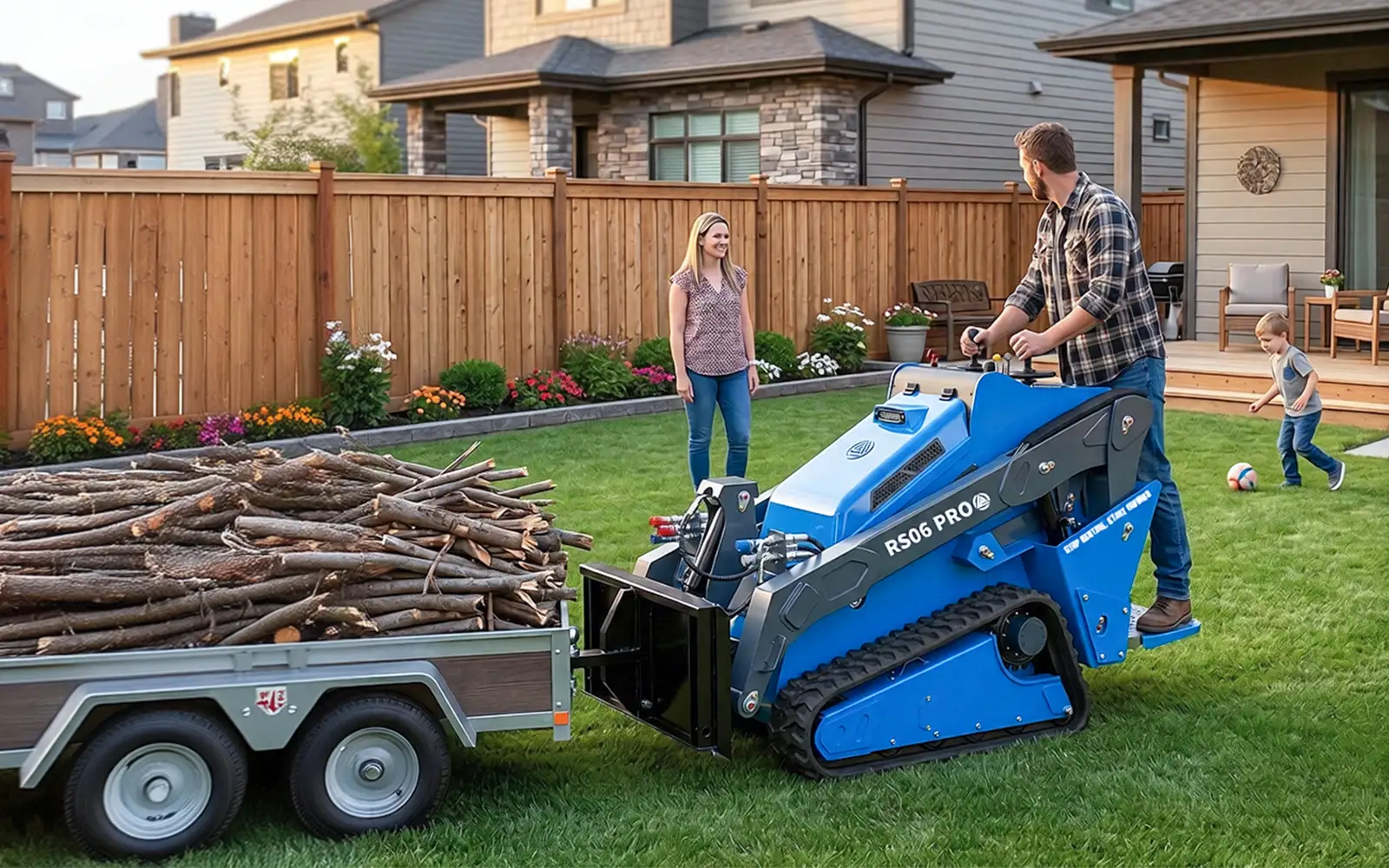
A skid steer loader is one of the most versatile machines you can own. With dozens of attachments, it handles digging, loading, grading, clearing, snow removal, and demolition. Choose wheeled for hard surfaces or tracked for soft ground. Small to medium sizes (500‑1,000 lb ROC) are best for most homeowners and landscapers.
Next step: Identify your primary tasks, choose the right attachment set, and contact a reputable manufacturer for a recommendation.


 Strona główna
 Produkty
 E-mail
 WhatsApp