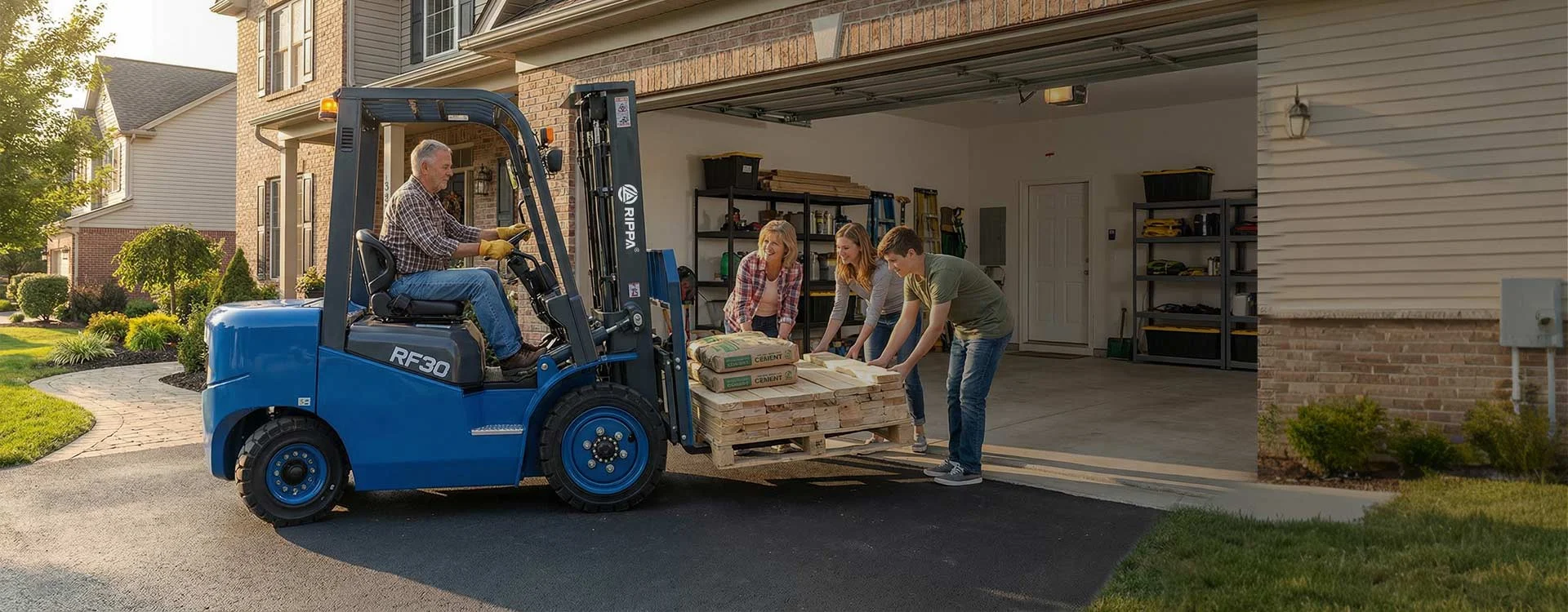
Quick Answer: What Maintenance Does a Forklift Really Need?
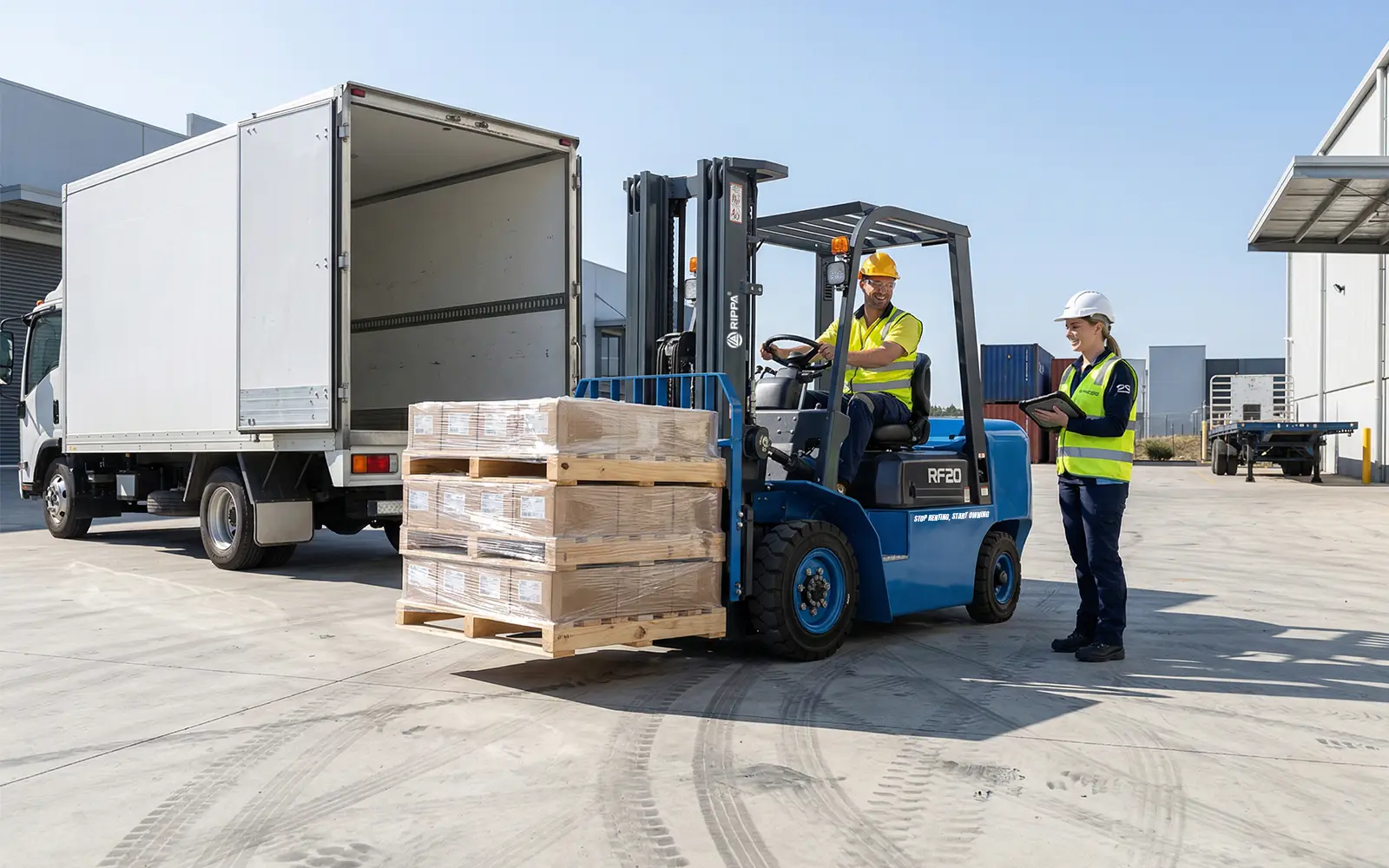
Every forklift needs to be inspected before each shift. A thorough pre‑operation check takes 5 to 10 minutes and can prevent breakdowns that cost thousands in downtime and repairs. OSHA requires that all powered industrial trucks be examined before being placed in service – and when used round‑the‑clock, after each shift.
What a 5‑minute daily check prevents:
-
$2,000+ emergency repair bills
-
Days of lost productivity
-
OSHA citations and fines
-
Workplace accidents and injuries

1. Why Forklift Maintenance Matters
A forklift is one of the most significant equipment investments a business makes – typically 20,000��60,000 for a new machine. Regular inspections catch early warning signs of failure: hydraulic performance issues, fork wear, and battery condition. That intelligence prevents downtime and informs what parts to order, when to order them, and when to schedule follow-up work.
Cost of neglect:
| Neglected Maintenance | Typical Consequence | Repair Cost |
|---|---|---|
| Skipping daily checks | Brake or steering failure | 2,000‑5,000 |
| Ignoring hydraulic leaks | Pump failure | 3,000‑6,000 |
| Clogged air filter | Engine damage | 5,000‑10,000 |
| Low coolant | Overheating, head gasket | 2,000‑4,000 |
| Worn tire neglect | Drive motor failure | 3,500‑7,000 |
2. The Three‑Phase Inspection Flow
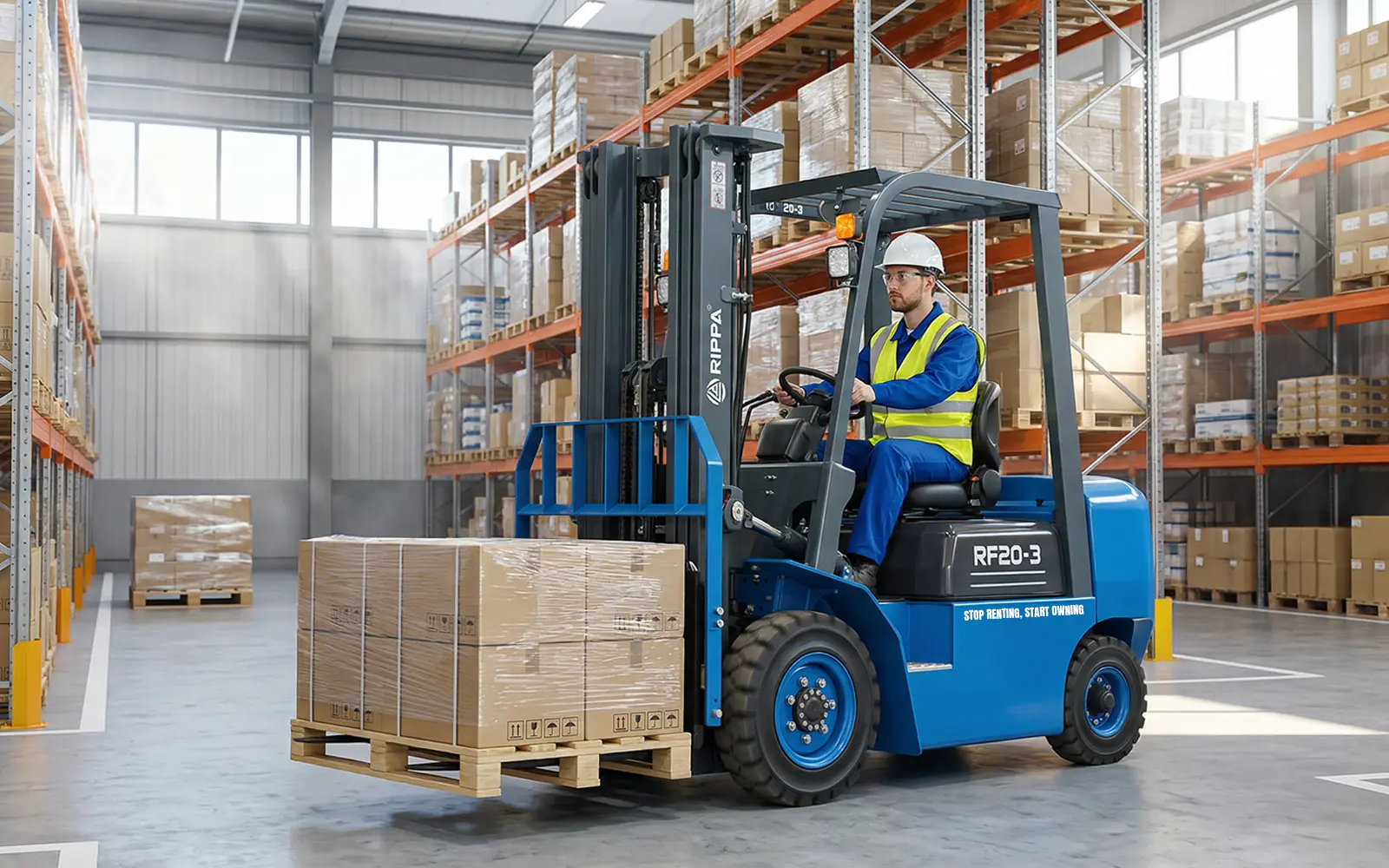
Electric forklift inspection follows a strict sequence:
PHASE 1: Power‑Off Visual
-
Key off, main disconnect open
-
Safe to inspect HV‑adjacent components visually
PHASE 2: Power‑On Systems
-
Key on, verify all indicators, gauges, warning lights
-
Check electronic safety systems before moving
PHASE 3: Operational Test
-
Move slowly in open area
-
Test steering, brakes, lift, tilt, and all operational functions under load
3. Complete 62‑Point Inspection Checklist
Battery Pack & Power System (12 items)
-
Battery compartment cover – secure, undamaged
-
Battery cables and terminals – no corrosion, fraying
-
Main disconnect/emergency cutoff – accessible, functional
-
Electrolyte levels (lead‑acid) – check each cell, top up AFTER charging only
-
Cell caps/vents – present, not clogged (hydrogen venting)
-
Battery case – no cracks, leaks, bulging, or acid residue
-
Battery enclosure (lithium) – sealed, no damage or swelling
-
BMS indicator light – check fault codes, thermal alerts
-
Cooling system vents/fans (lithium) – unobstructed
-
Battery charge indicator/SoC display – verify reading
-
Voltage reading – within normal range for pack size
-
Battery restraint/hold‑down – secure, no shifting
Electric Motor & Controller (7 items)
13. Motor housing – no damage, cracks, blocked ventilation
14. Motor cables/wiring – no chafing, exposed conductors, burn marks
15. Controller/inverter unit – secure, ventilation clear
16. Motor response – smooth acceleration, no hesitation/jerking
17. Unusual sounds – no grinding, whining, clicking
18. Regenerative braking – engages when throttle released
19. Motor performance under load – no power loss, overheating odor
Charging System & Port (8 items)
20. Charging port/connector – no damage, corrosion, bent pins
21. Charging cable – no cuts, kinks, exposed wiring
22. Charging port cover/cap – present and functional
23. Charger interlock – verify truck cannot drive while connected
24. Charger‑to‑BMS communication (lithium) – proper handshake
25. Charging area ventilation (lead‑acid) – adequate for hydrogen gas
26. Eyewash station – within 25 feet of charging area
27. Charge completion indicator – normal completion
Mast, Forks & Hydraulics (10 items)
28. Forks – no cracks, bending, excessive wear (10% wear = replace)
29. Fork positioning latch/pin – functional and engaged
30. Mast channels and rollers – no excessive wear, debris
31. Hydraulic cylinders – no leaks, scoring, rod damage
32. Hydraulic hoses and fittings – no leaks, chafing, bulging
33. Hydraulic fluid level – check sight glass or dipstick
34. Lift function – smooth operation through full travel
35. Tilt function – smooth, holds position when released
36. Side‑shift (if equipped) – smooth operation both directions
37. Load backrest extension – secure, not cracked/bent
Brakes & Steering (7 items)
38. Service brake pedal – proper feel, no sponginess
39. Parking brake – engages and holds on grade
40. Regenerative braking – smooth deceleration
41. Brake test – stops straight without pulling
42. Steering response – full lock, smooth, no dead spots
43. Power steering operation – no unusual noise
44. Inching control (if equipped) – smooth operation
Tires, Wheels & Chassis (6 items)
45. Tire condition – no chunks missing, exposed cords
46. Tire inflation (pneumatic) – correct pressure
47. Wheel lug nuts – all present and tight
48. Chassis and frame – no cracks, structural damage
49. Counterweight – secure, mounting bolts tight
50. Floor/ground under truck – check for fluid puddles
Safety Devices & Operator Controls (8 items)
51. Overhead guard – no cracks, bending, missing hardware
52. Horn – audible and functional
53. Lights – headlights, tail lights, warning strobes
54. Backup alarm – sounds when reverse selected
55. Seat belt – functions, retracts, buckle clicks
56. Operator presence sensing – truck stops when operator leaves seat
57. Emergency stop button – press and verify power cutoff
58. Mirrors and camera system – clean, adjusted, functional
Data Plate & Documentation (4 items)
59. Data plate – legible, shows capacity, attachments allowed
60. Load capacity chart – legible, current
61. Warning labels – present, legible (HV warnings for electric)
62. Operator manual – on truck or readily accessible
4. Inspection Frequency Requirements
| Frequency | Scope | Responsible |
|---|---|---|
| Daily (pre‑shift) | Visual checks, fluid levels, safety devices, operational test | Operator |
| Weekly/Monthly | Deeper checks of hydraulic systems, battery health, chain tension | Maintenance tech |
| Annual | Comprehensive testing, third‑party certification (if required) | Specialist |
OSHA requirements:
-
29 CFR 1910.178(q)(7): Daily inspection before placing in service. Round‑the‑clock operations: inspect after each shift.
-
29 CFR 1910.178(q)(1): Any PIT not in safe operating condition removed from service. All repairs by authorized personnel.
5. How to Handle Failed Inspections
Remove from service immediately if:
-
Brake or steering problems
-
Hydraulic leaks near heat sources
-
Visible structural damage
-
Any condition that could compromise safety
Create work order (may continue operation) if:
-
Minor fluid leaks
-
Worn tires with acceptable tread
-
Slow battery charging
6. Frequently Asked Questions
Q: How long should a daily forklift inspection take?
A: A thorough pre‑operation inspection typically takes 5 to 10 minutes. The time investment pays off; identifying a worn brake line takes minutes, while an unplanned breakdown costs hours.
Q: Do I need different checklists for electric vs. propane forklifts?
A: Yes. Electric forklifts require battery and charger checks, while propane units need fuel system and tank inspections. Core safety items overlap, but power system differences demand tailored inspection points.
Q: How often should batteries be replaced?
A: Lead‑acid batteries typically last 1,500 cycles (3‑5 years). Lithium‑ion batteries last 3,000+ cycles (8‑10 years).
Q: What are the five most important inspection items?
A: Brakes, steering, hydraulic systems, fork condition, and mast/chain integrity. Each signals a distinct failure mode.
7. Conclusion
Regular forklift inspections aren’t just about compliance – they’re about protecting your investment, your operators, and your productivity. The 5‑10 minutes spent on daily checks can prevent catastrophic failures that cost thousands in repairs and days of downtime.
Next step: Download a free inspection checklist template from your forklift supplier or create your own. Consistent records help you spot trends and schedule maintenance before failures occur.


 홈
홈
 제품
제품
 이메일
이메일
 WhatsApp
