Nov 04, 2026
Loading ramps are essential equipment for many contractors and machinery owners who transport mini excavators between job sites.
The right ramp helps an operator move the machine from ground level onto a trailer safely.
However, not every loading ramp is suitable for every ekskavator.
Ramp selection should consider:
Choosing the wrong ramp can create serious risks, including slipping, structural failure, or equipment falling from the trailer.
This guide explains the main types of mini ekskavator loading ramps and how to select the correct configuration.
Mini excavator loading ramps are structural platforms used to move tracked machinery onto or off a trailer.
They create a transition between the ground and the trailer deck.
Depending on the trailer design, loading ramps may be:
The ramp must be compatible with the trailer and rated for the machine being loaded.
These ramps cover a broad section of the trailer’s rear.
Advantages may include:
They are commonly integrated into equipment trailer designs.
These consist of two separate ramps positioned under the machine’s tracks.
They can be useful for tracked excavators when the ramp width and spacing match the machine.
However, both ramps must be properly rated and positioned.
Some trailers use removable ramps that slide into designated storage or mounting locations.
Advantages include:
Always verify the manufacturer’s capacity rating and installation procedure.
Tilt-deck trailers use a movable deck to create a loading surface.
Depending on the design, they may reduce the need for conventional rear ramps.
Buyers should check the tilt system’s rated capacity, operating instructions, and loading limitations.
Ramp capacity must be suitable for the actual machine and loading configuration.
Consider:
If using two separate ramps, do not simply assume that their individual ratings can always be added together.
The manufacturer’s instructions determine how the rated capacity applies to the complete loading arrangement.
Some ramp manufacturers specify different ratings depending on ramp length, support conditions, and loading method.
Ramp length affects the angle between the ground and trailer deck.
A longer ramp generally creates a shallower loading angle when other conditions remain comparable.
A steep loading angle can create challenges involving:
The appropriate ramp length depends on the trailer deck height, machine dimensions, and manufacturer requirements.
Ramp width must match the machine’s track configuration.
For separate ramps, consider:
For a full-width ramp, confirm that the complete loading surface supports the machine’s track arrangement.
A ramp that is too narrow can make alignment difficult and increase the risk of a track slipping off the side.
Loading ramps may become slippery due to:
Choose ramps with a suitable traction design.
Inspect the surface before loading.
Remove loose debris and follow the ramp manufacturer’s recommendations.
Do not load equipment on a visibly damaged or contaminated ramp surface.
A suitable loading procedure generally includes the following steps.
Park on firm, level ground.
Connect the trailer to the towing vehicle and secure it according to the manufacturer’s instructions.
Check:
Align the excavator with the loading path.
Use a qualified spotter where appropriate, positioned outside the machine’s travel path.
Follow the manufacturer’s operating instructions and use the appropriate travel mode.
Avoid sudden steering movements or unnecessary changes in direction while on the ramps.
Once loaded, lower the attachment, shut down the machine, and apply the prescribed securement procedures.
Bobcat’s compact excavator transportation guidance also emphasizes level ground, suitable ramp dimensions and capacity, secure trailer positioning, and correct machine tie-down procedures.
Reference: Bobcat Mini Excavator Transport Guide.
Avoid:
The loading system should be inspected before each use.
Both materials can be used in equipment loading systems.
Potential advantages include:
Potential advantages include:
Material alone does not determine safe capacity.
Buyers should compare:
Dealers should ask customers:
This helps ensure that customers purchase compatible transportation equipment.
For dealers selling mini excavators, transportation guidance can also become useful educational content that builds customer trust.
The best ramp depends on machine weight, track width, trailer design, loading angle, and the manufacturer’s rated capacity.
Yes, when they are designed for the machine and trailer configuration and have sufficient individual capacity and secure connections.
Some aluminum ramps are designed for tracked equipment. The specific manufacturer’s rating must be checked.
A longer ramp may reduce the loading angle, but capacity, traction, support, and proper alignment remain essential.
Yes. Follow the ramp and trailer manufacturers’ instructions to prevent ramp movement during loading.
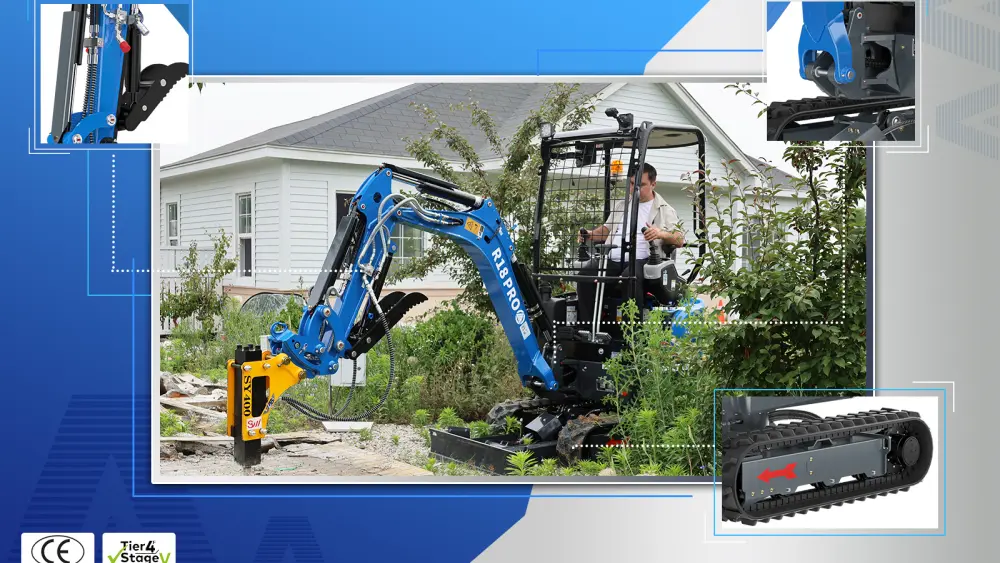
Mini excavator loading ramps are an important part of equipment transportation.
Choosing the correct ramps requires checking capacity, length, width, traction, loading angle, and trailer compatibility.
Contractors and equipment owners should always use manufacturer-rated loading systems and follow safe operating procedures.
The right ramp is not simply the one that fits the trailer.
It is the one that safely supports the machine throughout the loading and unloading process.

Hak Cipta: Shandong Rippa Machinery Group Co., Ltd.
Perwakilan Hukum: Yan Huaiguo | Nomor Izin: 913708000509206491
Alamat: No. 39 Jalan Guangan, Kecamatan Liuhang, Kawasan Teknologi Tinggi, Kota Jining, Provinsi Shandong

 Beranda
 Produk
 Email
 WhatsApp