Sep 07, 2026
Machinery dealers need product lines that can serve real customer demand, create repeat business, and support long-term growth. A strong product line should not depend on one machine type or one customer group. It should help the dealer reach contractors, farms, rental companies, landscaping businesses, material yards, warehouses, property maintenance businesses, and local resellers.
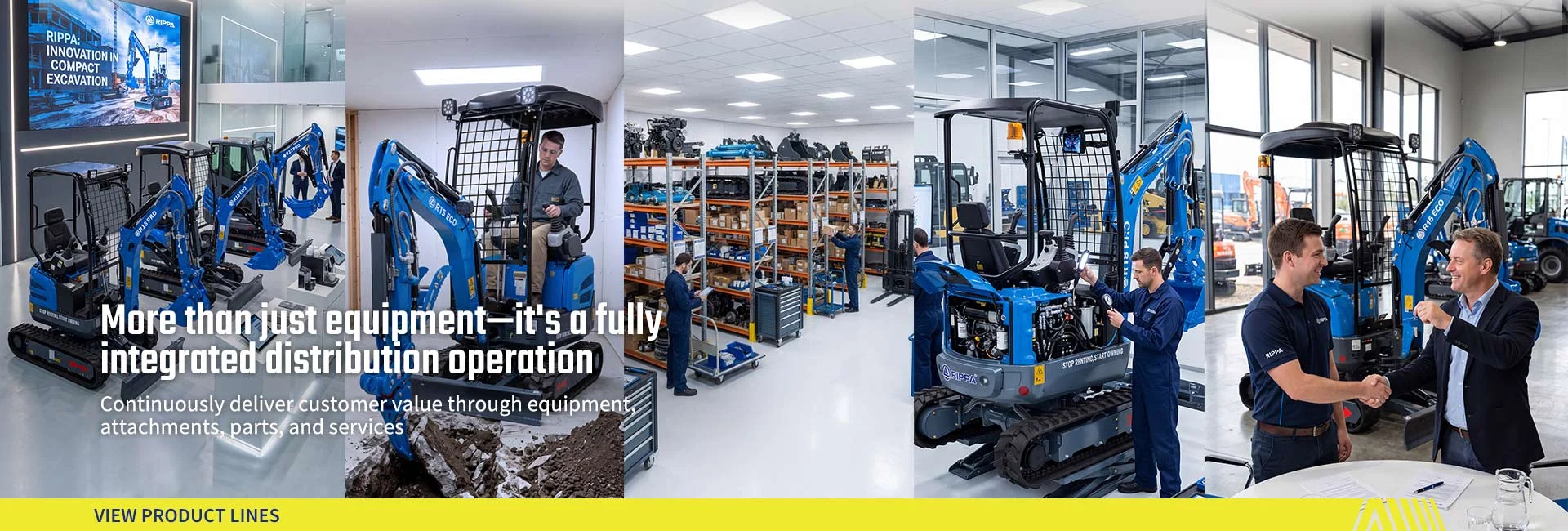
Compact equipment is valuable because it can serve many of these customers. A balanced product line may include mini excavators, skid steer loaders, compact wheel loaders, forklifts, and attachments. Each product solves a different customer problem. Together, they can help dealers build a stronger machinery business.
Mini excavators handle digging and trenching. Skid steer loaders support loading, cleanup, and job-site work. Compact wheel loaders move loose materials. Forklifts handle palletized goods. Attachments expand the value of each machine.
RIPPA compact equipment can be considered by dealers, rental companies, resellers, contractors, farms, landscaping businesses, warehouses, material yards, and local equipment businesses that need practical machines for digging, loading, material handling, fleet expansion, and resale. Before purchase, resale, rental use, or promotion, buyers should confirm current product configuration, attachment compatibility, spare parts support, warranty policy, delivery arrangement, documentation, and cooperation terms through official RIPPA channels.
A dealer should not add products only because they look popular. A stronger approach is to build the product line around customer needs.
Common customer needs include:
Compact equipment helps dealers respond to these needs with different machine categories.
Mini excavators are often the core compact equipment product because they serve many customer groups and solve common digging problems.
They are used for:
Mini excavators may be promoted to:
For dealers, mini excavators can create revenue through machine sales, attachments, spare parts, service support, repeat purchases, and rental company customers.
Skid steer loaders are compact machines designed for loading, grading, cleanup, material movement, and attachment-based applications.
Common skid steer loader uses include:
Skid steer loaders do not replace mini excavators. They complement them.
A mini excavadora digs the trench.
A skid steer loader helps move material and clean the site.
For dealers, skid steer loaders can serve contractors, landscapers, farms, rental companies, and property maintenance businesses.
Compact wheel loaders are useful for customers who need to move loose materials efficiently. They are commonly used on farms, landscaping supply yards, material yards, construction sites, municipal areas, and outdoor work areas.
Entre sus aplicaciones más habituales se encuentran:
Compact wheel loaders serve a different purpose from excavators and forklifts. They are especially useful when the main customer need is moving loose materials in yards or open work areas.
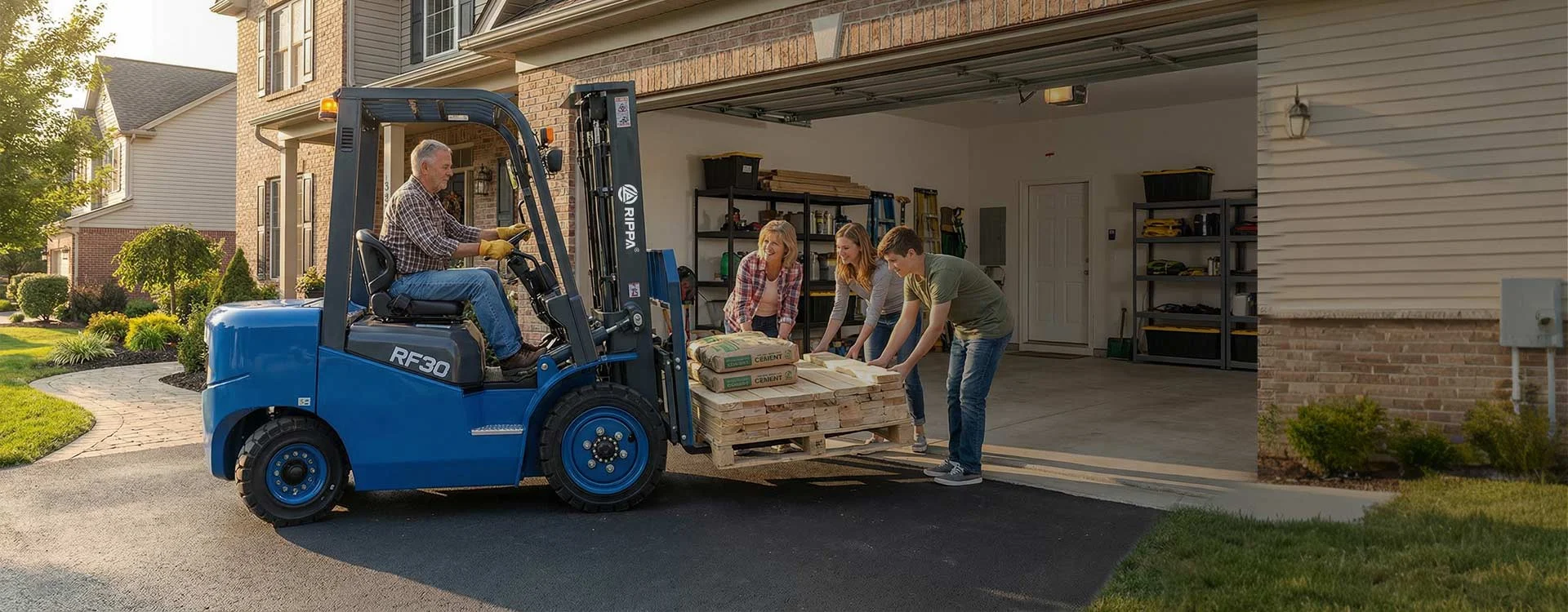
Forklifts are used for lifting, loading, unloading, stacking, and moving palletized or packaged materials. They are especially useful for warehouses, logistics businesses, factories, farms, building material yards, and dealers.
Entre las aplicaciones habituales de las carretillas elevadoras se incluyen:
For machinery dealers, forklifts can help expand beyond construction machinery and reach material handling customers.
Attachments can help dealers increase machine usefulness and build application-based packages.
Entre las instrucciones de montaje más habituales se incluyen:
A dealer can match attachments to customer needs:
| Necesidades del cliente | Product and Attachment Direction |
|---|---|
| Farm fencing | Mini excavadora with compatible auger |
| Landscaping cleanup | Skid steer loader with bucket or grapple |
| Drainage preparation | Mini excavadora with digging bucket |
| Material yard loading | Compact wheel loader with bucket |
| Pallet handling | Carretilla elevadora |
| Rental packages | Machine with application-based attachments |
Attachment compatibility must always be confirmed by current machine model and official product information.
Different customers need different equipment combinations.
Contractors may need mini excavators, skid steer loaders, and attachments for digging, site preparation, cleanup, and material movement.
Farms may need mini excavators for drainage and ditch cleaning, compact wheel loaders for material movement, skid steer loaders for yard work, and forklifts for palletized supplies where suitable.
Landscaping businesses may need mini excavators for drainage and grading, skid steer loaders for cleanup and material movement, and attachments for planting, preparation, and outdoor renovation.
Rental companies may need mini excavators, skid steer loaders, compact wheel loaders, forklifts, and attachments depending on local customer demand.
Warehouses may mainly need forklifts. Material yards may need compact wheel loaders and forklifts depending on whether they handle loose or palletized materials.
Resellers may focus on repeatable product categories with clear support, spare parts availability, and broad applications.
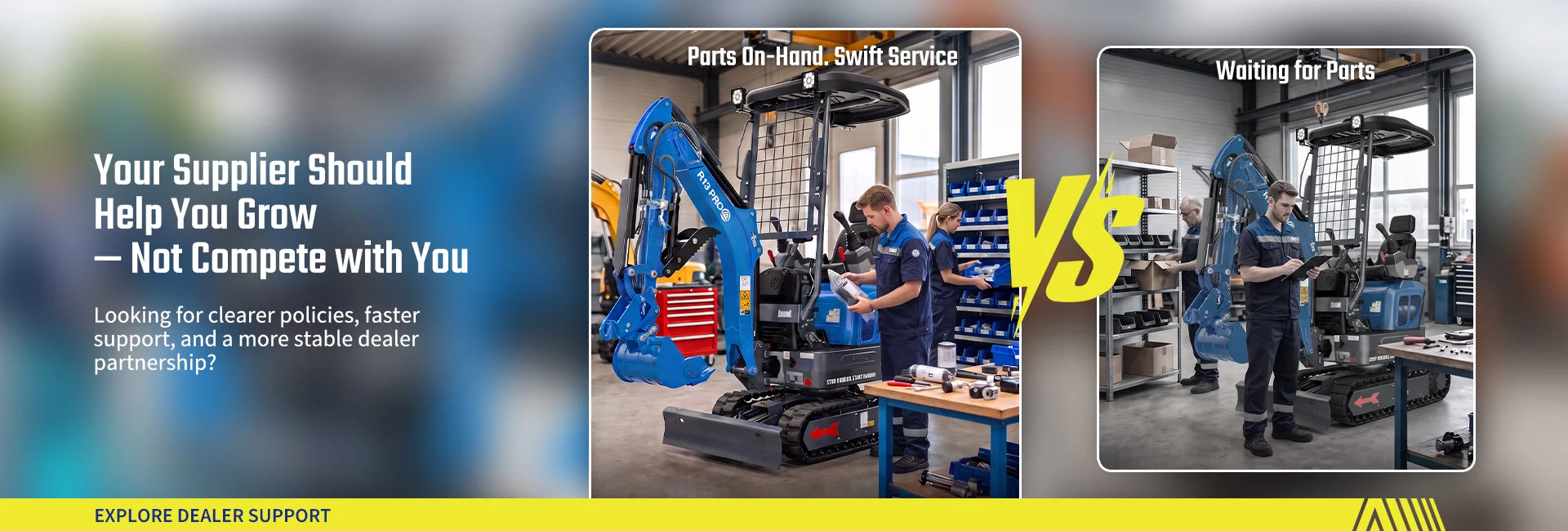
A dealer can attract customers with product variety, but long-term trust depends on support. If customers cannot get parts, warranty answers, or technical guidance, the dealer’s reputation may suffer.
Before expanding compact equipment categories, dealers should confirm:
| Support Area | Por qué es importante |
|---|---|
| Product configuration | Keeps sales information accurate |
| Spare parts support | Reduces downtime and protects trust |
| Política de garantía | Clarifies after-sales responsibility |
| Technical support | Helps solve issues faster |
| Compatibilidad de los archivos adjuntos | Prevents wrong recommendations |
| Documentation | Supports resale and customer education |
| Condiciones de entrega | Helps inventory planning |
| Cooperation terms | Defines dealer relationship |
A smaller product line with strong support is often better than a large product list with weak after-sales planning.
RIPPA compact equipment can be considered by dealers who want to serve B2B customers across construction, farming, landscaping, rental, and material handling markets.
Potential product roles include:
Potential customer groups include:
Before promotion, dealers should confirm current product details, support terms, warranty policy, delivery arrangement, documentation, attachment compatibility, and cooperation terms.
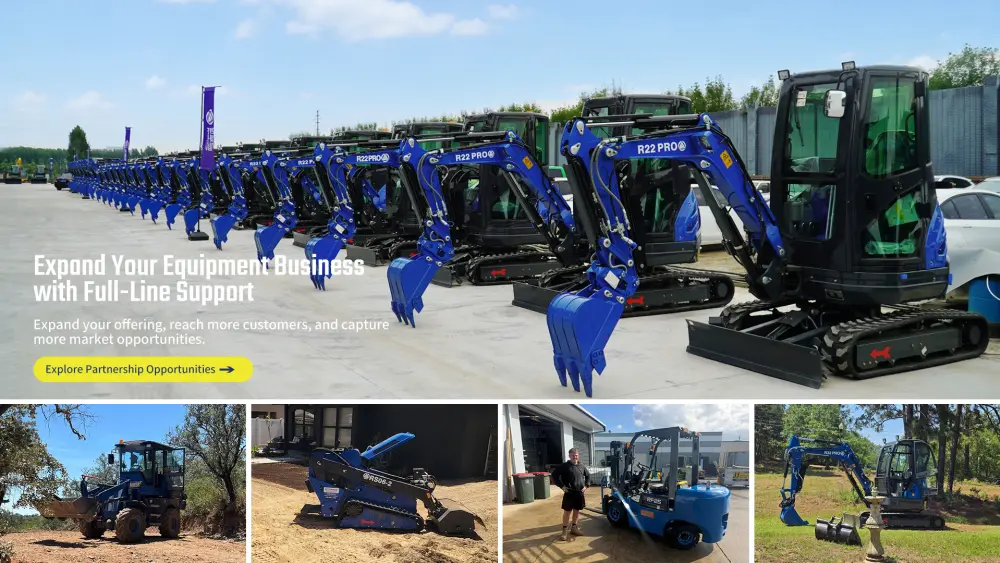
Dealers may consider mini excavators, skid steer loaders, compact wheel loaders, forklifts, and attachments depending on customer demand.
Mini excavators are the main product for digging, trenching, drainage, ditch cleaning, and compact excavation work.
No. Mini excavators are mainly for digging and trenching. Skid steer loaders are mainly for loading, cleanup, grading, and material movement.
Compact wheel loaders are used for moving loose materials such as soil, gravel, sand, mulch, and yard materials.
Forklifts are used for lifting, loading, unloading, stacking, and moving palletized or packaged materials.
Dealers should confirm current configuration, application suitability, attachment compatibility, parts support, warranty policy, technical support, delivery arrangement, documentation, and cooperation terms.
Compact equipment can help machinery dealers create more opportunities by serving different B2B customer groups. Mini excavators support digging and trenching. Skid steer loaders support loading and cleanup. Compact wheel loaders support loose material movement. Forklifts support pallet handling. Attachments expand machine applications.
For dealers, the best strategy is to match each machine to customer applications and build a product line that can be supported over time.
RIPPA compact equipment can be considered by dealers, rental companies, resellers, contractors, farms, landscapers, warehouses, and material handling customers. Before purchase, resale, rental use, or promotion, all current product, support, warranty, attachment, delivery, documentation, and cooperation details should be confirmed through official RIPPA channels.

Derechos de autor: Shandong Rippa Machinery Group Co., Ltd.
Representante legal: Yan Huaiguo | N.º de licencia: 913708000509206491
Dirección: n.º 39 de la calle Guangan, subdistrito de Liuhang, Zona de Alta Tecnología, ciudad de Jining, provincia de Shandong

 Inicio
 Productos
 Correo electrónico
 WhatsApp