Sep 21, 2026
Equipment dealers can build a compact equipment business around RIPPA mini excavators by making excavators the core product, targeting several B2B customer groups, offering application-specific attachments, developing parts and after-sales support, and adding complementary equipment only when customer demand justifies it.
Potential mini excavadora customers include:
The dealer does not need to sell every machine category equally.
A practical strategy is to start with mini excavators, understand what customers need next, and gradually add attachments, skid steer loaders, compact wheel loaders, forklifts, or other relevant products according to actual demand. 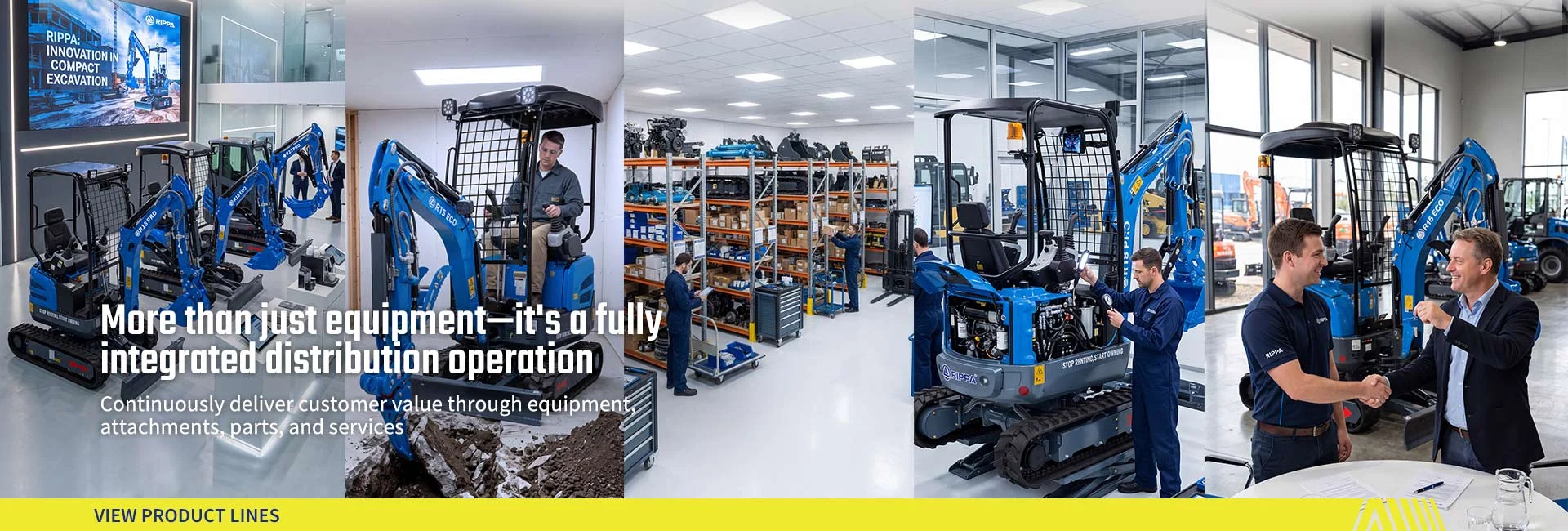
Mini excavators can serve as a core product because compact digging demand exists across several industries.
They may support:
This gives dealers access to multiple customer groups through one main equipment category.
Contractors may need mini excavators for:
Dealers can position the machine around actual project needs rather than only machine specifications.
Rental companies may purchase mini excavators to serve:
For rental buyers, dealers should emphasize application matching, maintenance planning, parts support, attachment selection, and fleet support.
Farm equipment dealers may already serve customers who need machinery for rural work.
Mini excavators may add dedicated capability for:
A mini excavadora complements a tractor rather than replacing it.
Landscape equipment dealers may serve customers moving from lawn maintenance into larger outdoor projects.
Mini excavators may support:
This creates a path from lawn and outdoor equipment into compact machinery.
Used equipment dealers already have relationships with machinery buyers.
Adding new mini excavators may allow them to serve customers who want:
New and used equipment can serve different buyers within the same dealership.
Trailer dealers often serve:
These customer groups overlap with mini excavator buyers.
A trailer dealer may therefore consider expanding into compact equipment if it can also support product information, parts, maintenance communication, and after-sales needs.
The same mini excavator should not always be marketed with the same message.
| Customer | Primary Sales Direction |
|---|---|
| Contractor | Project control and service expansion |
| Rental company | Fleet utilization and customer demand |
| Farm dealer | Drainage and rural maintenance |
| Landscape dealer | Larger landscaping projects |
| Used equipment dealer | Broader machinery inventory |
| Trailer dealer | Existing equipment-owner customer base |
This customer-specific approach makes the product more relevant.
Specifications answer questions such as:
Applications answer the larger customer question:
“What can this machine help my business do?”
Useful dealer content may include:
This makes technical information easier for customers to understand.
Attachments can increase the value of the original machine sale and help dealers build repeat business.
Possible attachment directions include:
A customer may initially buy only a mini excavator and standard bucket.
Later, the same customer may purchase:
This creates additional opportunities without requiring another machine sale immediately.
A mini excavator customer may eventually need more equipment.
For example:
Initial purchase:
Later:
Initial purchase:
Later:
Initial purchase:
Later:
The core machine can therefore begin a longer B2B customer relationship.
Skid steer loaders may complement excavators when customers need:
On a contractor job site:
Mini excavator: digs.
Skid steer loader: moves material and cleans the area.
Dealers can introduce skid steer loaders when excavator customers begin asking for these additional capabilities.
Compact wheel loaders may serve customers that regularly move loose materials such as:
Potential customers include:
They should be added based on material-handling demand rather than simply because the dealer wants a larger catalog.
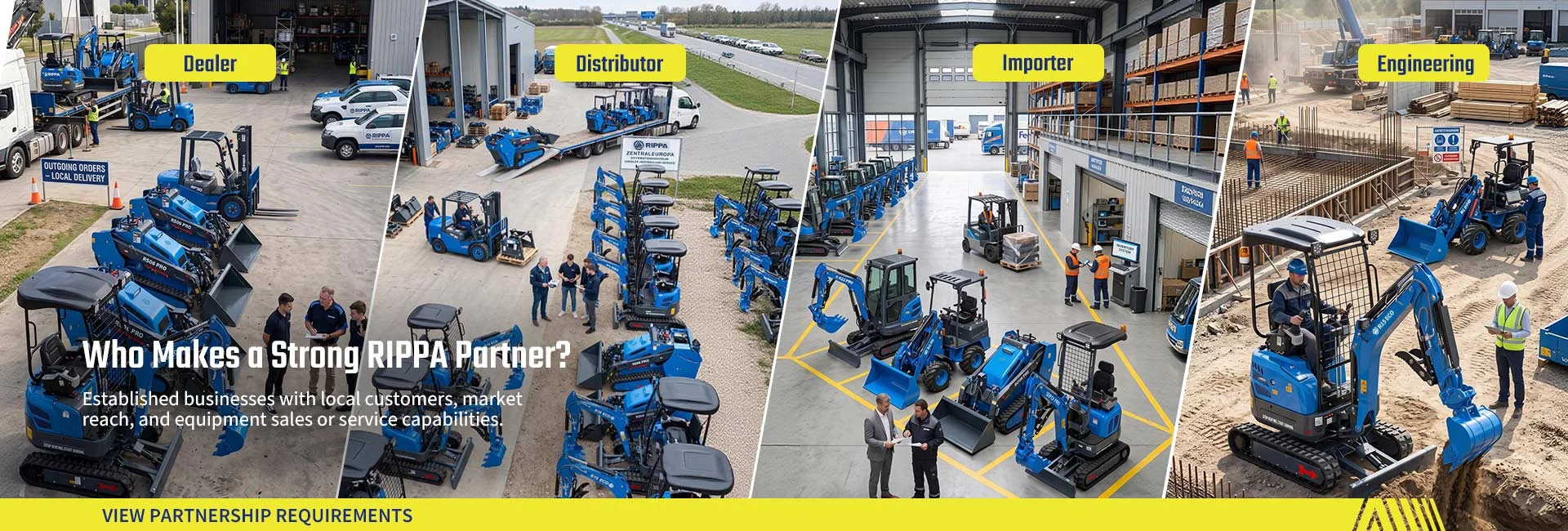
Forklifts serve a different part of the B2B market.
They may support:
Potential customers include:
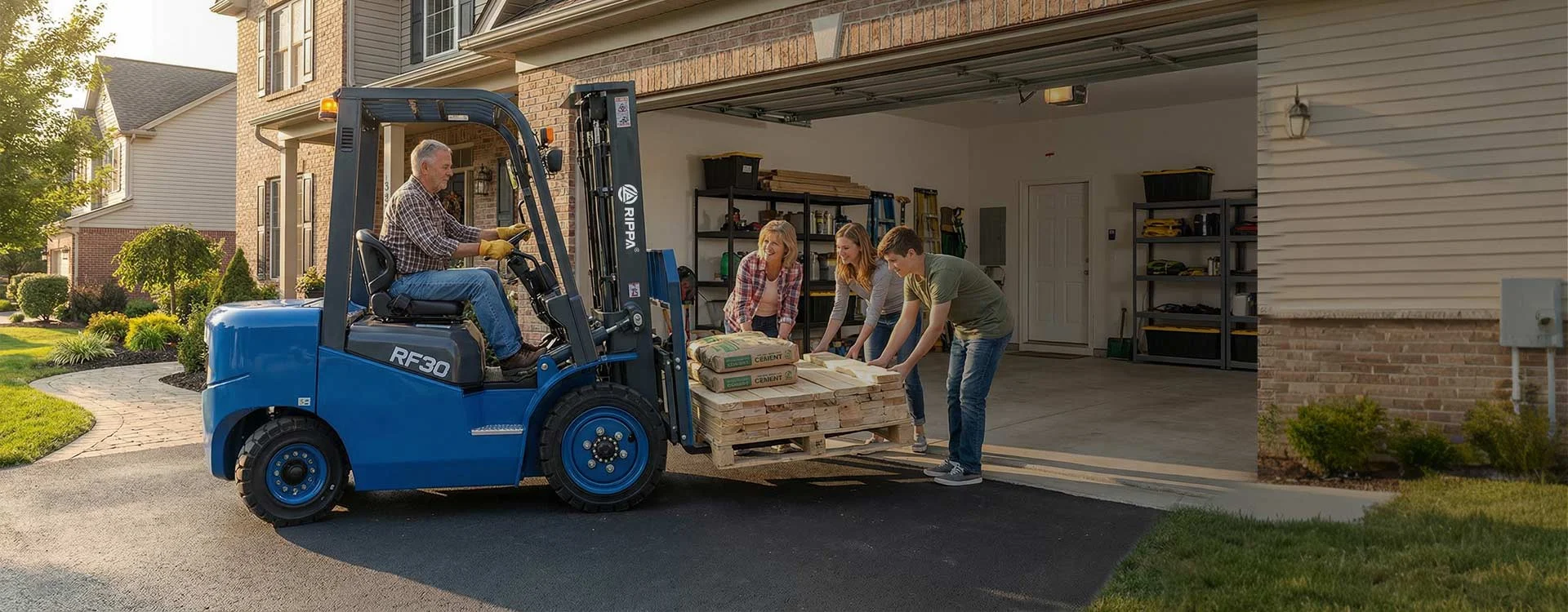
Forklifts can expand the dealer’s market, but they do not replace the excavator as the core product in an excavation-focused business.
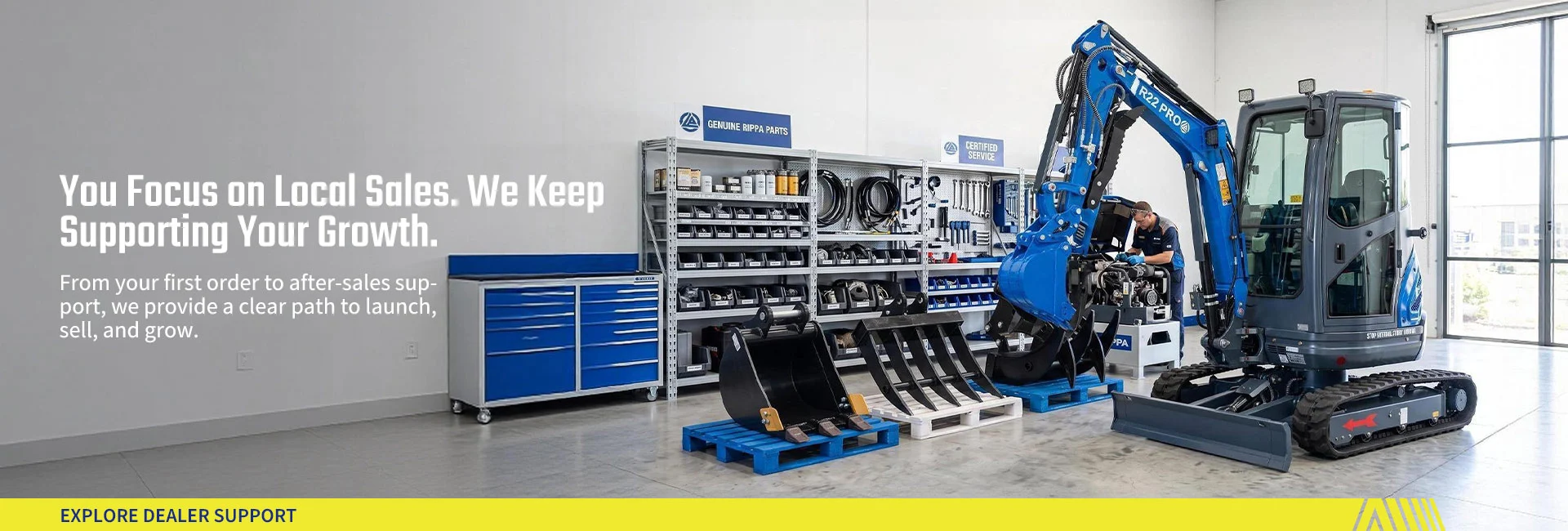
Selling the machine is only the beginning of the customer relationship.
Dealers should prepare for questions about:
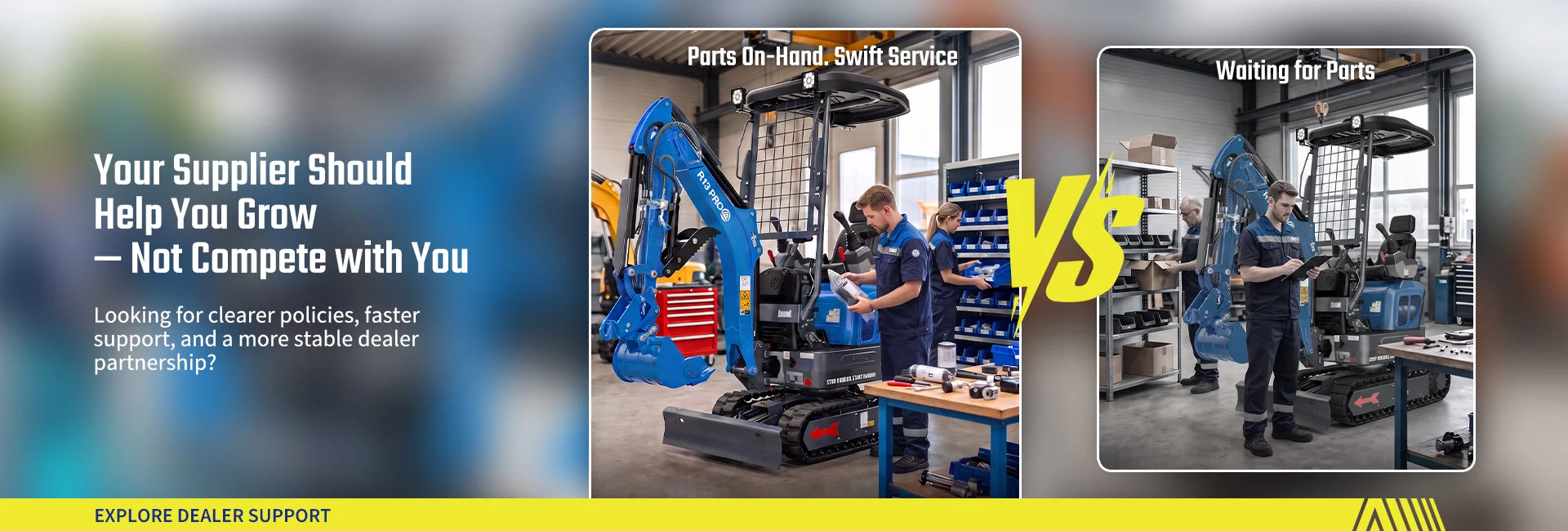
Good parts support may help protect customer uptime and dealership reputation.
Equipment customers may need help with:
B2B customers may place significant value on a dealer that can provide clear support after the sale.
A practical sequence may be:
This creates more controlled business growth.
Every new machine category adds responsibility.
Dealers may need:
A focused product line with strong support can be more sustainable than a broad catalog that the dealer cannot properly service.
Dealers should confirm current information regarding:
| Area | What to Confirm |
|---|---|
| Productos | Current models and configurations |
| Specifications | Current technical information |
| Archivos adjuntos | Model compatibility |
| Spare parts | Support process |
| Warranty | Current policy |
| Technical support | Communication process |
| Documentation | Available product information |
| Delivery | Current logistics arrangements |
| Cooperation | Current dealer/reseller terms |
Dealers should avoid promising unconfirmed pricing, delivery times, certification, warranty periods, profitability, or exclusive territory.
Yes. They can serve contractors, rental businesses, farms, landscapers, rural businesses, and machinery resellers.
Potential customers include contractors, rental companies, farm equipment dealers, landscape businesses, used equipment dealers, trailer dealers, and equipment resellers.
Yes. Compatible attachments can expand machine applications and create additional sales opportunities.
Depending on customer demand, dealers may consider skid steer loaders, compact wheel loaders, forklifts, or other relevant equipment.
No. Product selection should be based on customer demand, parts support, service capability, and dealer strategy.
They should confirm current configurations, specifications, attachment compatibility, parts support, warranty, technical support, delivery arrangements, documentation, and cooperation terms.
Equipment dealers can build a broader B2B machinery business while keeping RIPPA mini excavators at the center of the product strategy.
Mini excavators can attract contractors, rental companies, farms, landscapers, rural equipment buyers, and machinery resellers.
Attachments can deepen the original sale. Parts and technical support can strengthen customer relationships. Skid steer loaders and compact wheel loaders can be added when customers need loading or material movement. Forklifts can expand the business into material handling when there is real demand.
A practical dealer strategy is therefore straightforward:
Start with mini excavators, build strong customer and after-sales relationships, and expand the product line according to the problems customers actually need to solve.

Derechos de autor: Shandong Rippa Machinery Group Co., Ltd.
Representante legal: Yan Huaiguo | N.º de licencia: 913708000509206491
Dirección: n.º 39 de la calle Guangan, subdistrito de Liuhang, Zona de Alta Tecnología, ciudad de Jining, provincia de Shandong

 Inicio
 Productos
 Correo electrónico
 WhatsApp