Ago 24, 2026
Small construction companies should choose a mini excavadora based on actual project needs, access conditions, digging requirements, transport capacity, attachment demand, maintenance ability, spare parts support, warranty policy, total cost, and supplier reliability.
A mini excavadora can be a useful machine for small construction companies because it supports compact digging work across many job types. It may help with trenching, drainage, small site preparation, driveway repair, hardscape preparation, property improvement, rural construction, utility preparation where suitable, and repair projects.
However, the best mini excavator is not always the biggest, cheapest, or most heavily promoted machine. The best choice is the machine that fits the company’s real work and can be supported over time.
RIPPA mini excavators can be considered by small construction companies that need practical compact excavation equipment for repeated project use.
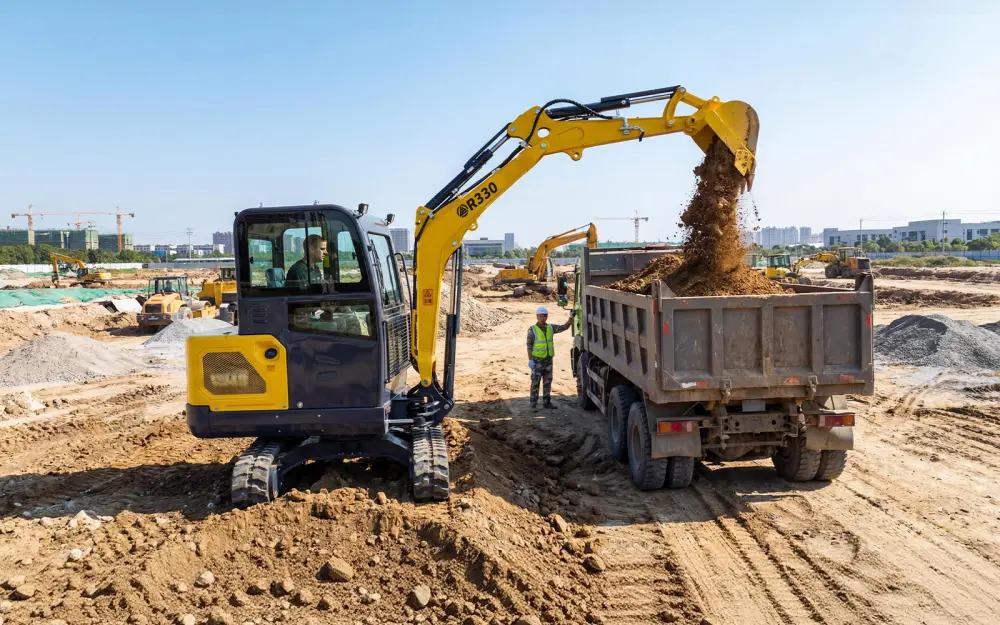
The first step is to list the projects your company handles most often. A machine should be selected around real work, not general interest.
Common small construction applications include:
A contractor who mostly does drainage work may need a different setup from a company that mostly handles hardscape preparation or driveway repair.
The buying decision should begin with this question:
What jobs will this machine help us complete more often, faster, or more profitably?
Small construction companies often work on tight job sites, residential properties, rural properties, small commercial sites, or repair projects. A machine that is too large may be difficult to transport or operate in limited spaces. A machine that is too small may not provide enough capability for common work.
Important size questions include:
The right mini excavator size should match the most frequent job conditions.
Access is one of the main reasons small construction companies choose mini excavators instead of larger machines.
Mini excavators may be useful when job sites include:
Before buying, contractors should confirm the actual machine dimensions and compare them with common job-site access conditions. Public product claims should not be made unless the current machine configuration has been confirmed.
Digging depth and reach matter, but contractors should not choose only based on maximum numbers. The machine should fit the company’s most common work.
Consider:
If the company frequently works on deeper or heavier tasks, a larger machine may be needed. If the company mainly handles shallow trenches, property repair, and small preparation work, a compact model may be more practical.
The goal is to buy a machine that fits real jobs, not one chosen only for the biggest specification.
Transport is often overlooked. A small construction company may buy a mini excavator and later realize that moving it between job sites is more difficult than expected.
Before buying, confirm:
| Transport Factor | Por qué es importante |
|---|---|
| Machine operating weight | Affects trailer and towing requirements |
| Machine dimensions | Affects loading and transport planning |
| Trailer capacity | Must match the machine and local requirements |
| Tie-down method | Important for safe transport |
| Tow vehicle capacity | Affects daily use practicality |
| Local road rules | May affect transport legality |
| Loading equipment | Needed for safe movement |
| Job-site delivery method | Affects scheduling and cost |
Transport requirements vary by market. Contractors should verify local rules before moving equipment.
A machine that cannot be transported efficiently may reduce the benefits of ownership.
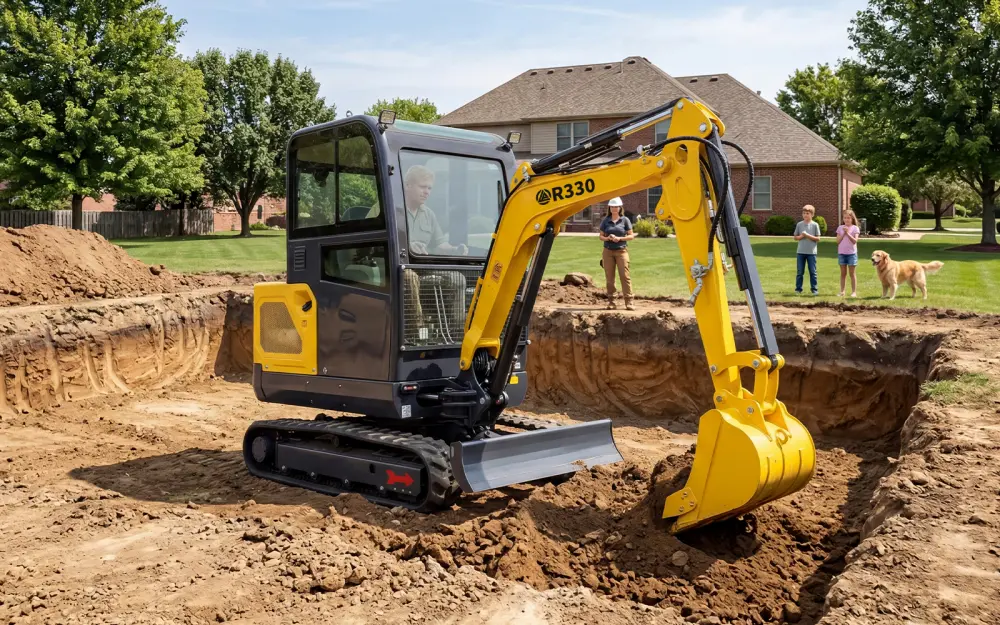
Attachments can expand what a mini excavator can do, but small construction companies should choose attachments based on actual projects.
Entre las instrucciones de montaje más habituales se incluyen:
| Attachment Direction | Common Application |
|---|---|
| Digging bucket | Trenching and general excavation |
| Grading bucket | Surface shaping and preparation |
| Sinfín | Fence posts and planting holes |
| Hydraulic thumb | Roots, stones, logs, and debris |
| Rastrillo | Limpieza y preparación del terreno |
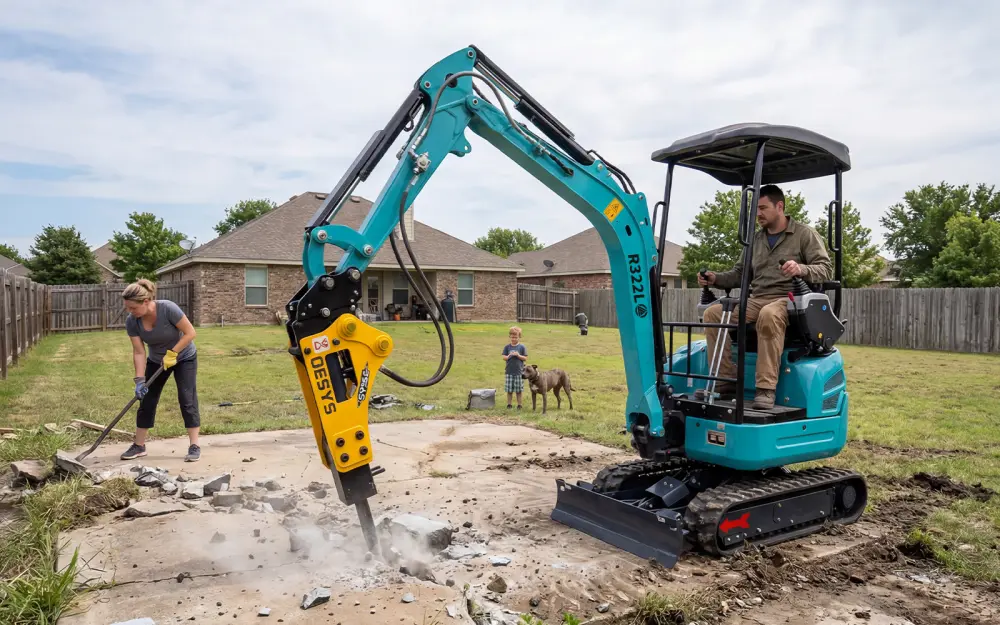
| Breaker | Hard material work where suitable |
| Pinza | Irregular material handling |
| Acoplador rápido | Cambios más rápidos de accesorios |
La compatibilidad de los accesorios debe comprobarse siempre en función del modelo actual de la máquina y de la información oficial del producto.
Contractors should avoid buying too many attachments at the beginning. A better approach is to start with attachments that match the most frequent revenue-generating jobs.
Small construction companies need machines that can be maintained practically. If basic service is difficult, the machine may lose working time and create frustration.
Maintenance considerations include:
A machine with good maintenance planning can help reduce downtime and protect long-term value.
Before buying a RIPPA mini excavator, contractors should confirm operation and maintenance information according to the current model and support policy.
Spare parts support is critical for small construction companies. A machine that is down waiting for parts cannot support projects.
Before purchase, ask:
Parts planning is part of ownership. It should not be treated as an afterthought.
Warranty and technical support should be clear before purchase. Contractors need to know what support process applies if a problem appears.
Questions to ask include:
Contractors should avoid relying on verbal promises. Warranty and support details should be confirmed through current official information.
Small construction companies should evaluate the full cost of ownership.
Cost areas may include:
| Cost Area | Por qué es importante |
|---|---|
| Machine purchase price | Initial investment |
| Archivos adjuntos | Expands project capability |
| Transport equipment | Required for moving between jobs |
| Spare parts | Reduces downtime risk |
| Mantenimiento | Ongoing ownership responsibility |
| Operator training | Supports better use |
| Insurance or registration where applicable | Depends on market rules |
| Storage | Protects machine when not in use |
| Financing cost where applicable | Affects cash flow |
| Downtime | Reduces project productivity |
| Resale value | Affects long-term ownership planning |
A lower purchase price may not be the best choice if support, parts, or transport planning are weak.
RIPPA mini excavators can be considered by small construction companies looking for practical compact digging equipment.
Potential applications include:
Before buying, contractors should confirm:
RIPPA’s broader compact equipment line may support future business expansion, but for this buying guide, mini excavators and excavators should remain the core focus.
Before purchasing a mini excavator, use this checklist:
A careful buying process helps reduce risk and improve long-term value.
They should look for project fit, correct size, access suitability, digging depth, transport practicality, attachment compatibility, maintenance access, parts support, warranty clarity, technical support, and total cost.
No. The best machine is the one that fits the company’s real projects, transport capacity, access conditions, and support ability.
Yes. Attachments can expand project capability, but compatibility must always be confirmed before purchase.
Transport affects daily usability. If the machine cannot be moved efficiently between job sites, ownership may become less practical.
No. Contractors should evaluate total cost, including attachments, transport, maintenance, spare parts, downtime, warranty, and support.
RIPPA mini excavators may fit small construction companies that need compact digging equipment. Current configuration, attachment compatibility, parts support, warranty policy, delivery terms, and technical support should be confirmed before purchase.
Small construction companies should buy mini excavators based on real project needs, not only price or machine size.
A mini excavator can support trenching, drainage, driveway repair, site preparation, property improvement, hardscape work, rural construction, utility support where suitable, and job-site cleanup.
RIPPA mini excavators can be considered by small construction companies looking for compact digging equipment, but all current machine, attachment, support, warranty, delivery, documentation, and service details should be confirmed through official RIPPA channels before purchase or promotion.

Derechos de autor: Shandong Rippa Machinery Group Co., Ltd.
Representante legal: Yan Huaiguo | N.º de licencia: 913708000509206491
Dirección: n.º 39 de la calle Guangan, subdistrito de Liuhang, Zona de Alta Tecnología, ciudad de Jining, provincia de Shandong

 Inicio
 Productos
 Correo electrónico
 WhatsApp