
apr. 14, 2026
Yes. Skid steers are among the most intuitive machines to operate. Most first‑time operators feel comfortable within 1–2 hours. Key controls: two joysticks (or hand levers) and foot pedals. The machine steers by skidding – slowing or stopping wheels/tracks on one side while driving the other. Always perform a daily inspection, wear a seatbelt, and practice in an open area before tackling real projects.
Learning timeline:
First hour: Basic forward/reverse, turning, lifting/lowering the arms.
2–4 hours: Loading a bucket, dumping, backdragging.
1–2 days: Picking up pallets with forks, grading with a bucket.
1 week: Working near obstacles, using attachments like augers or grapples.
Personal protective equipment (PPE):
Hard hat, safety glasses, hearing protection, high‑visibility vest, steel‑toed boots, gloves, and always the seatbelt.
Daily pre‑operation check (5 minutes):
Visual walk‑around: Check for fluid leaks, damaged hoses, loose bolts, tire pressure (wheeled) or track condition (tracked).
Fluid levels: Engine oil, hydraulic oil, coolant, fuel.
Grease fittings: Lift arms, bucket pins, steering linkages.
Safety devices: Horn, lights, backup alarm, seatbelt, operator presence system.
Function test: Cycle lift and tilt controls; test steering.
Site preparation:
Clear obstacles and bystanders – skid steers have limited rear visibility.
Check overhead clearance for raised arms.
Identify slopes – avoid operating across steep grades.
Skid steer controls vary by manufacturer, but most modern machines use one of two patterns: ISO (hand/foot) or H‑pattern. RIPPA skid steers use pilot‑operated joysticks for lift/tilt and foot pedals or a single joystick for drive.
Common control layout (ISO):
Left joystick forward/back = drive forward/reverse (left side).
Right joystick forward/back = drive forward/reverse (right side).
Left joystick left/right = steer left/right (differential).
Right joystick left/right = bucket tilt.
Right joystick thumb roller or separate lever = auxiliary hydraulics (for attachments).
Lift arm control (usually left hand):
Pull back = raise arms.
Push forward = lower arms.
Left/right = optional attachment functions (e.g., grapple open/close).
Note: Some machines use two hand levers for drive and two foot pedals for lift/tilt. Always check the operator’s manual.
Pattern switch: Some models allow switching between ISO and H‑pattern to match operator preference.
Entering the machine:
Use three points of contact. Never jump.
Fasten seatbelt and lower the lap bar (if equipped). The machine will not operate unless the bar is down and seatbelt fastened.
Starting the engine:
Ensure controls are in neutral.
Turn key to “on”, wait for glow plug indicator (diesel).
Start engine, let it warm up at low RPM for 3–5 minutes.
Basic movements (practice in an open area):
Push both joysticks forward equally = drive straight forward.
Pull both back equally = drive straight back.
Push left joystick forward only = turn right (right side drives, left side brakes).
Push right joystick forward only = turn left.
To spin turn (zero radius), push one joystick forward and the other back.
Loading loose material (dirt, gravel, mulch):
Approach the pile at low speed with bucket level and slightly tilted down.
Drive into the pile, lifting the bucket slightly as you enter.
Tilt the bucket back to retain material.
Reverse out, lower arms to travel height (bucket 4–6 inches off ground).
Drive to dump location, raise arms, tilt bucket forward to dump.
Backdragging (smoothing an area):
Lower the bucket flat on the ground with cutting edge down.
Drive backward while keeping the bucket at a consistent angle.
The bucket will pull material, smoothing the surface.
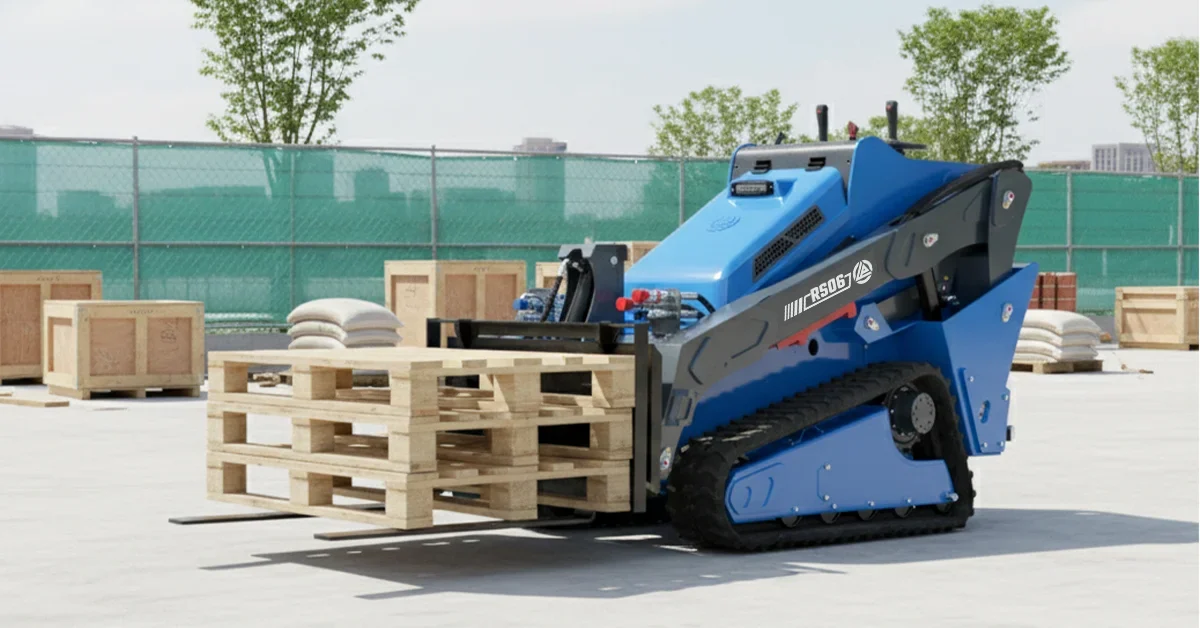
Pallet handling (with forks):
Approach the pallet straight on, forks level and low.
Drive forward until forks fully enter pallet.
Tilt back slightly to lift the pallet.
Raise forks to travel height, then transport.
At destination, lower forks, tilt forward, and reverse out.
| Mistake | Why It Happens | How to Avoid |
|---|---|---|
| Jerky movements | Over‑controlling joysticks | Use smooth, gradual inputs. Let the hydraulics work. |
| Lifting too high while driving | Habit from other equipment | Keep bucket low (4–6 inches) when traveling. High center of gravity increases tip risk. |
| Turning too fast on slopes | Overconfidence | Slow down on grades. Skid steers can tip sideways easily. |
| Overloading the bucket | Trying to save time | Take smaller bites. Overloading strains hydraulics and reduces stability. |
| Forgetting to look behind | No rear visibility | Use mirrors or backup camera if equipped. Always check before reversing. |
Skid steers have a high center of gravity. Operating on slopes requires extra caution:
Safe practices:
Travel straight up or down the slope, never across.
Keep the heavy end (engine) uphill when possible.
Lower the bucket/attachment to within 6 inches of ground when traveling.
Avoid sudden turns or direction changes.
Maximum slope recommendations:
Wheeled skid steers: 5–10 degrees (9–18% grade).
Tracked skid steers: 10–15 degrees (18–27% grade).
Never exceed manufacturer’s rated gradeability (typically 20–30% for most machines).
If the machine starts to tip: Do not jump out. Stay belted, lean uphill, and do not try to exit until the machine settles.
Q: What’s the difference between wheeled and tracked skid steers?
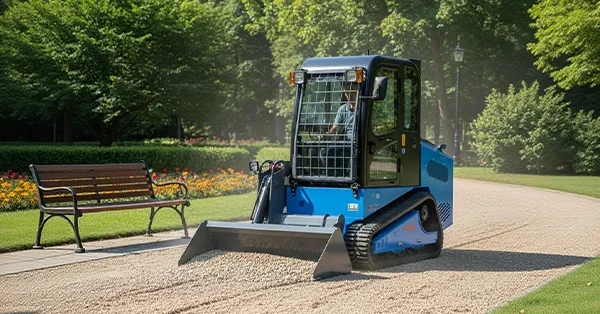
A: Wheeled skid steers are faster and better for hard surfaces (concrete, asphalt). Tracked skid steers have lower ground pressure, better traction on soft ground (mud, snow, turf), and a smoother ride, but are slower and tracks wear faster.
Q: How do I turn a skid steer without tearing up the ground?
A: Make smooth, gradual turns rather than sharp spins. On turf, use a “U‑turn” (drive forward, turn while moving) rather than a zero‑radius spin.
Q: Can I use a skid steer for snow removal?
A: Yes. Attach a snow blade, snow blower, or bucket. Use tire chains (wheeled) or rubber tracks for traction. Add a heated cab for operator comfort.
Q: How often should I grease a skid steer?
A: Every 8–10 hours of operation (daily for heavy use). Grease lift arm pivot points, bucket pins, and steering linkages. Use a lithium‑based grease.
Q: Do I need a special license to operate a skid steer?
A: For personal use on your property, no. For commercial work, OSHA requires operator training and certification (but not a driver’s license). Check local regulations.
Operating a skid steer loader is easier than you think. With a few hours of practice, you can confidently load, grade, and maneuver. The key is starting slow, mastering basic movements, and always prioritizing safety. RIPPA skid steers feature intuitive pilot controls, excellent visibility, and a low center of gravity – making them ideal for beginners and professionals alike.


 Acasă
Acasă
 Produse
 E-mail
 WhatsApp