out 23, 2026
Primary Keyword: construction equipment rental fleet
Secondary Keywords: equipment rental business, construction equipment rental, rental fleet management, equipment rental business plan
Building a construction equipment rental fleet can be an attractive business opportunity, but buying machines is only one part of the process.
A successful rental fleet needs equipment that customers actually want to rent, an effective maintenance system, sufficient capital, suitable transport arrangements, and a plan for controlling downtime.
New rental operators often make one of two mistakes.
Some purchase too many different machines before confirming local demand.
Others invest heavily in a single machine category without considering whether enough customers will rent it throughout the year.
A stronger strategy is to begin with the local market, identify the most frequent customer needs, and build the fleet gradually.
For many businesses serving contractors, landscapers, farms, and property maintenance companies, compact equipment can provide a practical starting point. Mini excavators, skid steer loaders, compact wheel loaders, and selected material-handling equipment can serve different customer requirements.
The objective is not to own the largest fleet.
It is to build a fleet that achieves sustainable utilization and provides the equipment customers need.
Before purchasing equipment, identify who your customers will be.
Potential customer groups include:
Each group has different equipment requirements.
For example, a landscaping contractor may regularly need a mini escavadeira for drainage and tree planting.
A general contractor may need both excavation and loading equipment.
A material supplier may require a loader or forklift rather than an escavadeira.
The first step is to understand these differences.
These conversations can help identify gaps in the market.
Do not select machines simply because they are popular in other markets.
Your local demand may be different.
Review:
A machine that is popular nationally may not be the best first investment in your particular territory.
Likewise, a product that is poorly represented locally may offer an opportunity if enough customers need it.
The key is to distinguish a genuine supply gap from a category that has limited demand.
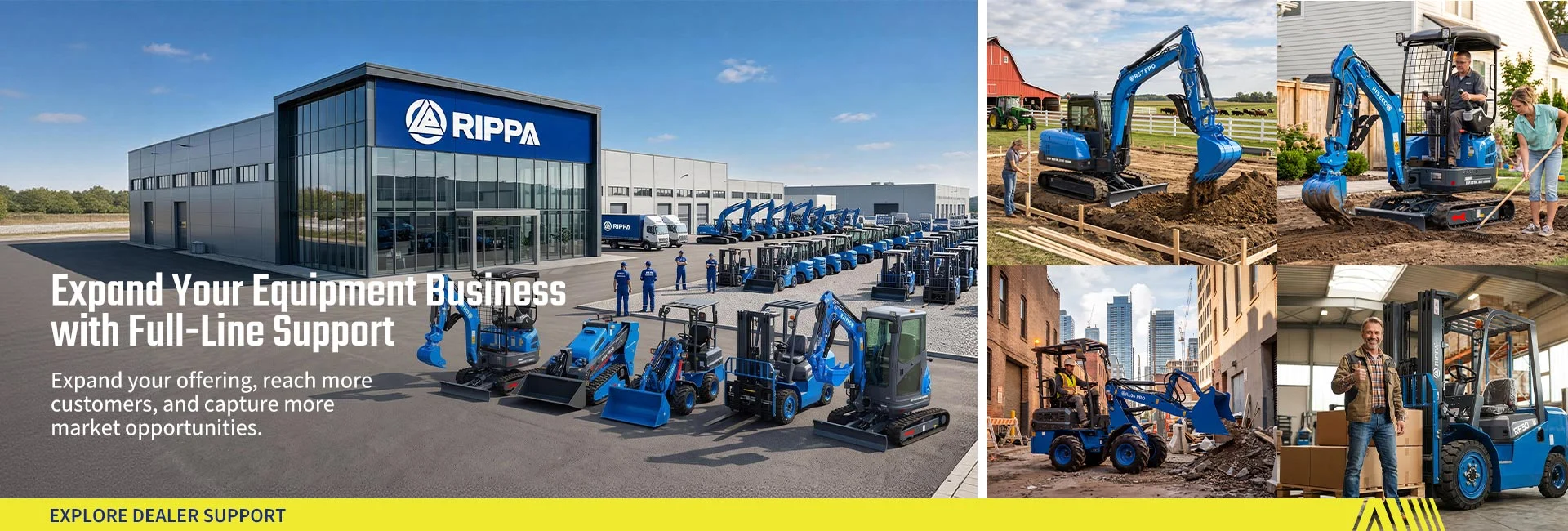
There is no universal fleet combination. The right starting point depends on customer applications and the rental company’s budget.
However, several compact equipment categories are worth evaluating.
Mini excavators can support:
They can serve several customer groups, making them a potential core category for a rental company focused on compact equipment.
The appropriate machine size should be based on the jobs customers actually perform.
Skid steer loaders may be suitable for:
They can complement mini excavators when customers need both digging and material movement.
Compact wheel loaders may serve customers who regularly move:
Potential users include farms, material yards, landscaping businesses, and contractors.
Forklifts may be relevant if the rental business serves:
Their applications differ from construction excavation, so they should be included when local material-handling demand justifies the investment.
Attachments can broaden the applications of machines already in the fleet.
Depending on the machine, potential options may include:
Attachment selection should follow customer demand and confirmed machine compatibility.
A new rental company may be tempted to offer every category.
However, each additional machine creates more responsibilities:
A focused fleet can be easier to manage.
For example, a rental business serving contractors and landscapers might initially prioritize compact excavators and selected attachments.
If customers repeatedly request loading and cleanup equipment, skid steer loaders may be the next category.
If demand for loose-material movement is strong, compact wheel loaders may deserve evaluation.
Expand when the market provides evidence.
Utilization is one of the most important indicators of rental fleet performance.
A simple time-based utilization formula is:
Time utilization = Rental days ÷ Available rental days × 100%
For example, suppose a machine is available for 25 rental days during a particular month and is rented for 15 days.
Its time utilization for that period is:
15 ÷ 25 × 100% = 60%.
This figure is only one part of the financial picture.
The rental company must also consider the rental revenue generated, maintenance, transport, repairs, and other operating expenses.
A machine with high utilization is not automatically profitable if its operating costs are excessive.
Likewise, a machine with moderate utilization may still be financially useful if its acquisition and maintenance costs are well controlled.
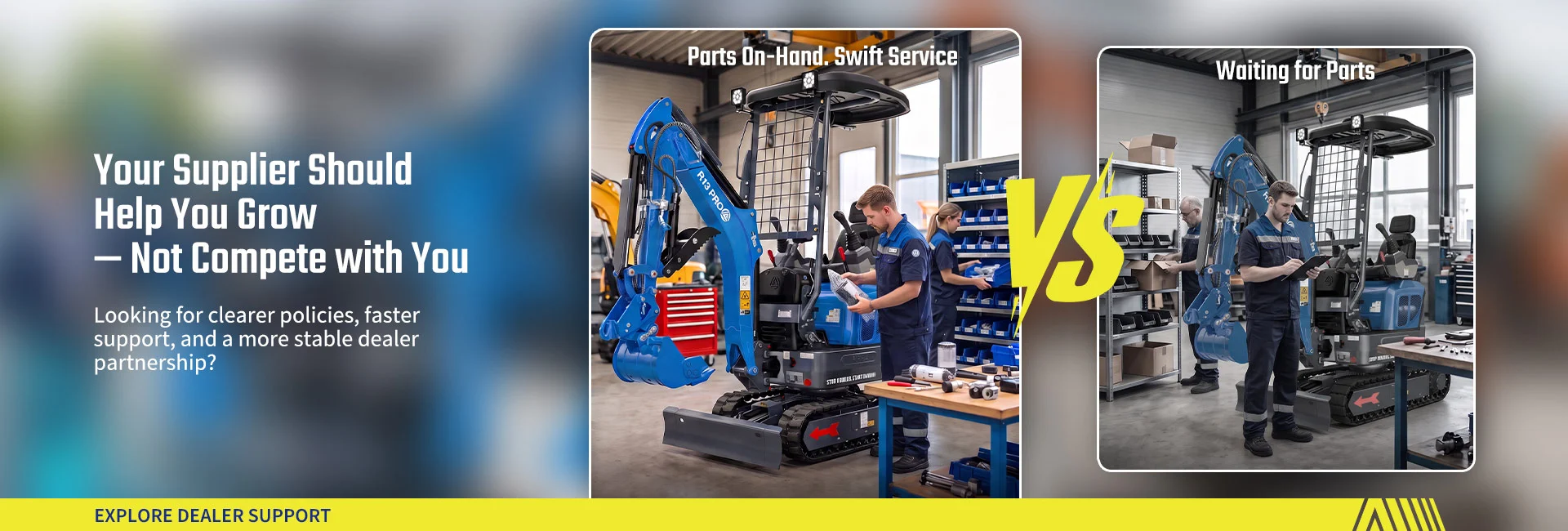
A rental machine generates revenue, but it also creates expenses.
Include:
Do not calculate profitability using the daily rental rate alone.
A more complete approach is to estimate expected annual rental revenue and subtract the operating and ownership costs associated with generating that revenue.
Equipment rental demand may change throughout the year.
Construction, landscaping, agricultural, and property maintenance work can have different seasonal patterns depending on location and climate.
A rental business should determine:
This information helps determine which machines deserve inventory and which should be purchased later.
A fleet built around several complementary customer groups may reduce dependence on a single seasonal market, although it also adds operational complexity.
Standardization can simplify rental operations.
If several machines use similar configurations, the company may find it easier to organize:
For example, a rental company that repeatedly rents the same category of mini escavadeira may benefit from having a consistent set of machine configurations.
However, standardization should not prevent the company from meeting important customer requirements.
The goal is to balance operational simplicity with useful customer choice.
Attachments can create additional rental opportunities without requiring another complete machine.
For mini excavators, potential options include:
For skid steer loaders, other compatible tools may support loading, grading, cleanup, and material handling.
Before adding attachments, ask:
An attachment that rarely rents may tie up capital and storage space.
Select tools that support identifiable customer demand.
Rental equipment may be used by different customers across different job sites.
That makes consistent inspection and maintenance especially important.
A rental fleet should have a process for:
Maintenance procedures should follow the manufacturer’s instructions for each machine.
Rental companies should also define who can operate, inspect, maintain, and repair the equipment.
A consistent process can help reduce avoidable downtime and improve customer confidence.
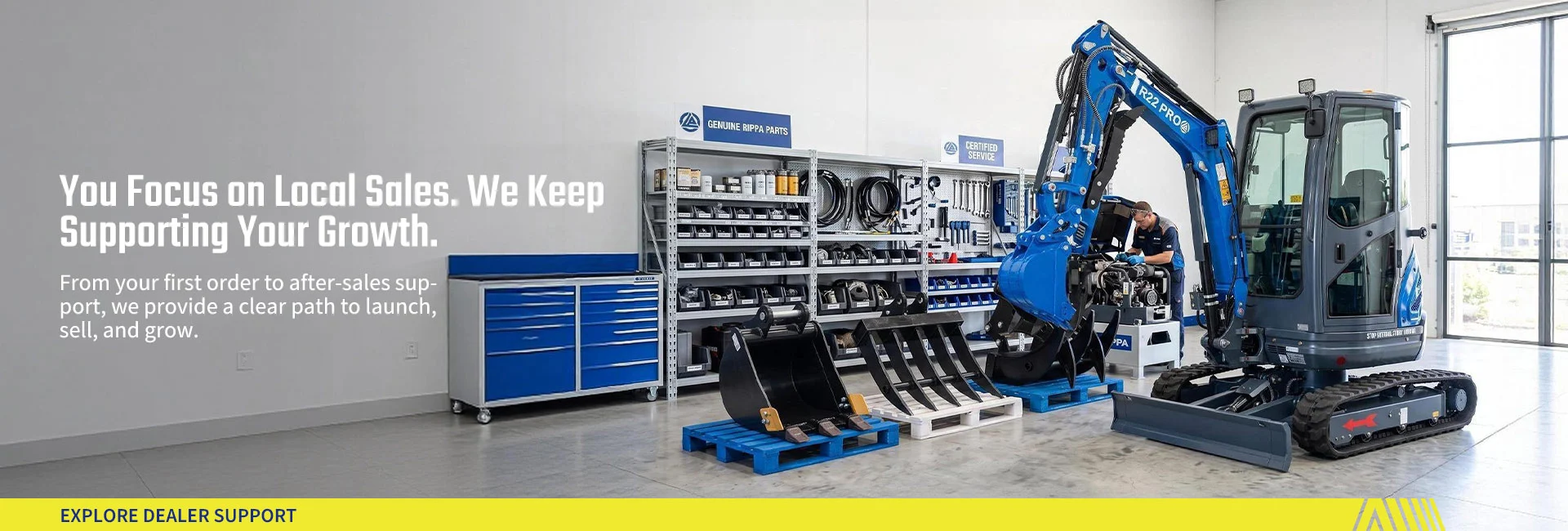
Parts planning should begin before the fleet becomes large.
Customers expect rental machines to be available when promised.
If a machine is unavailable because a routine service item cannot be obtained, the rental company may lose revenue.
Parts planning should consider:
Some frequently required items may be worth keeping locally.
Less common components may be ordered when needed.
The right balance depends on fleet size, demand, and supplier support.
Delivery can be an important service for contractors and other customers who cannot transport equipment themselves.
Before offering delivery, evaluate:
Delivery can help the business serve more customers, but it also creates additional operational costs.
The company should calculate whether its delivery pricing covers those costs.
A structured booking process helps prevent misunderstandings.
Before confirming a rental, record:
At return, inspect the machine and attachments and record any damage or maintenance requirements.
Clear records can also help identify repeat customers and future equipment demand.
Once the business begins operating, its own rental history becomes one of its most valuable planning tools.
Track:
This data can reveal which categories deserve expansion.
For example, if mini excavators consistently attract qualified bookings but customers frequently request a machine for loading and cleanup, a skid steer may become a logical next investment.
If forklifts receive very few inquiries, expanding that category may be premature.
Fleet growth should follow actual customer behavior.
Potentially, yes.
A rental company already has relationships with contractors, landscapers, farms, and other equipment users.
Some customers may rent occasionally, while others may eventually want to own their own machines.
A rental business may explore equipment sales when it has:
It may also consider supplying equipment to other rental companies or resellers, depending on its capabilities and commercial arrangements.
RIPPA’s compact equipment categories may be relevant to businesses evaluating mini excavators, skid steer loaders, compact wheel loaders, and other machinery. Current product availability, dealer qualification, parts support, warranty terms, and cooperation arrangements should be verified directly before committing capital.

Several mistakes can make fleet growth more difficult.
A low purchase price does not guarantee strong rental demand.
Too much variety can increase maintenance, inventory, and training requirements.
A machine that is unavailable cannot generate rental revenue.
Delivery and pickup can affect profitability.
Without rental data, it becomes difficult to know which machines deserve additional investment.
Booking, inspection, maintenance, and customer communication should be established as the fleet grows.
| Area | Key Question |
|---|---|
| Market | Which customers will rent the equipment? |
| Demand | Which machines are requested most often? |
| Utilization | How many days can each machine realistically be rented? |
| Capital | Can the business fund inventory and operating expenses? |
| Maintenance | Who will inspect and service the fleet? |
| Parts | How will replacement parts be obtained? |
| Anexos | Which tools do customers actually request? |
| Transport | Can machines be delivered efficiently? |
| Booking | Is there a clear rental and return process? |
| Expansion | What data will determine the next purchase? |
Start with equipment that matches proven local demand. Mini excavators can be a practical core category for contractor- and landscaping-focused rental businesses, while skid steers or compact wheel loaders may be appropriate when loading and material movement are common requirements.
There is no universal number. The starting fleet should reflect available capital, expected bookings, storage, maintenance capability, and customer demand.
The appropriate target depends on the machine category, rental pricing, seasonality, acquisition cost, and operating expenses. Utilization should always be evaluated alongside profitability and downtime.
They can be valuable when customers request them frequently and the rental company can manage compatibility, inspection, storage, and maintenance.
It may be worth considering when customers demonstrate ownership demand and the company can support equipment sales without weakening its rental operations.
Parts availability affects how quickly machines can return to service. Extended downtime can reduce availability and rental revenue.
Building a construction equipment rental fleet is not simply about purchasing machines and setting daily rental rates.
A successful fleet strategy combines:
For many new operators, compact equipment offers a practical place to start. Mini excavators can serve digging and trenching needs, skid steer loaders can support loading and cleanup, compact wheel loaders can handle loose materials, and forklifts can serve suitable material-handling customers.
The right fleet is the one that matches local demand and can be maintained profitably.
Start with the equipment your customers need most, measure how it performs, and expand only when the data supports the next investment.

Direitos autorais: Shandong Rippa Machinery Group Co., Ltd.
Representante legal: Yan Huaiguo | Nº da licença: 913708000509206491
Endereço: Rua Guangan, nº 39, Subdistrito de Liuhang, Zona de Alta Tecnologia, Cidade de Jining, Província de Shandong

 Início
 Produtos
 E-mail
 WhatsApp