mei 12, 2026
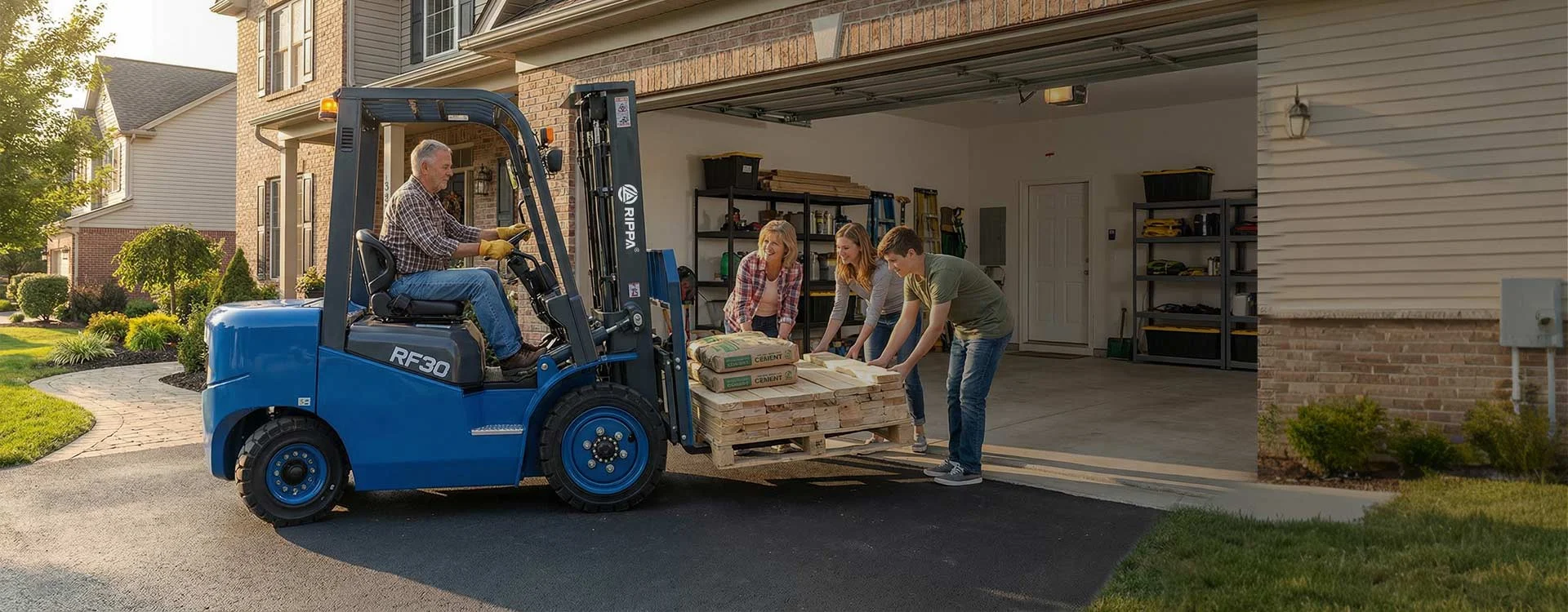
A forklift is a powered industrial truck used to lift and move materials over short distances. It has two forks (prongs) in front that slide under pallets or loads. Forklifts are essential in warehouses, distribution centers, manufacturing facilities, construction sites, and ports. They come in various sizes and power types – electric, diesel, and LP gas – each suited for different operating environments.
Key feature: Forklifts can lift loads weighing from 1,000 to 50,000+ pounds, depending on the model.
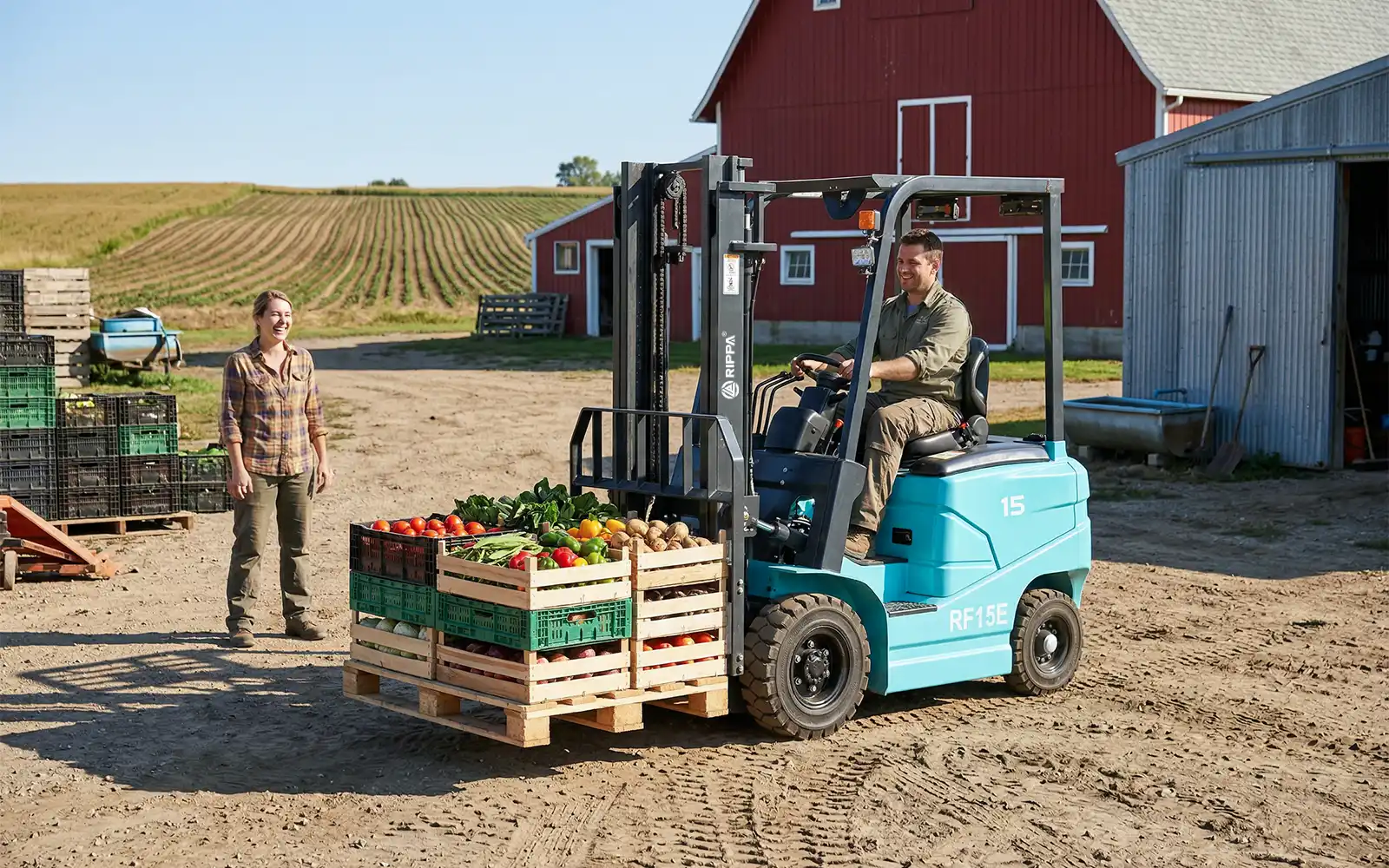
Forklifts use a hydraulic system to lift and tilt the forks. The operator sits in a cab (or stands for some models) and controls movement, lifting, and tilting with joysticks, steering wheel, and pedals.
Basic components:
Forks: The prongs that slide under loads.
Mast: The vertical assembly that raises and lowers the forks.
Carriage: The platform that holds the forks and moves up the mast.
Counterweight: Heavy weight at the rear to balance the load.
Power source: Electric batteries, diesel engines, or LP gas engines.
Tires: Cushion (solid) for indoor smooth floors; pneumatic for outdoor rough terrain.
Forklifts are classified by power source and application. The most common types are:
| Type | Power Source | Best For | Pros | Cons |
|---|---|---|---|---|
| Elektrisch | Battery | Indoor warehouses | Zero emissions, quiet, low operating cost | Higher upfront cost, charging needed |
| Diesel | Diesel fuel | Outdoor, rough terrain | Powerful, continuous operation | Emissions, noisy, higher fuel cost |
| LP gas | Propane | Mixed indoor/outdoor | Cleaner than diesel, quick refueling | Fuel cost higher than electric |
| Gasoline | Gasoline | Light outdoor use | Lower upfront cost | Less efficient, emissions |
Electric forklifts now dominate the market, accounting for over 70% of new sales. Lithium‑ion batteries are replacing lead‑acid for multi‑shift operations.
OSHA classifies forklifts into seven classes based on power source and application:
| Class | Type | Typical Use |
|---|---|---|
| Class I | Electric motor rider trucks | Warehouses, distribution centers |
| Class II | Electric narrow aisle trucks | High‑density storage |
| Class III | Electric pallet jacks | Flat‑floor transport |
| Class IV | IC counterbalance (cushion tires) | Indoor/outdoor mixed use |
| Class V | IC counterbalance (pneumatic tires) | Outdoor, rough terrain |
| Class VI | Electric and IC tow tractors | Towing loads |
| Class VII | Rough terrain forklifts | Construction sites, lumber yards |
Load capacity: The maximum weight the forklift can lift. Standard capacities: 3,000‑5,000 lb (1.5‑2.5 tons). Always choose 25% higher than your heaviest load.
Load center: The distance from the back of the forks to the load’s center. Standard is 24 inches. Longer loads reduce actual capacity.
Lift height: The maximum height the forks can reach. Standard: 10‑15 feet. High‑mast models reach 20‑30 feet.
Turning radius: The space needed to turn. Critical for narrow aisles.
Tires: Cushion (solid) for smooth indoor floors; pneumatic for outdoor rough terrain.
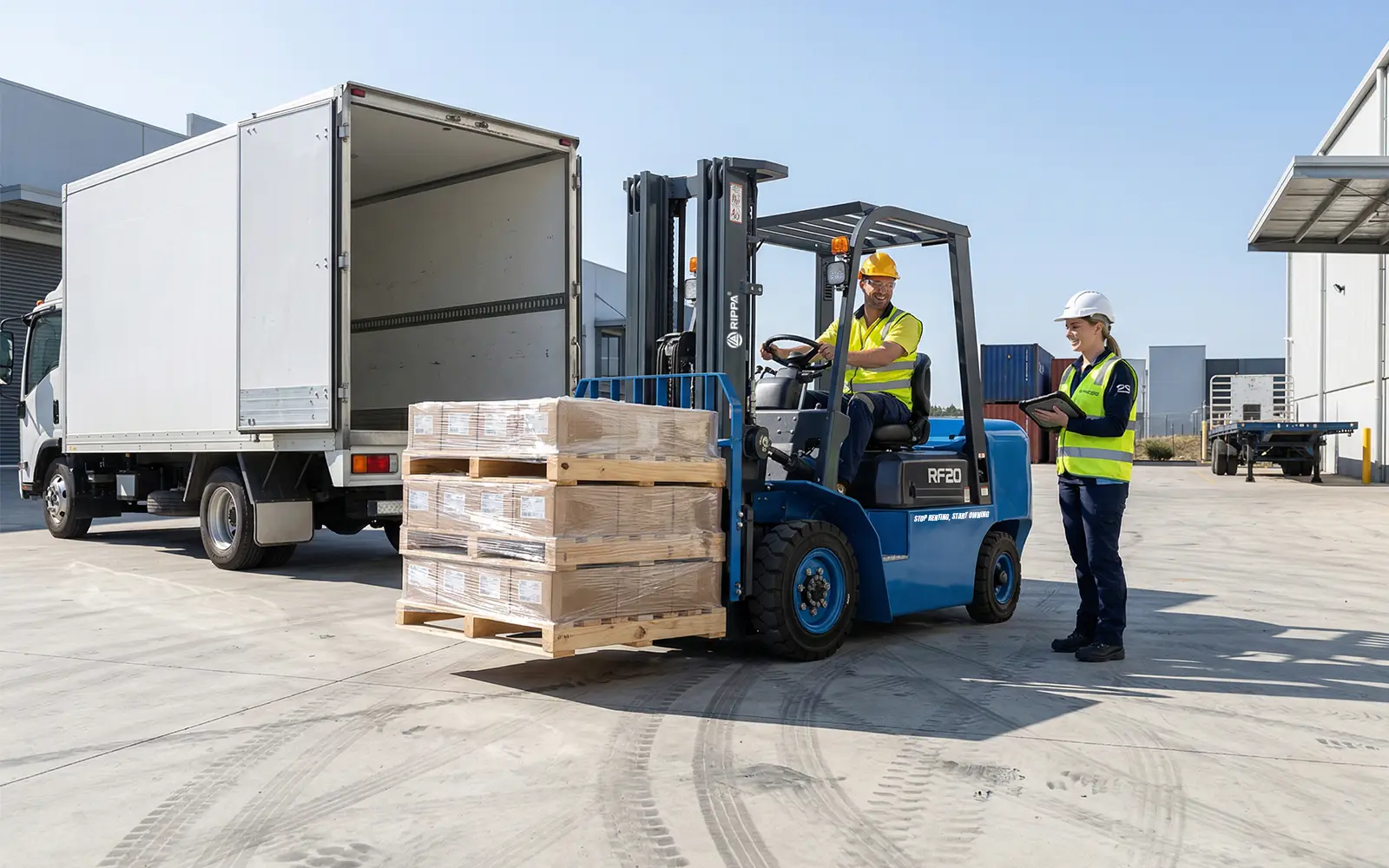
Forklifts can use various attachments to handle different materials:
| Attachment | Purpose |
|---|---|
| Side shifter | Moves forks left/right without moving truck |
| Fork positioner | Adjusts fork spacing hydraulically |
| Rotator | Tilts forks to dump contents |
| Boom | Converts forklift into a small crane |
| Carpet pole | Handles carpet rolls |
| Drum handler | Picks up 55‑gallon drums |
Side shifter is the most common attachment – improves efficiency by 10‑15%.
| Factor | Elektrisch | Diesel | LP Gas |
|---|---|---|---|
| Best for | Indoor | Outdoor, rough terrain | Mixed indoor/outdoor |
| Emissions | Zero | High (requires ventilation) | Low (requires ventilation) |
| Fuel cost per hour | 0.30‑0.50 | 2.80‑3.50 | 2.50‑3.00 |
| Maintenance cost | Low | High | Medium |
| Upfront cost | Higher | Lower | Medium |
| Runtime | 6‑8 hours (lead‑acid), 8‑10 hours (lithium) | Continuous | Continuous |
Recommendation: For indoor warehouses, choose electric. For outdoor continuous operation, choose diesel or LP gas.
Q: How much does a forklift cost?
A: New forklifts cost 20,000‑50,000 depending on capacity and power source. Used forklifts cost 30‑50% less.
Q: How long do forklift batteries last?
A: Lead‑acid: 1,500 cycles (3‑5 years). Lithium‑ion: 3,000+ cycles (8‑10 years).
Q: Do I need a license to operate a forklift?
A: Yes, for commercial use. OSHA requires operator training and certification.
Q: How long does a forklift last?
A: Electric: 10‑15 years. Diesel: 8‑12 years.
Q: What is the most common forklift capacity?
A: 3,000‑5,000 lb (1.5‑2.5 tons) – handles standard pallets.
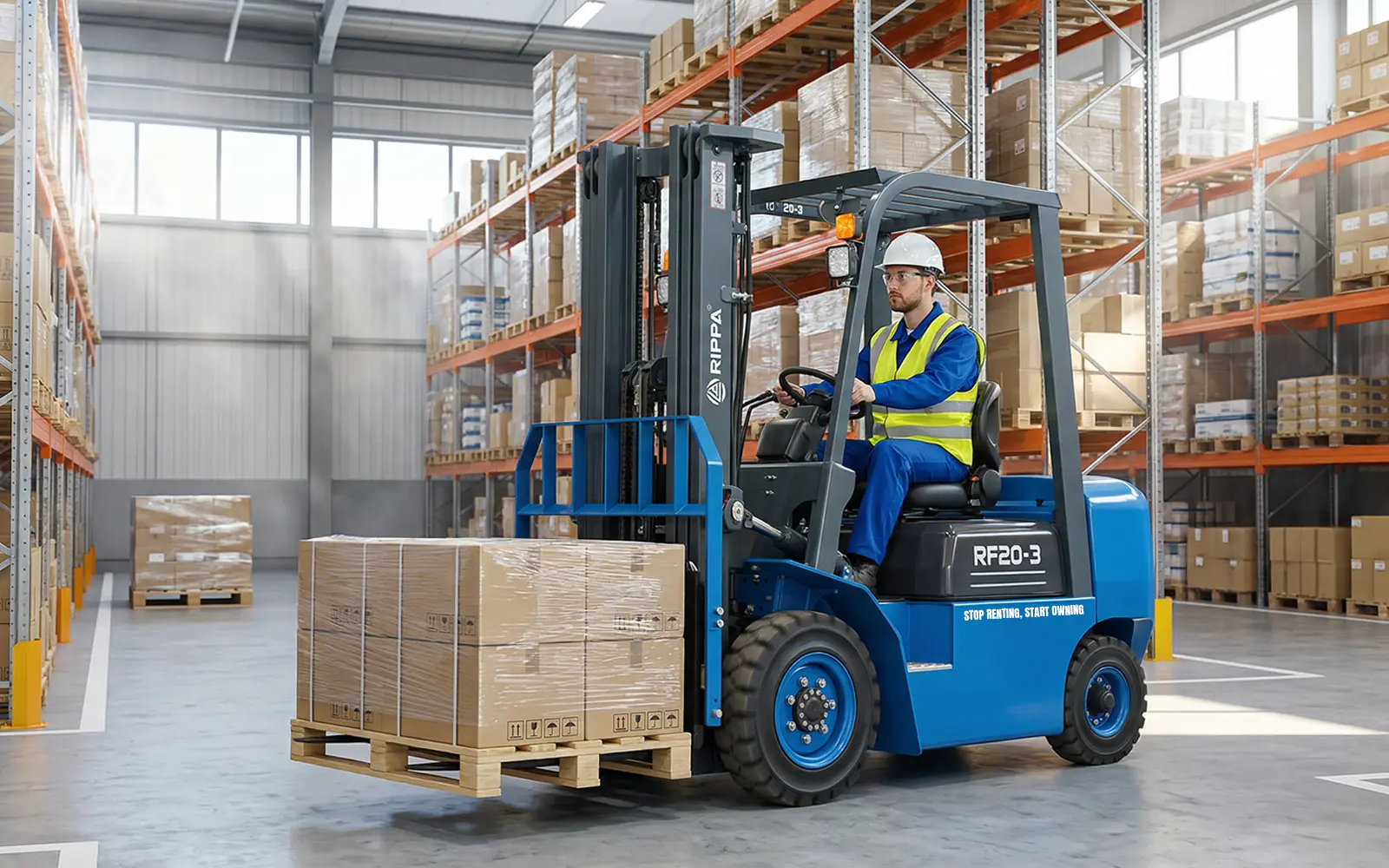
Forklifts are essential material handling equipment for warehouses, factories, and construction sites. Choose electric for indoor use, diesel for outdoor continuous operation, and LP gas for mixed environments. Match capacity to your heaviest load, and consider lithium‑ion batteries for multi‑shift operations.
Next step: Determine your load capacity and operating environment, then contact a reputable forklift manufacturer for a recommendation.


 Home
Home
 Producten
 E-mail
 WhatsApp