
mrt 20, 2026
Every forklift needs to be inspected before each shift. A thorough pre-operation check takes 5 to 10 minutes and can prevent breakdowns that cost thousands in downtime and repairs.
What a 5-minute daily check prevents:
$2,000+ emergency repair bills
Days of lost productivity
OSHA citations and fines
Workplace accidents and injuries

A forklift is one of the most significant equipment investments your business makes—typically $20,000 to $60,000 for a new machine. Regular inspections catch early warning signs of failure: hydraulic leaks, fork wear, battery problems, and unusual noises. Catching these issues early means you can order parts and schedule repairs before a breakdown stops your operation.
Different forklift types require different inspection approaches:
| Forklift Type | What’s Different | What to Check |
|---|---|---|
| Elektrisch | Battery-powered, no engine | Battery, charger, cables, motor controller |
| Diesel | Internal combustion, fuel tank | Engine oil, fuel system, exhaust |
| LPG/Propane | Gas cylinders | Fuel tank, hoses, ventilation |
Electric forklifts require a completely different inspection sequence. There’s no engine oil to check, no exhaust system, no fuel tank. Instead, you need to check the high-voltage battery pack (which represents 30-40% of the machine’s value), electric motor and controller, charging system, and thermal management.
Electric forklift inspections should follow this strict order:
Phase 1: Power-Off Visual Inspection
Key off, main disconnect open
Safe to inspect all visible components
Check battery, cables, hydraulic hoses, tires
Phase 2: Power-On Systems Check
Key on, verify all indicators and gauges
Check warning lights, horn, backup alarm
Test safety systems before moving
Phase 3: Operational Test
Move slowly in open area
Test steering, brakes, lift, tilt under load
Verify all functions work smoothly
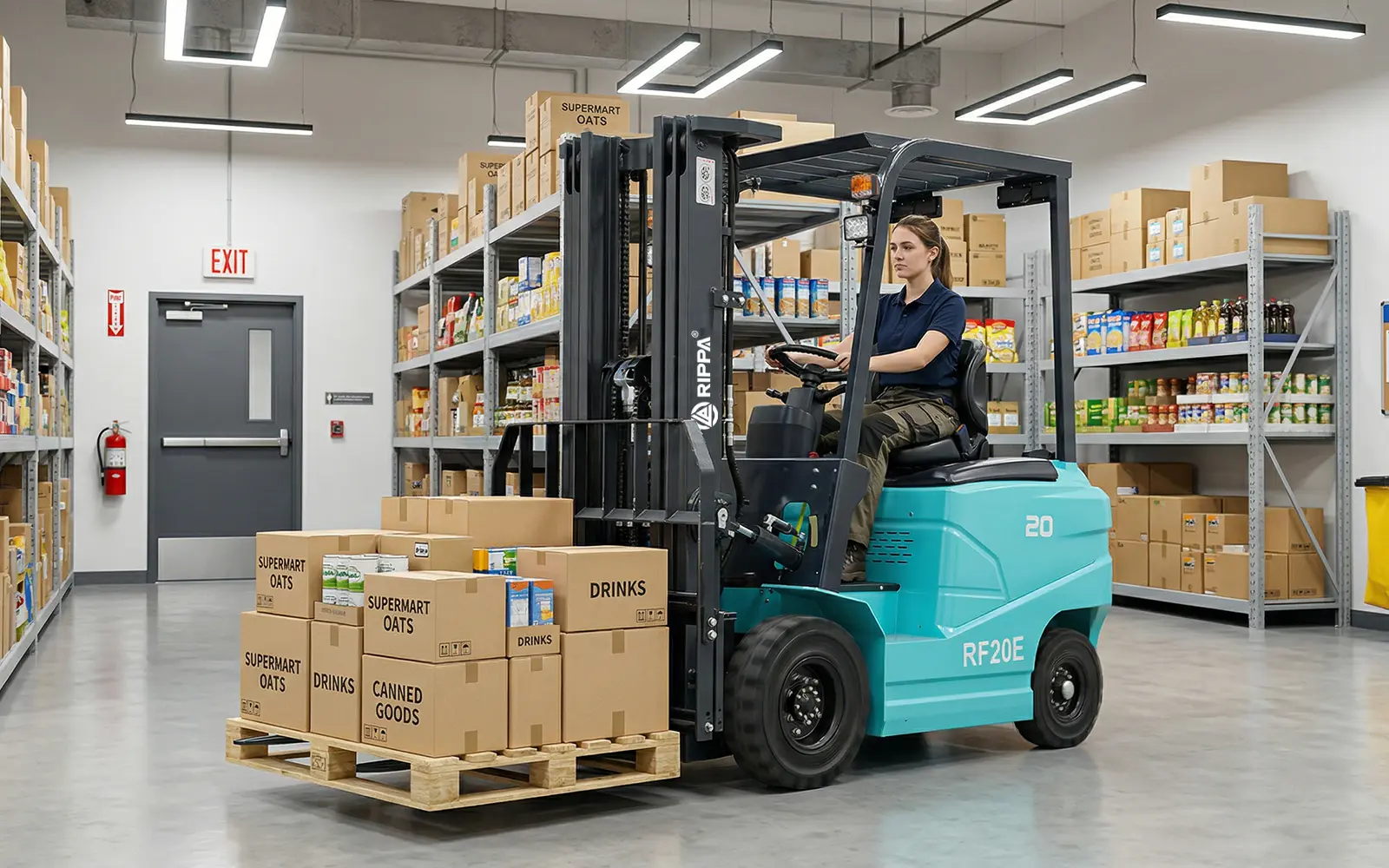
Every shift, check these battery items:
Battery compartment cover – Must be secure and undamaged. A loose cover can short terminals.
Battery cables and terminals – Look for corrosion, fraying, or loose connections. Corroded terminals cause voltage drops and poor performance.
Main disconnect / emergency cutoff – Must be accessible and functional. Test that it actually cuts power.
Electrolyte levels (lead-acid only) – Check each cell. Top up with distilled water AFTER charging, never before. Low electrolyte damages plates permanently.
Cell caps and vents (lead-acid only) – Must be present and not clogged. Hydrogen gas needs to vent safely.
Battery case – Inspect for cracks, leaks, bulging, or acid residue. Any leak requires immediate removal.
Battery enclosure (lithium-ion) – Must be sealed with no damage or swelling. Swollen cells indicate internal failure.
BMS indicator light (lithium-ion) – Check for fault codes or thermal alerts. The Battery Management System protects the pack.
Cooling system vents (lithium-ion) – Must be unobstructed. Lithium batteries generate heat during fast charging.
Battery charge indicator – Verify reading matches expected state of charge. A sudden drop indicates problems.
Voltage reading – Should be within normal range for your pack size. Low voltage under load indicates weak cells.
Battery restraint / hold-down – Must be secure with no shifting. A moving battery can short against the frame.
Motor housing – Check for damage, cracks, or blocked ventilation. Overheating motors fail quickly.
Motor cables and wiring – Look for chafing, exposed conductors, or burn marks. Damaged insulation causes shorts.
Controller / inverter unit – Must be secure with clear ventilation. These units generate significant heat.
Motor response – Accelerate smoothly; check for hesitation or jerking. Smooth response indicates healthy controller.
Unusual sounds – Listen for grinding, whining, or clicking. Bad bearings make distinctive noises.
Regenerative braking – Should engage smoothly when you release the throttle. Regeneration recovers energy.
Motor performance under load – Lift a rated load; check for power loss or overheating odor. Weak performance means trouble.
Charging port / connector – Inspect for damage, corrosion, or bent pins. Damaged ports cause charging failures.
Charging cable – Check for cuts, kinks, or exposed wiring. Damaged cables are fire hazards.
Charging port cover / cap – Must be present and functional. Keeps dirt and moisture out.
Charger interlock – Verify the truck cannot drive while connected. This safety feature prevents drive‑away accidents.
Charger-to-BMS communication (lithium) – Proper handshake must occur before charging starts.
Charging area ventilation (lead-acid) – Must be adequate for hydrogen gas. Hydrogen explodes at 4% concentration.
Eyewash station (lead-acid) – Must be within 25 feet of charging area. Acid exposure requires immediate flushing.
Charge completion indicator – Verify normal completion cycle. Incomplete charging indicates problems.
Forks – Inspect for cracks, bending, or excessive wear. Replace when wear reaches 10% of original thickness.
Fork positioning latch / pin – Must be functional and engaged. A loose fork can slide off during lifting.
Mast channels and rollers – Check for excessive wear or debris buildup. Worn rollers cause jerky movement.
Hydraulic cylinders – Look for leaks, scoring, or rod damage. A leaking cylinder loses lifting power.
Hydraulic hoses and fittings – Check for leaks, chafing, or bulging. A burst hose sprays hot oil under pressure.
Hydraulic fluid level – Check sight glass or dipstick. Low fluid causes pump cavitation and failure.
Lift function – Raise and lower full range; movement should be smooth. Jerky lifting means air in system.
Tilt function – Tilt forward and back; should hold position when released. Drifting indicates cylinder bypass.
Side-shift (if equipped) – Move left and right; operation should be smooth. Sticking indicates linkage wear.
Load backrest extension – Must be secure, not cracked or bent. Prevents loads from falling backward.
Service brake pedal – Press firmly; should have solid feel with no sponginess. Spongy brakes need bleeding.
Parking brake – Engage and test on a grade. Must hold the truck stationary.
Regenerative braking (electric) – Should provide smooth deceleration. Grabby regen indicates controller issues.
Brake test – Drive and stop; truck should stop straight without pulling. Pulling indicates uneven brake adjustment.
Steering response – Turn full lock both directions; should be smooth with no dead spots.
Power steering operation – Listen for unusual noise; whining indicates low fluid or pump wear.
Inching control (if equipped) – Pedal should provide smooth control for precise positioning.
Tire condition – Check for chunks missing or exposed cords. Damaged tires blow out under load.
Tire inflation (pneumatic) – Check pressure with gauge. Underinflated tires wear faster and waste energy.
Wheel lug nuts – All must be present and tight. Loose nuts allow wheels to wobble.
Chassis and frame – Look for cracks or structural damage. A cracked frame is dangerous and often fatal.
Counterweight – Must be secure with mounting bolts tight. A loose counterweight shifts stability.
Floor / ground under truck – Check for fluid puddles. Any leak needs investigation.
Overhead guard – Check for cracks, bending, or missing hardware. Protects operator from falling objects.
Horn – Must be audible and functional. Used to warn pedestrians.
Lights – Test headlights, tail lights, and warning strobes. Essential for low-light operation.
Backup alarm – Should sound when reverse is selected. Alerts workers behind the truck.
Seat belt – Must function, retract properly, and buckle securely. Saves lives in tip-overs.
Operator presence sensing – Truck should stop when operator leaves seat. Prevents runaway trucks.
Emergency stop button – Press and verify power cuts off. Must be easily accessible.
Mirrors and camera system – Clean, properly adjusted, and functional. Eliminates blind spots.
Data plate – Must be legible and show capacity, attachments allowed. Never exceed rated capacity.
Load capacity chart – Must be legible and current. Shows safe load at different heights.
Warning labels – Must be present and legible. Include high-voltage warnings for electric models.
Operator manual – Must be on truck or readily accessible. Reference for procedures and specs.
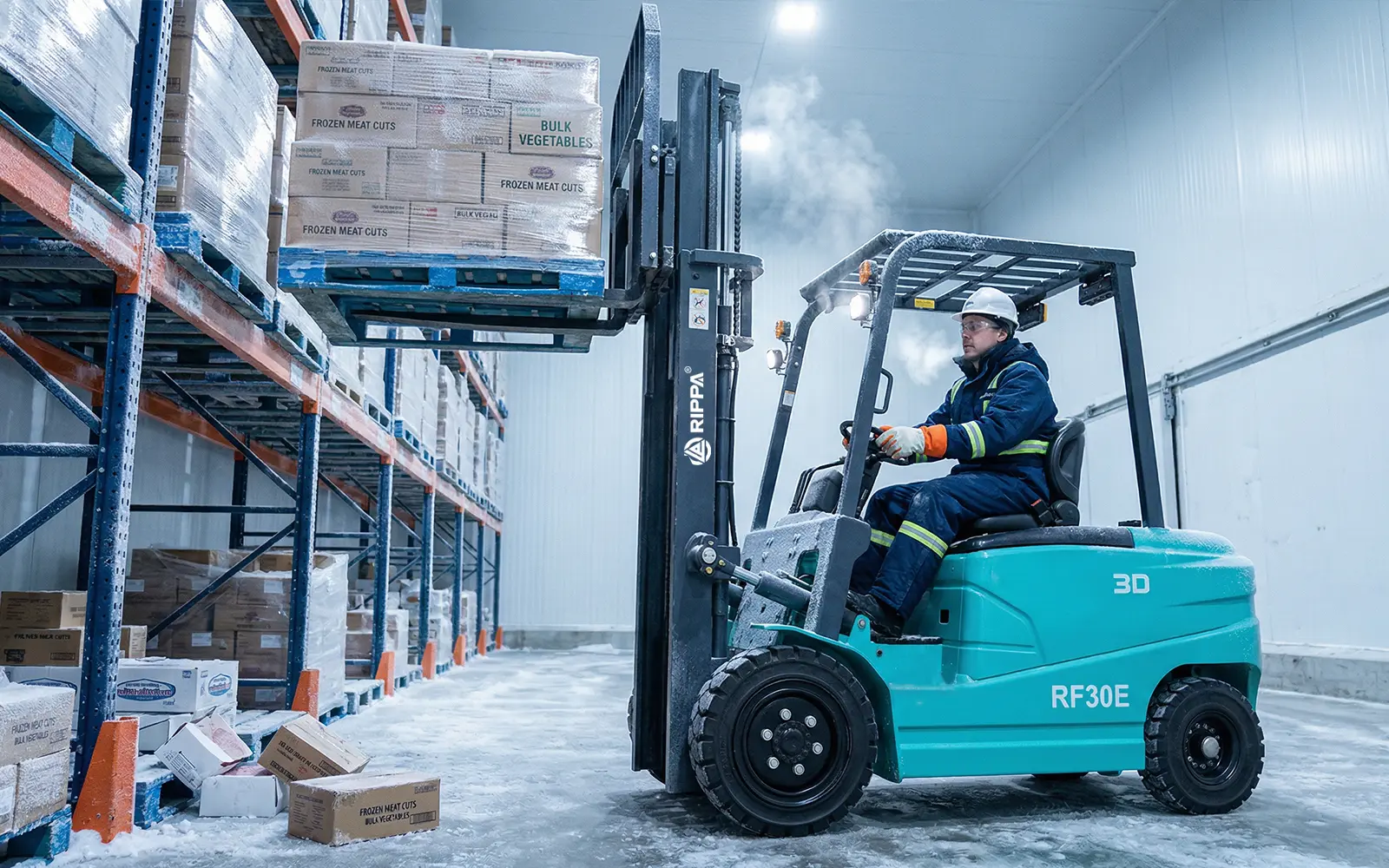
| Requirement | What You Need to Do |
|---|---|
| Daily inspection | Inspect before each shift. Round-the-clock operations: inspect after each shift. Report defects immediately. |
| Remove from service | Any truck not in safe operating condition must be removed. All repairs by authorized personnel only. |
| Battery charging area | Must have adequate ventilation, acid spill containment, no open flames, eyewash station within 25 feet (lead-acid). |
| Operator training | Only trained and evaluated operators may conduct inspections and operate forklifts. |
| Frequency | What to Do | Who Should Do It |
|---|---|---|
| Daily (pre-shift) | Visual checks, fluid levels, safety devices, operational test | Operator |
| Weekly / Monthly | Deeper checks of hydraulic systems, battery health, chain tension | Maintenance technician |
| Annual | Comprehensive testing, third-party certification if required | Specialist |
Some problems cannot wait. Remove the forklift from service immediately if you find:
Brake or steering problems
Hydraulic leaks near heat sources
Visible structural damage
Any condition that could compromise safety
For minor issues like slow battery charging or minor fluid leaks, you can create a work order and may continue operation while scheduling repairs. Always document the resolution—what was found, who was notified, what action was taken, and when the equipment was returned to service.
If you have lead-acid batteries, the charging area itself needs regular inspection:
Adequate ventilation for hydrogen gas (hydrogen explodes at 4% concentration)
Fire extinguisher accessible
“No Smoking” signs posted
Eyewash station within 25 feet
Spill containment equipment available
Acid-neutralizing supplies on hand
For lithium-ion batteries, ventilation requirements are minimal, but you still need fire suppression appropriate for lithium fires.
Most operations now use digital inspection systems through a Computerized Maintenance Management System (CMMS). Digital offers significant advantages:
| Feature | Paper Inspection | Digital Inspection |
|---|---|---|
| Timestamps | Manual entry, easy to fake | Automatic, cannot be altered |
| Photo documentation | Not possible | Yes, attach photos of defects |
| Instant defect routing | Drop in suggestion box | Automatically emails maintenance |
| Trend analysis | Manual spreadsheet work | Automated reports |
| Audit trail | Search through paper files | Fully searchable database |
Digital inspection transforms compliance documentation into maintenance intelligence. You can see which components degrade fastest across your fleet and schedule proactive replacements before failures occur.

A thorough pre-operation inspection takes 5 to 10 minutes. That small time investment pays off enormously—identifying a worn brake line takes minutes, while an unplanned breakdown costs hours or days of lost productivity.
Yes. Electric forklifts require battery and charger checks that don’t exist on diesel units. Diesel forklifts need engine oil, fuel system, and exhaust inspections that electric trucks don’t have. Core safety items like brakes and steering overlap, but the power system differences demand tailored checklists.
Lead-acid batteries typically last 1,500 charge cycles, which translates to 3-5 years in single-shift operations. Lithium-ion batteries last 3,000+ cycles, or 8-10 years. Signs of battery failure include reduced runtime, longer charge times, and physical swelling (lithium) or corrosion (lead-acid).
The most critical components are:
Brakes – must stop the truck reliably
Steering – must respond accurately
Hydraulic system – lifts and holds the load
Fork condition – cracks cause catastrophic failure
Mast and chains – structural integrity of the lift mechanism
Each of these, if failed, can cause serious accidents.
Most items are similar, but stand-up riders have additional controls and different operator presence systems. Adjust your checklist accordingly.
Follow your facility’s reporting procedure. Typically: tag the truck “Out of Service,” report to supervisor immediately, and document the finding. Never operate equipment with known safety defects.
Use this quick-reference daily checklist:
Every Shift – 5 Minutes:
Walk around inspection – look for leaks, damage
Check battery charge and connections
Verify fluid levels (hydraulic, coolant if applicable)
Inspect forks for cracks or wear
Test horn, lights, backup alarm
Check tire condition and pressure
Test service and parking brakes
Verify steering response
Lift and tilt – smooth operation?
Check operator presence system
Verify data plate readable
If any item fails, do not operate. Report immediately.
Regular forklift inspections aren’t just about compliance—they’re about protecting your investment, your operators, and your productivity. The 5-10 minutes spent on daily checks can prevent catastrophic failures that cost thousands in repairs and days of downtime.
A structured inspection program with clear pass/fail criteria transforms maintenance from reactive firefighting to proactive management. You’ll catch problems early, schedule repairs during planned downtime, and extend the life of your equipment by years.
The checklist above covers every critical system on both electric and diesel forklifts. Print it, laminate it, and use it daily. Your forklifts—and your operators—will thank you.
Need a printable version? Contact RIPPA for a free downloadable PDF of this 62-point inspection checklist, formatted for daily use in your facility.


 Home
Home
 Producten
 E-mail
 WhatsApp