Rgp 17, 2026
Mini excavators have become increasingly popular in construction, landscaping, agriculture, utility installation, and municipal projects. Their compact size, maneuverability, and versatility make them particularly useful in areas where conventional excavators are too large or difficult to operate.
For contractors, rental companies, and construction equipment dealers, mini excavators can provide an efficient solution for a wide variety of excavation and material-handling tasks.
A mini ekskavatorius is a compact tracked ekskavatorius designed for excavation and material-handling work in relatively small or restricted areas.
Although mini excavators are smaller than medium and large excavators, modern machines still offer many of the same basic functions, including digging, lifting, grading, swinging, and traveling.
One of the biggest advantages of a mini excavator is its ability to work in confined spaces.
For example, when installing drainage systems in a residential backyard, a full-size excavator may have difficulty entering the site. A compact mini excavator can often pass through narrow entrances and perform excavation work with greater flexibility.
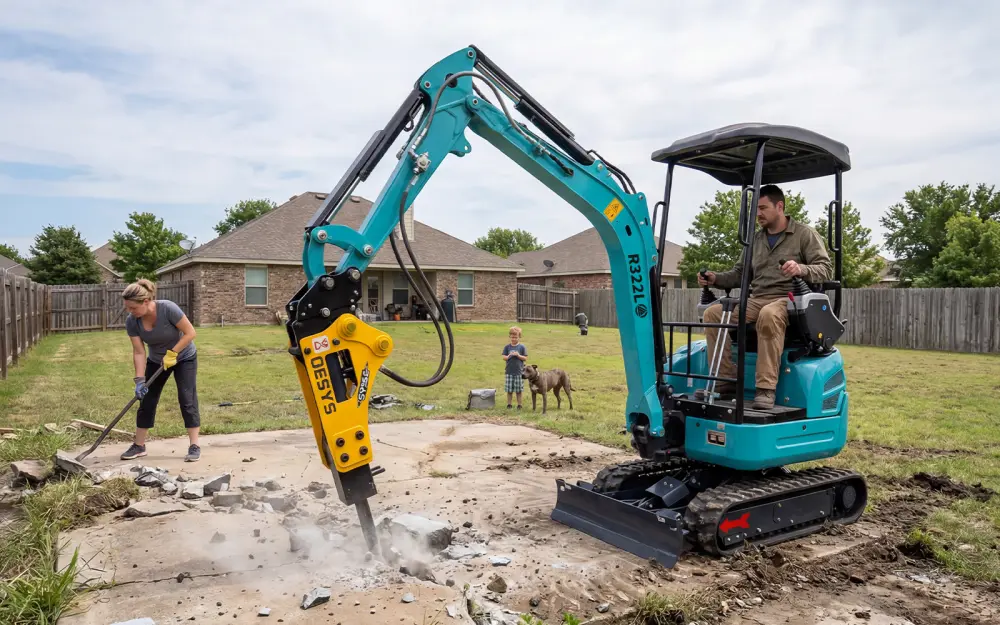
Mini excavators typically use a diesel engine and hydraulic system to perform their main functions.
The engine powers a hydraulic pump, which generates hydraulic pressure. Hydraulic fluid is then distributed to different hydraulic cylinders and motors.
The operator uses the controls to operate:
This hydraulic design allows a mini excavator to perform multiple movements smoothly and precisely.
The compact dimensions of a mini excavator make it ideal for narrow construction sites.
They are commonly used in residential backyards, gardens, urban construction sites, greenhouses, and other areas where larger construction equipment cannot operate effectively.
Mini excavators are generally easier to transport than larger construction machines.
Many compact models can be transported using a suitable trailer, making them convenient for contractors who frequently move between different jobsites.
A mini excavator can operate in relatively tight areas while maintaining good digging and lifting performance.
This makes it useful for projects where precision and maneuverability are more important than maximum digging capacity.
Modern mini excavators can support a variety of attachments, allowing one machine to perform different types of work.
Common attachments include:
With the right attachment, a mini excavator can be used for digging, trenching, drilling, demolition, landscaping, material handling, and other tasks.
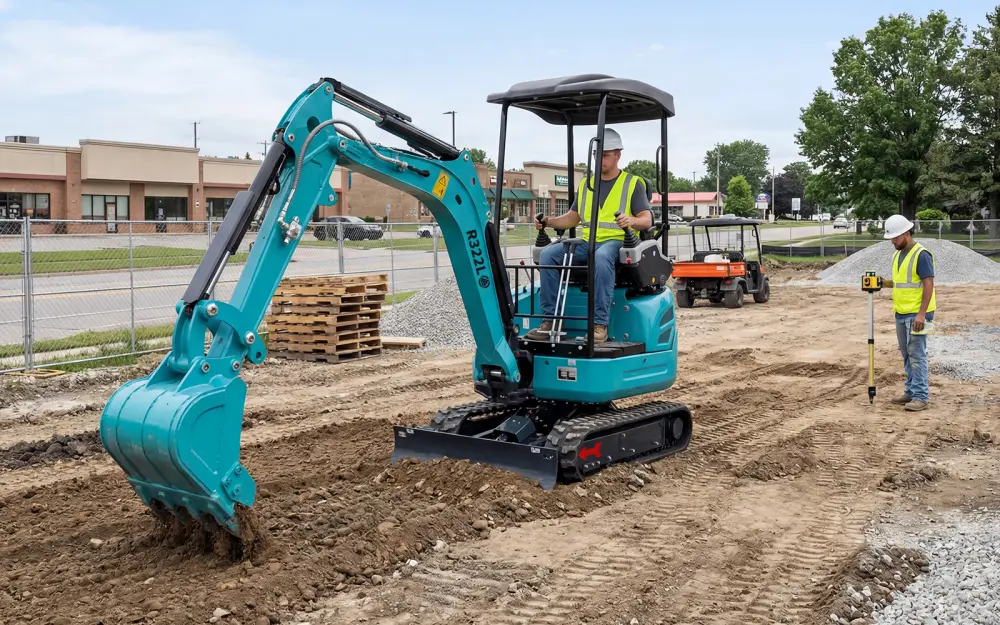
Mini excavators are used across many industries.
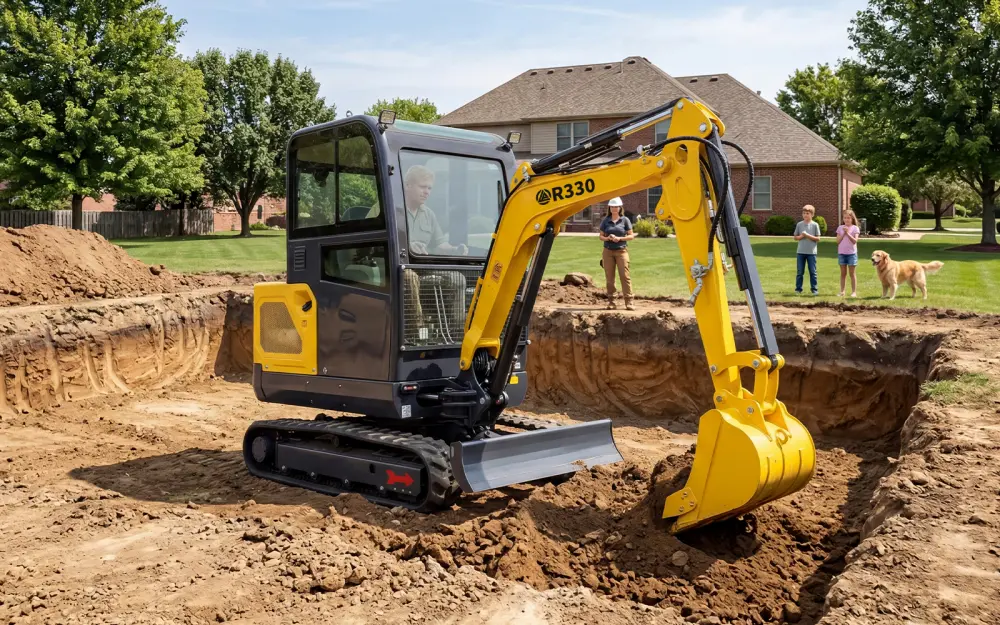
Mini excavators can be used for foundation excavation, drainage installation, trenching, landscaping, and site preparation.
Their compact dimensions are particularly useful when working around existing buildings.
Landscaping contractors often use mini excavators for digging planting areas, removing soil, preparing terrain, installing drainage systems, and moving materials.
Farmers and agricultural contractors can use mini excavators for irrigation channels, land preparation, drainage work, fence installation, and general farm maintenance.
Mini excavators are commonly used to dig trenches for water pipes, electrical cables, drainage systems, and other underground utilities.
Small excavators can also be used for road maintenance, public landscaping, drainage projects, and other municipal applications.
When equipped with a hydraulic breaker or other suitable attachment, a mini excavator can perform light demolition and concrete-breaking tasks.
Selecting the right mini excavator requires careful consideration of the machine’s specifications and the intended application.
Operating weight affects machine stability, transportation requirements, and overall performance.
Smaller models may be ideal for landscaping and light residential projects, while heavier compact excavators can provide greater digging force and stability.
Engine performance directly affects machine productivity. Buyers should consider engine brand, rated power, fuel efficiency, emissions requirements, and local regulations.
Maximum digging depth is an important specification for trenching, foundation work, drainage installation, and other excavation applications.
Machine width is particularly important when the excavator will be used in backyards, narrow construction sites, or areas with restricted access.
A narrow machine can provide access to a wider range of jobsites.
The hydraulic system influences digging force, attachment performance, operating speed, and control precision.
For contractors who frequently use hydraulic attachments, hydraulic flow and auxiliary hydraulic functions should be carefully evaluated.
A mini excavator that supports multiple attachments can provide greater flexibility and improve equipment utilization.
For professional contractors and equipment dealers, after-sales support is an important part of the purchasing decision.
Spare parts availability, warranty policies, technical support, and manufacturer responsiveness can have a direct impact on long-term operating costs.
RIPPA is a construction equipment manufacturer offering mini excavators, compact excavators, large excavators, skid steer loaders, wheel loaders, forklifts, and other machinery.
Its mini excavator range includes models such as the R10, R13 PRO, R15, R18 PRO, and R22 PRO, covering different operating requirements and applications.
The RIPPA R15, for example, uses a Kubota D722 engine and is designed for applications where compact dimensions, maneuverability, and reliable power are important.
RIPPA also offers different machine configurations and attachment options for various markets and working conditions.
For construction equipment dealers, working with a manufacturer that can provide multiple machine categories can make it easier to build a broader product portfolio and serve customers with different requirements.
The choice between a mini excavator and a large excavator depends primarily on the jobsite and workload.
| Funkcija | Mini ekskavatorius | Didelis ekskavatorius |
|---|---|---|
| Size | Compact | Large |
| Maneuverability | Puiku | Vidutinis |
| Confined-space work | Puiku | Limited |
| Transportation | Easier | More complex |
| Digging capacity | Lower | Higher |
| Fuel consumption | Generally lower | Generally higher |
| Typical applications | Residential, landscaping, utilities | Mining, major construction, earthmoving |
For small and medium-sized projects, a mini excavator can often provide the right balance between performance, flexibility, and transportation convenience.
The demand for compact construction equipment continues to grow as urban construction becomes more complex and contractors look for machines that can perform multiple tasks efficiently.
Future mini excavators are expected to focus increasingly on:
These developments can make mini excavators even more productive and versatile across different industries.
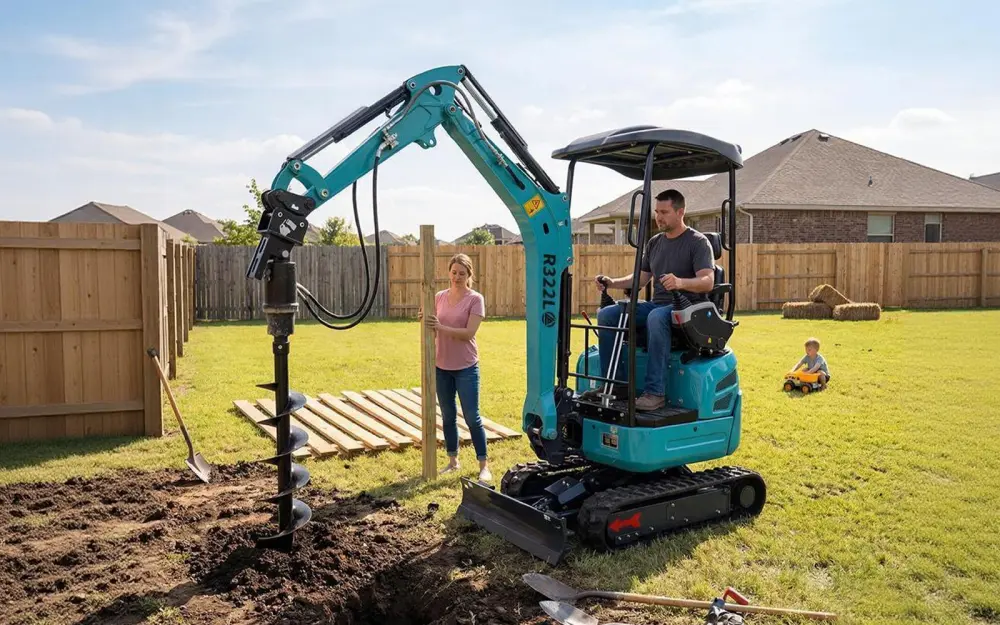
Mini excavators are compact but highly versatile machines that can handle a wide range of construction and excavation tasks.
Their ability to operate in confined spaces, relatively easy transportation, flexible attachment options, and broad application range make them an attractive choice for contractors, construction companies, and equipment dealers.
When selecting a mini excavator, buyers should look beyond the purchase price and evaluate operating weight, engine performance, digging depth, machine width, hydraulic capabilities, attachment compatibility, spare parts availability, and after-sales support.
RIPPA offers a range of mini excavators and other construction equipment for different applications and international markets, providing contractors and equipment dealers with additional options when building their equipment portfolio.

Autorių teisės: „Shandong Rippa Machinery Group Co., Ltd.“.
Teisinis atstovas: Yan Huaiguo | Licencijos Nr.: 913708000509206491
Adresas: Guangan Road 39, Liuhang mikrorajonas, Aukštųjų technologijų zona, Jiningo miestas, Šandongo provincija

 Pagrindinis puslapis
 Produktai
 El. paštas
 „WhatsApp“