2026 m. kovo 3 d.
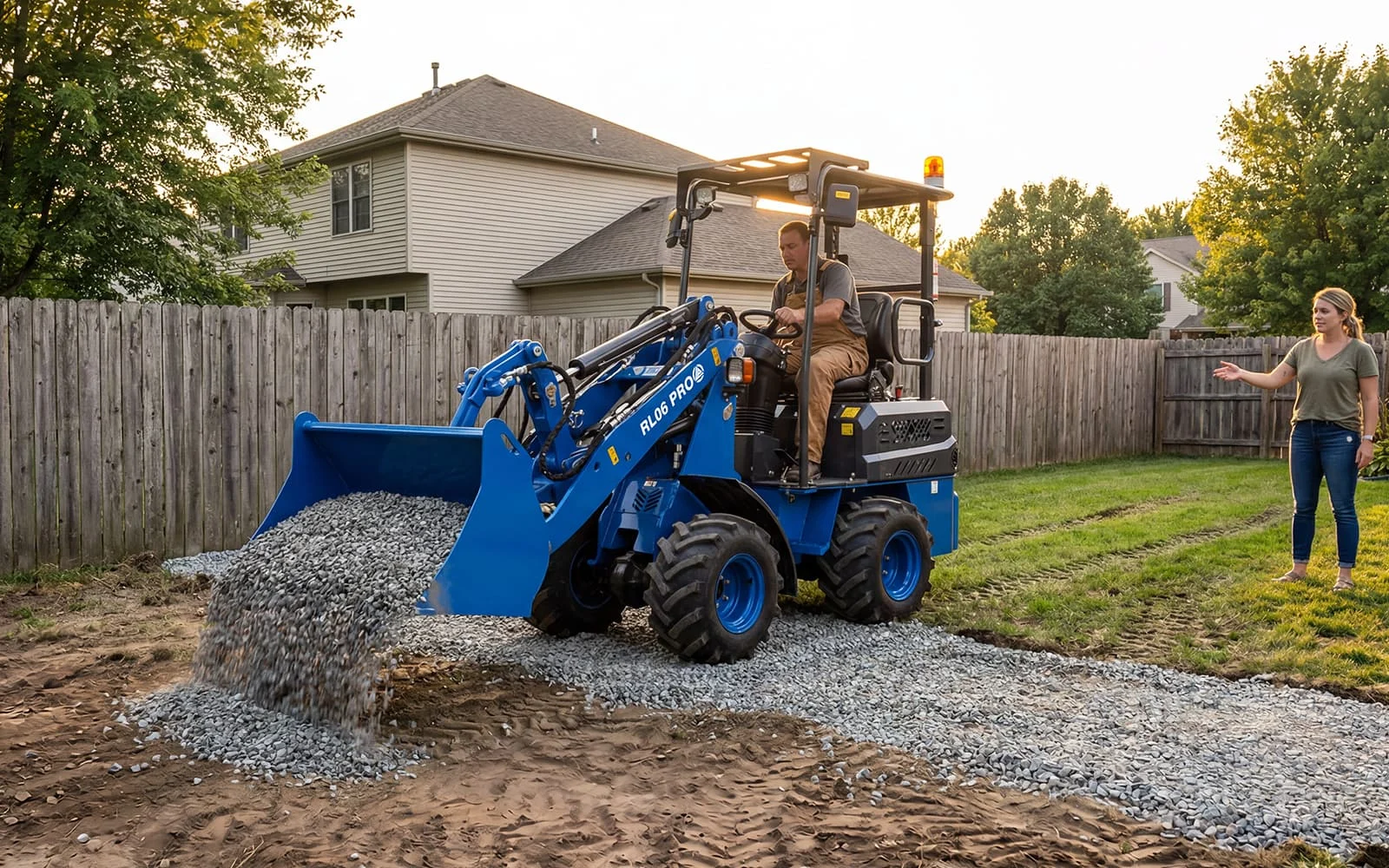
The four main types of wheel loader buckets are general purpose, light material, heavy-duty rock, and multi-purpose 4-in-1 buckets. Choose general purpose for everyday dirt and gravel work. Choose light material for low-density materials like snow, grain, and mulch. Choose heavy-duty rock for rocky terrain and demolition. Choose 4-in-1 for maximum versatility with clamping capability. The right bucket matches your material density and application for maximum productivity.
The bucket is the part of the loader that actually touches the material. The wrong bucket reduces productivity, increases fuel consumption, and wears out faster. The Rippa RL series uses thickened digging buckets with high-quality material selection that is sturdy, durable, anti-corrosion, and rust-proof. But even the best bucket must match the application.
The documentation states that Rippa loaders use a quick connector system allowing the operator to quickly change dozens of different attachments including buckets, forks, sweepers, hydraulic hammers, aerial work platforms, and more from the cab. This means you can switch bucket types as needed. 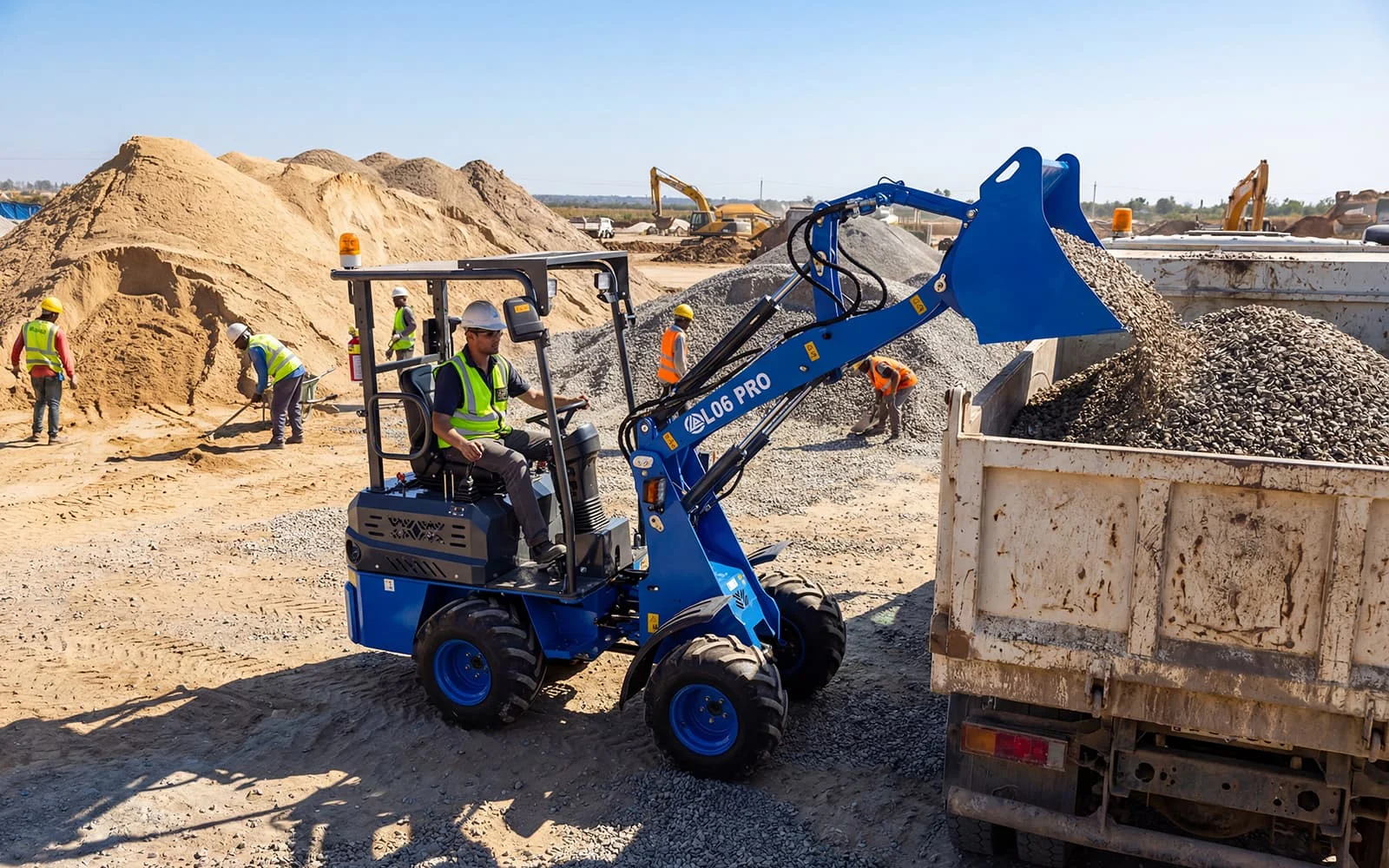
The general purpose bucket is the most common bucket type. It has a moderate profile with a straight cutting edge. It is designed for a wide range of materials.
Sand, gravel, soil, crushed stone, and dirt. It handles materials with moderate density.
Typically 0.6 to 1.28 cubic meters for Rippa RL series. The RL10 has a 0.6 cubic meter bucket. The RL15 has a 0.7 cubic meter bucket. The RL20 has a 1.28 cubic meter bucket.
Straight cutting edge. Bolt-on teeth option available. Moderate side height.
Versatile. Good for most jobs. Lower cost than specialty buckets.
Not ideal for very light or very heavy materials. Teeth may be needed for digging.
Choose general purpose if you work with a variety of materials and do not have a specific specialty. This is the best bucket for most users.
The light material bucket has a larger capacity and higher sides than a general purpose bucket. It is designed for low-density materials that weigh less per cubic meter.
Snow, wood chips, grain, manure, mulch, and feed. Materials with low density that need to be moved in volume.
Up to 2 times the capacity of a general purpose bucket of the same size.
High back and low profile. Often has a perforated or solid floor. May have a wider opening.
Moves more volume per load. Reduces cycle time for light materials. Lower weight than a heavy-duty bucket.
Not suitable for heavy materials. Can be overloaded if used with dense materials. Less durable for digging.
Choose light material if you primarily handle low-density materials. Farms handling grain, feed, and manure benefit from this bucket. Snow removal operations also benefit.
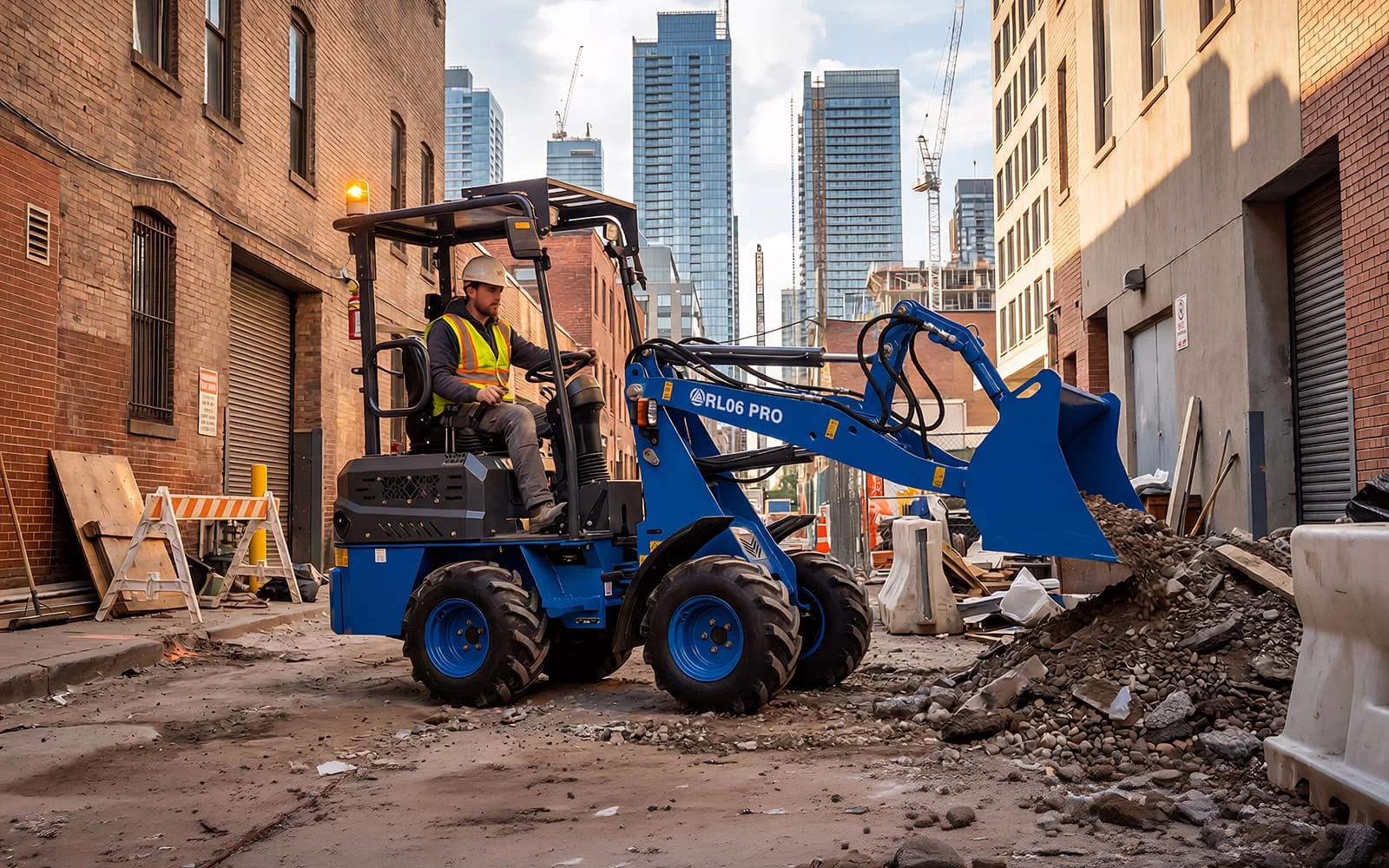
The heavy-duty rock bucket has a reinforced structure, thicker steel, and often includes a bolt-on cutting edge and teeth. It is designed for the toughest materials.
Rocks, demolition debris, concrete, and abrasive materials.
Smaller than general purpose of the same machine size. The heavier construction reduces payload capacity.
Thickened steel. Reinforced bottom and side plates. Bolt-on cutting edge with replaceable teeth. Often has wear strips.
Lasts longer in abrasive conditions. Resists impact damage. Teeth improve digging in hard ground.
Heavier, reducing payload capacity. Higher cost. Not needed for light work.
Choose heavy-duty rock if you work in quarries, mines, or demolition. If you handle rocks, concrete, or other abrasive materials regularly.
The Rippa documentation mentions the thickened digging bucket with high-quality material selection that is sturdy, durable, anti-corrosion, and rust-proof. This is the heavy-duty bucket option.
The 4-in-1 bucket is a versatile bucket with a clamshell design. The bottom opens like a jaw, allowing the bucket to clamp, grab, and spread material.
Users who need versatility. It serves as a bucket, grapple, scraper, and dozer blade.
Hydraulic clamshell operation. Opens and closes like a jaw. Can clamp logs, rocks, and debris. Can spread material like a dozer blade.
Eliminates the need for a separate grapple. Versatile for multiple applications. Good for cleanup and sorting.
Heavier than a standard bucket. Reduced capacity compared to light material bucket. Higher cost. More complex maintenance.
Choose 4-in-1 if you frequently handle a variety of materials and need clamping capability. Good for demolition, recycling, and farm applications.
| Material | Best Bucket Type | Kodėl |
|---|---|---|
| Sand and gravel | General purpose | Balanced for moderate density |
| Dirt and soil | General purpose | Standard application |
| Rock and stone | Heavy-duty rock | Abrasion and impact resistance |
| Concrete and debris | Heavy-duty rock | Durability in harsh conditions |
| Snow | Light material | High volume, low density |
| Grain and feed | Light material | High volume, low density |
| Mulch and wood chips | Light material | High volume, low density |
| Mixed materials | 4-in-1 or general purpose | Versatility needed |
| Logs and brush | 4-in-1 | Clamping capability |
| Manure and compost | Light material | High volume, low density |
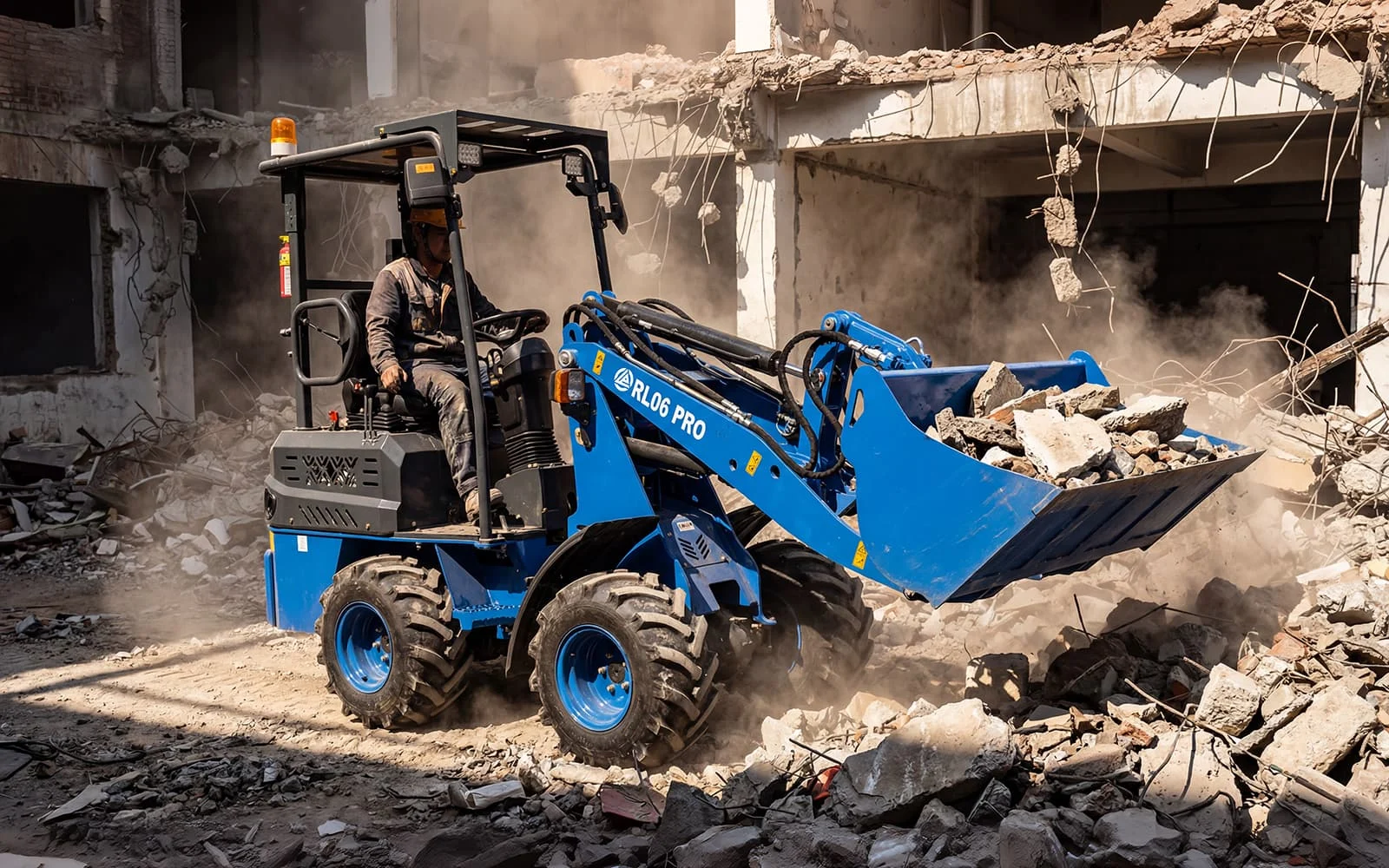
The bucket must match the machine’s lift capacity. A bucket that is too large will overload the machine. The Rippa RL10 has a rated load of 1200kg. The bucket capacity is 0.6 cubic meters. This is the factory-matched size.
The RL15 has a rated load of 1500kg with a 0.7 cubic meter bucket.
The RL20 has a rated load of 2800kg with a 1.28 cubic meter bucket.
Material density affects bucket sizing. A light material bucket for snow can be much larger than a heavy-duty bucket for rock because snow weighs much less per cubic meter.
Material densities for reference:
Snow: 100 to 300 kg per cubic meter
Grain: 600 to 800 kg per cubic meter
Gravel: 1,400 to 1,800 kg per cubic meter
Rock: 1,600 to 2,000 kg per cubic meter
Concrete: 2,000 to 2,400 kg per cubic meter
A heavier bucket reduces the payload you can carry. A heavy-duty rock bucket may weigh 200 to 500kg more than a light material bucket. That 200 to 500kg comes directly out of your payload capacity.
The cutting edge is the part that contacts the ground. It can be bolt-on or welded. Bolt-on edges are easier to replace. Replaceable teeth improve digging performance.
Teeth help the bucket penetrate hard ground. They are available in different styles for different materials. Rock teeth are shorter and stronger. General purpose teeth are longer and sharper.
Wear strips are added to the bottom of the bucket to protect the floor from abrasion. They are essential for rock and concrete applications.
All Rippa RL series loaders use a quick connector system. This allows you to change buckets quickly from the cab. Verify that any bucket you purchase is compatible with your quick coupler.
Inspect the cutting edge for wear. Check teeth for looseness or damage. Look for cracks in the bucket structure.
Grease the bucket pivot pins. Check for wear at the pin holes. Tighten any loose bolts.
Measure cutting edge wear. Replace when worn past the wear line. Inspect the bucket floor for thin spots.
| Bucket Type | Economy | Standartas | Heavy-Duty |
|---|---|---|---|
| General purpose | 800 to 1200 USD | 1200 to 1800 USD | 1800 to 2500 USD |
| Light material | 1000 to 1500 USD | 1500 to 2200 USD | 2200 to 3000 USD |
| Heavy-duty rock | 1500 to 2500 USD | 2500 to 4000 USD | 4000 to 6000 USD |
| 4-in-1 | 2500 to 4000 USD | 4000 to 6000 USD | 6000 to 9000 USD |
Prices vary by size and manufacturer.
Source: Rippa RL06, RL10, RL15, RL20 Product Documentation

Autorių teisės: „Shandong Rippa Machinery Group Co., Ltd.“.
Teisinis atstovas: Yan Huaiguo | Licencijos Nr.: 913708000509206491
Adresas: Guangan Road 39, Liuhang mikrorajonas, Aukštųjų technologijų zona, Jiningo miestas, Šandongo provincija

 Pagrindinis puslapis
 Produktai
 El. paštas
 „WhatsApp“