9월 22, 2026
B2B equipment procurement becomes more complex when buyers are considering several machine categories.
An equipment dealer may need mini excavators, skid steer loaders, compact wheel loaders, forklifts, and attachments. A rental company may want to build a mixed fleet. A farm equipment business may need digging and material-handling machines. A machinery reseller may want to serve several customer industries.
In these cases, the supplier should be evaluated as a business partner across multiple equipment categories, not only as a source of individual machines.
A compact equipment supplier should provide clear product information, explain different machine applications, support spare parts and technical questions, provide accurate attachment information, and communicate current commercial terms clearly.
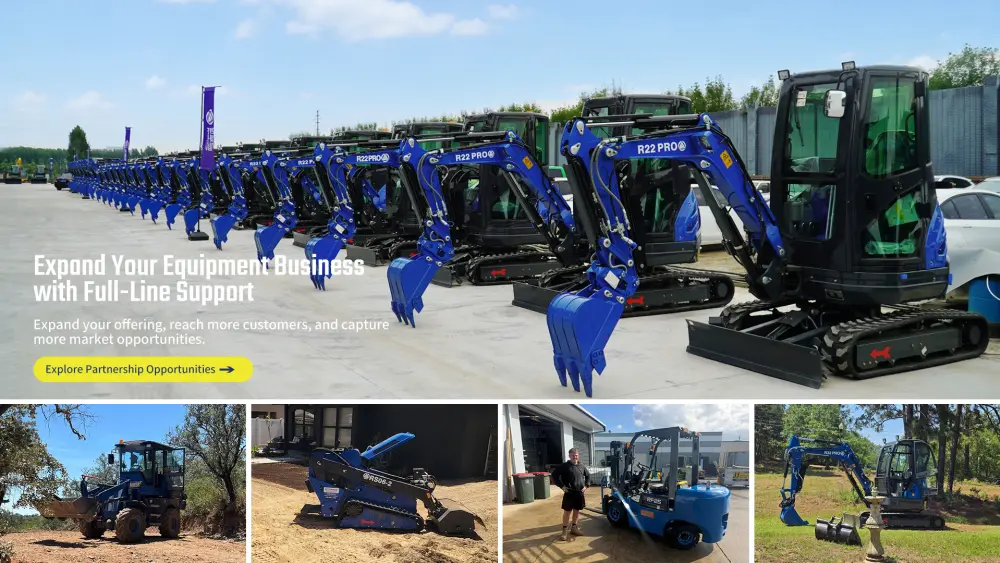
Before evaluating suppliers, buyers should understand their own market.
Ask:
This determines the equipment categories worth considering.
Different compact machines serve different purposes.
| 제품 | Primary Role |
|---|---|
| Mini 굴삭기 | 굴착 및 도랑 파기 |
| 스키드 스티어 로더 | Loading, grading, cleanup |
| Compact Wheel Loader | Loose-material movement |
| 지게차 | Palletized-material handling |
| 첨부 파일 | Application expansion |
A supplier should be able to explain these differences instead of treating every machine as interchangeable.
Mini excavators may serve:
Applications may include:
For many compact equipment dealers, mini excavators may remain the core product category.
Skid steer loaders may support:
They may complement mini excavators on contractor and landscaping projects.
Compact wheel loaders may support:
Potential customers may include farms, landscaping supply businesses, contractors, rental companies, and material yards.
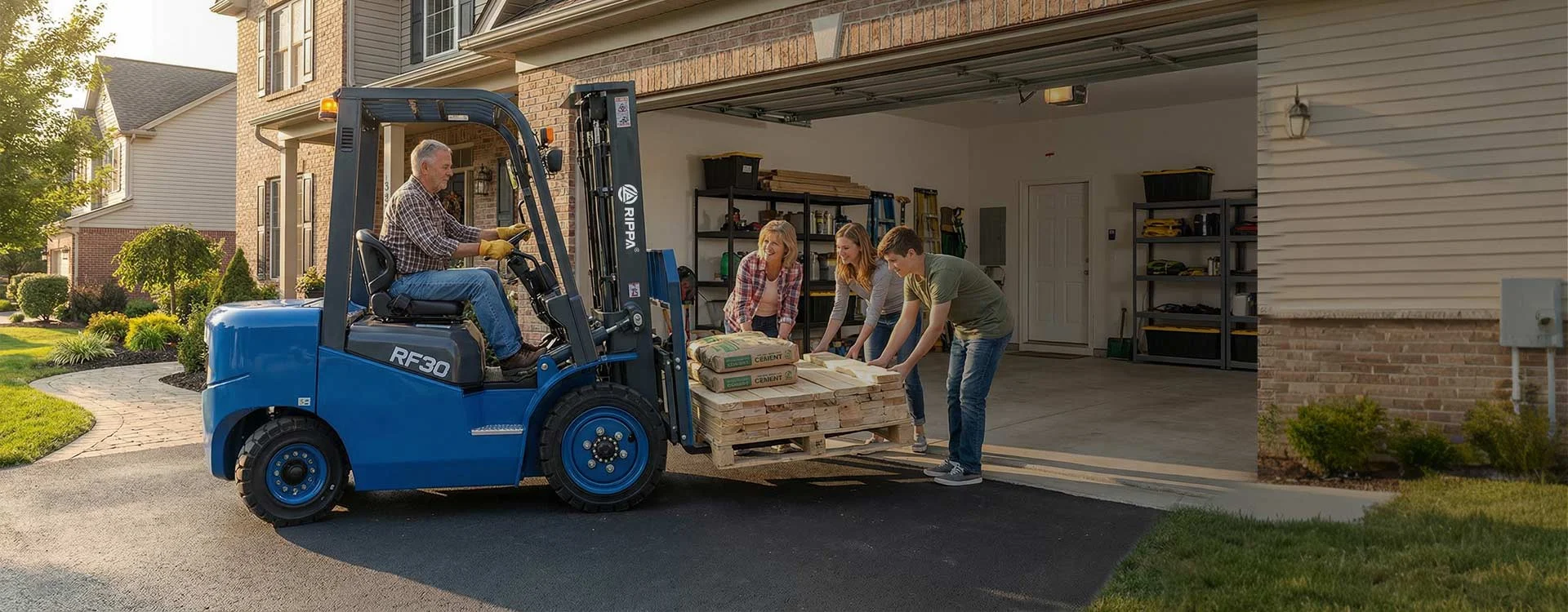
Forklifts may serve:
They should be selected according to actual load, lift, and operating-environment requirements.
A supplier with many products may appear attractive, but buyers do not necessarily need every category.
B2B buyers should ask:
The strongest product line is not always the largest product line.
Different machines require different service parts and components.
Before adding a new product category, buyers should understand:
Parts support should be evaluated separately for each machine category.
Attachments can expand the value of excavators and loaders.
Possible categories may include:
Compatibility should be confirmed by machine model and application.
Ask whether the supplier has clear processes for:
These processes matter more as the buyer’s equipment volume grows.
Good B2B communication should be:
Buyers should be cautious when a supplier makes broad promises without confirming machine-specific information.
Different product categories can create different transport and packaging requirements.
Buyers should confirm:
The exact logistics plan should be confirmed for each order.
Different B2B customers need different support.
Needs:
Needs:
Needs:
Needs:
The supplier should fit the buyer’s actual business model.
Initial cost is only one part of commercial equipment ownership.
Buyers should also consider:
The lowest quotation may not create the best long-term business result.
| Category | What to Evaluate |
|---|---|
| 제품 | Fit with customer applications |
| Specifications | Accuracy and clarity |
| 첨부 파일 | Compatibility |
| Spare parts | Availability and process |
| Maintenance | Information and support |
| Technical support | Troubleshooting process |
| Warranty | Current terms and claims process |
| Documentation | Product and service information |
| Logistics | Packaging and delivery |
| Communication | Accuracy and response process |
| Cooperation | Suitability for repeat business |
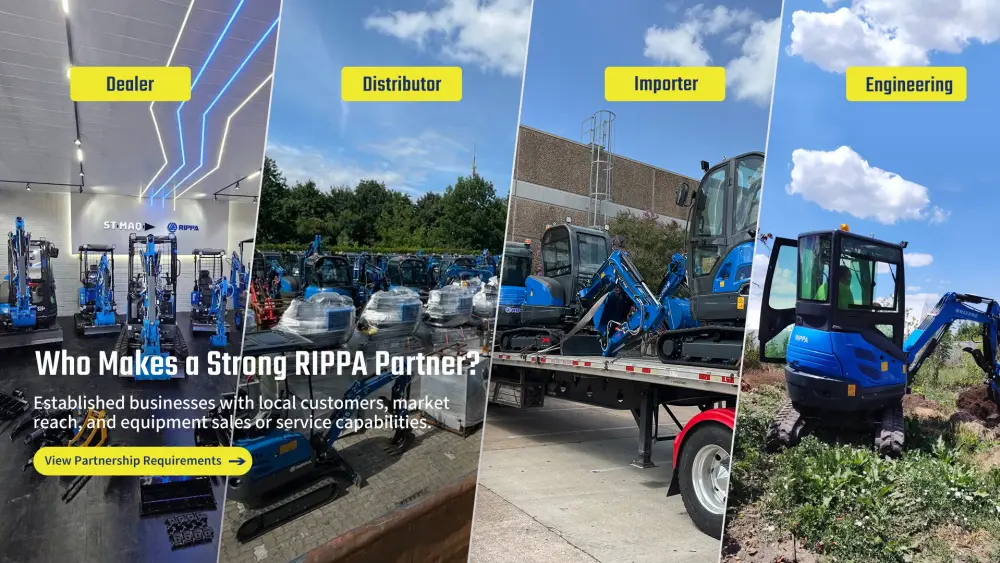
RIPPA compact equipment can be considered by businesses serving construction, agriculture, landscaping, rental, material handling, and machinery resale markets.
Potential product roles include:
The right product mix depends on the buyer’s customers and support capability.
They should evaluate products, specifications, parts, attachments, maintenance, warranty, technical support, documentation, logistics, communication, and cooperation terms.
No. Dealers should focus on categories that match real customer demand and their own support capability.
Because commercial equipment downtime can affect customers, rental utilization, and dealer reputation.
Potentially, but buyers should evaluate each category separately rather than assuming the same support level applies to all products.
No. Price should be evaluated together with product suitability and long-term support capability.
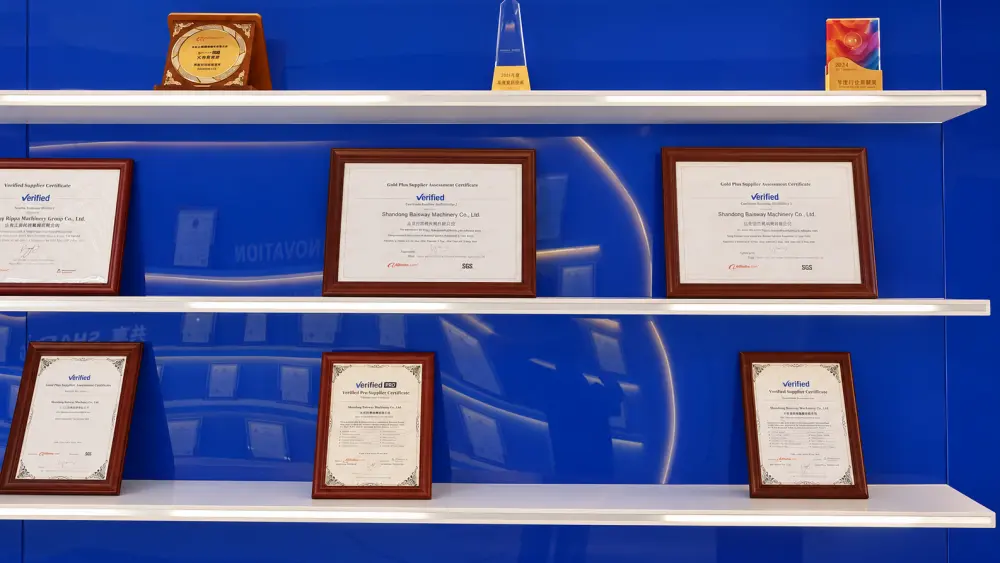
Choosing a compact equipment supplier is ultimately a business-system decision.
B2B buyers need machines that match customer applications, but they also need parts, attachments, maintenance information, technical communication, warranty procedures, documentation, and reliable logistics.
Mini excavators may remain the core product for many dealers, while skid steer loaders, compact wheel loaders, forklifts, and attachments can expand the business according to customer demand.
The strongest supplier relationship is one that supports both the equipment and the business built around that equipment.

저작권: 산동 리파 기계 그룹 유한공사.
법정 대표자: 옌 화이구오 | 등록번호: 913708000509206491
주소: 산동성 지닝시 하이테크 구 류항 지구 광안로 39호

 홈
홈
 제품
제품
 이메일
이메일
 WhatsApp