10월 07, 2026
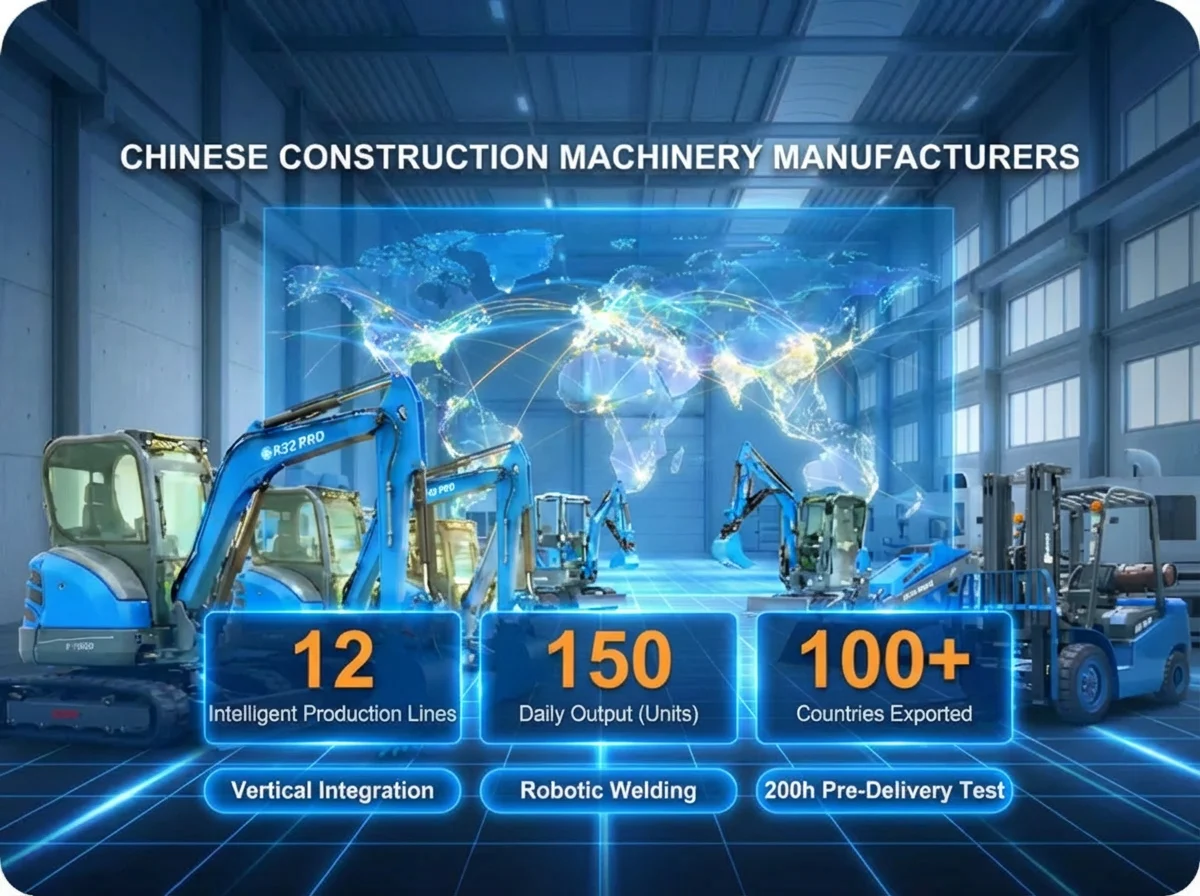
A used machinery dealer should consider adding new RIPPA equipment when existing customers are asking for new machines, standardized fleet units, attachments, repeat availability, or equipment categories that the dealership cannot reliably source through used inventory alone.
The dealer does not need to replace its used-equipment business.
Instead, new equipment can become a complementary channel.
Depending on customer demand, a dealer may consider products such as:
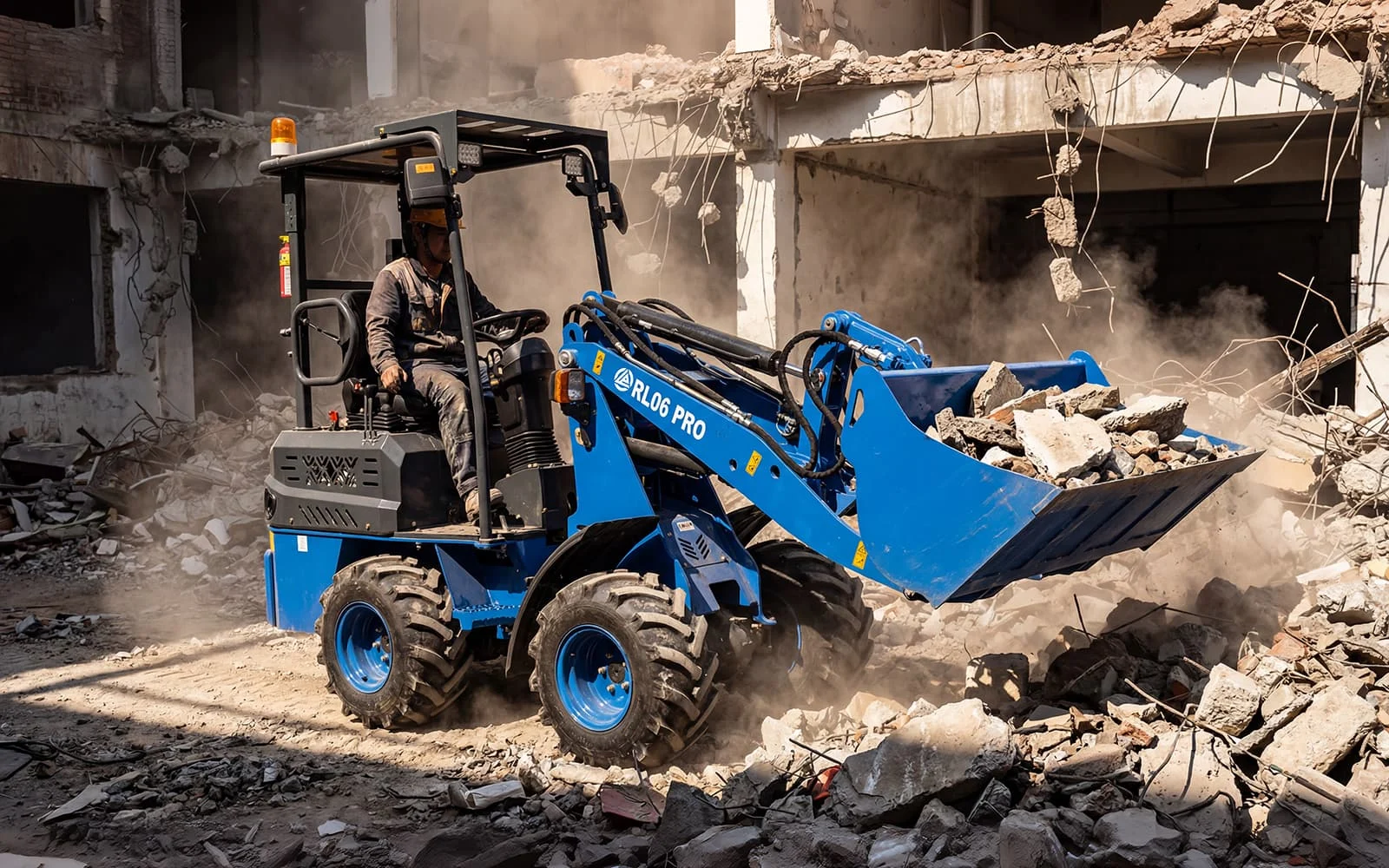
RIPPA’s current official product catalog includes Mini 굴삭기, Skid Steer, Wheel Loader, and Rippa Forklift categories among its broader equipment range.
The correct expansion strategy should follow the dealer’s existing customer base rather than simply adding every available machine category.
Used machinery businesses have an important strength:
inventory diversity.
But that diversity can also create limitations.
A dealer cannot always predict:
New equipment can introduce more repeatability.
This may be valuable for:
A used dealer should pay attention when customers repeatedly ask:
These questions indicate demand that ordinary used inventory may not fully address.
For many dealers serving:
mini excavators can be a practical first category.
They provide dedicated digging capability for applications such as:
RIPPA’s dealer-opportunity materials specifically position compact excavators for distributors, importers, rental companies, agricultural sellers, and regional equipment partners.
For this reason, excavators can remain the core product while other categories are added selectively.
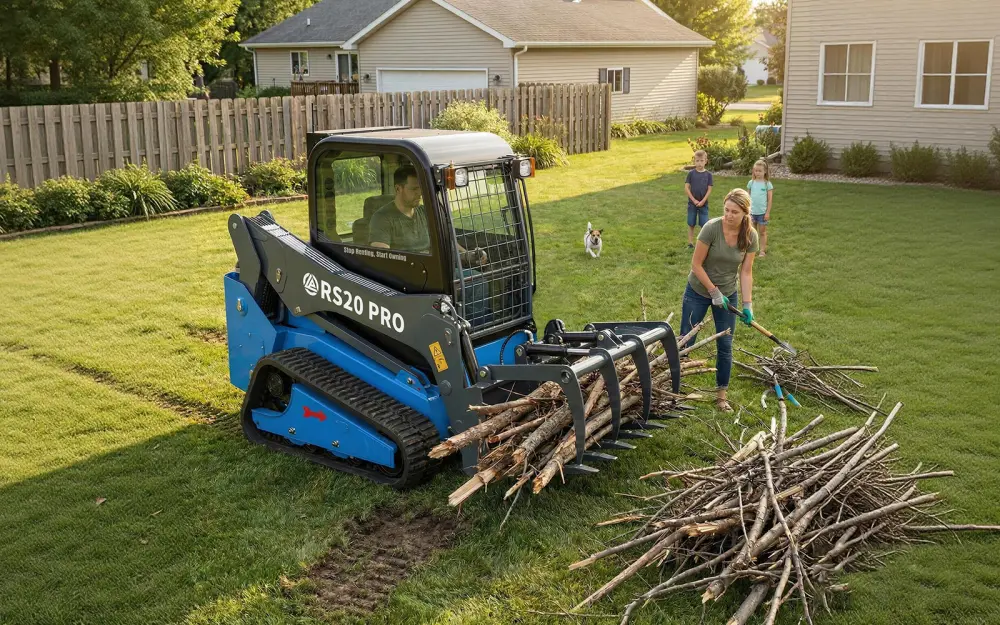
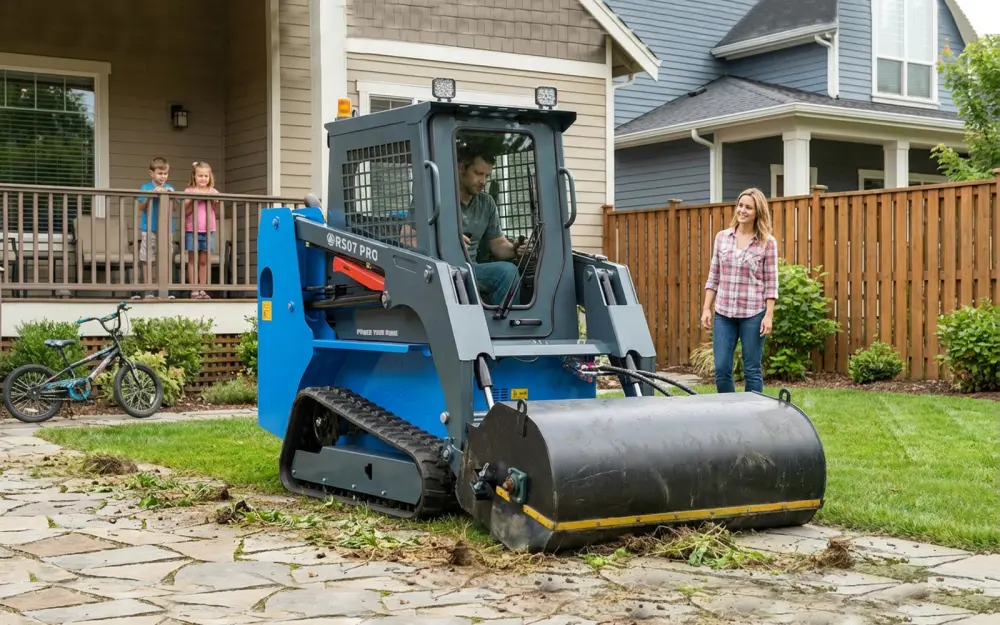
Skid steer loaders may make sense when customers frequently need:
A contractor purchasing an 굴삭기 may later say:
“We can dig efficiently, but we still need something to move the material and clean the site.”
That is a more meaningful reason to introduce a skid steer than simply wanting a larger catalog.
RIPPA’s current catalog includes multiple skid steer models alongside excavators and other equipment.
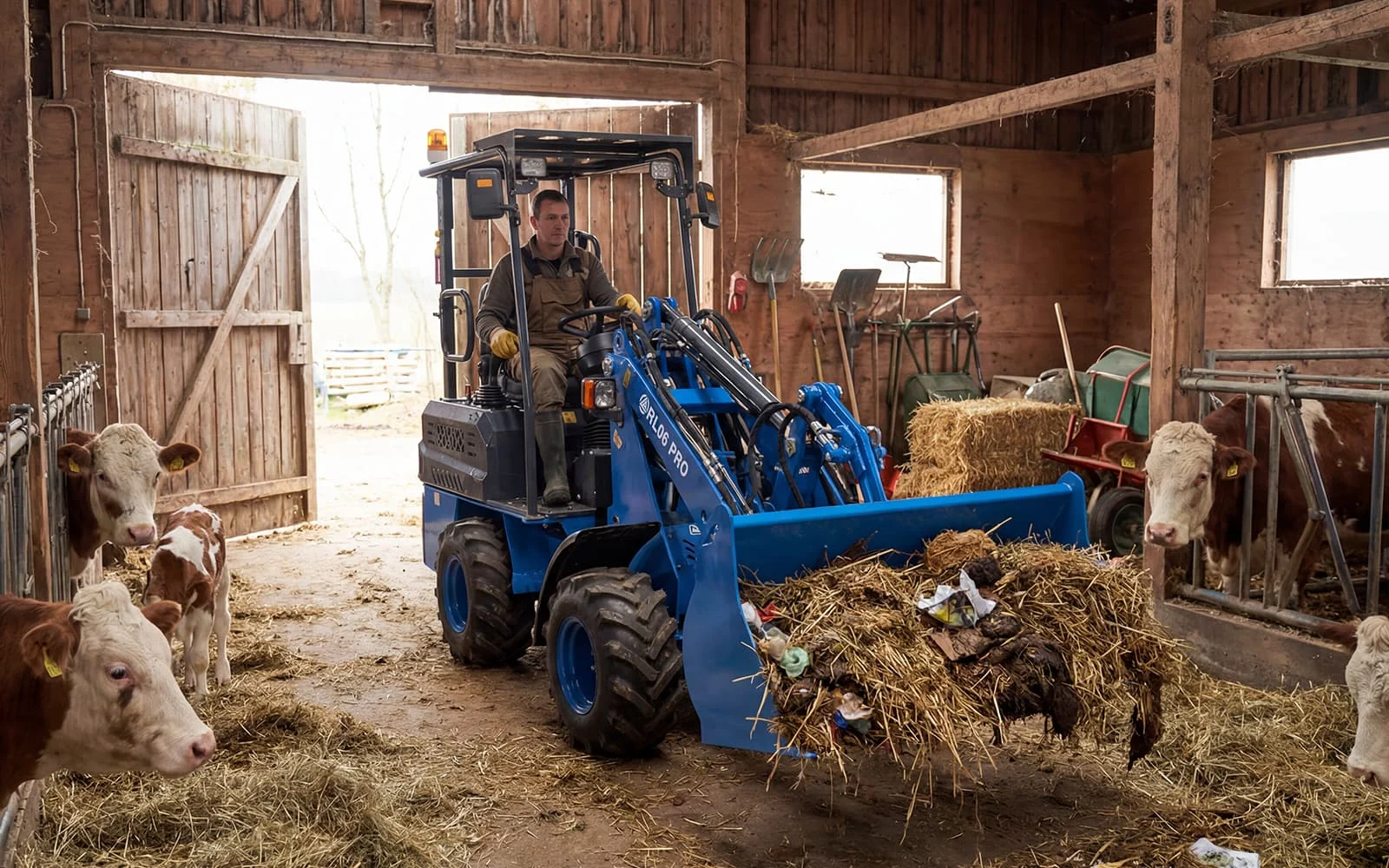
Wheel loaders become relevant when customers regularly move loose materials.
Potential applications include:
Potential customers may include:
RIPPA’s current wheel-loader catalog includes several loader sizes, which gives dealers options for different material-handling applications.
However, a dealer should only add the category if there is real local demand.
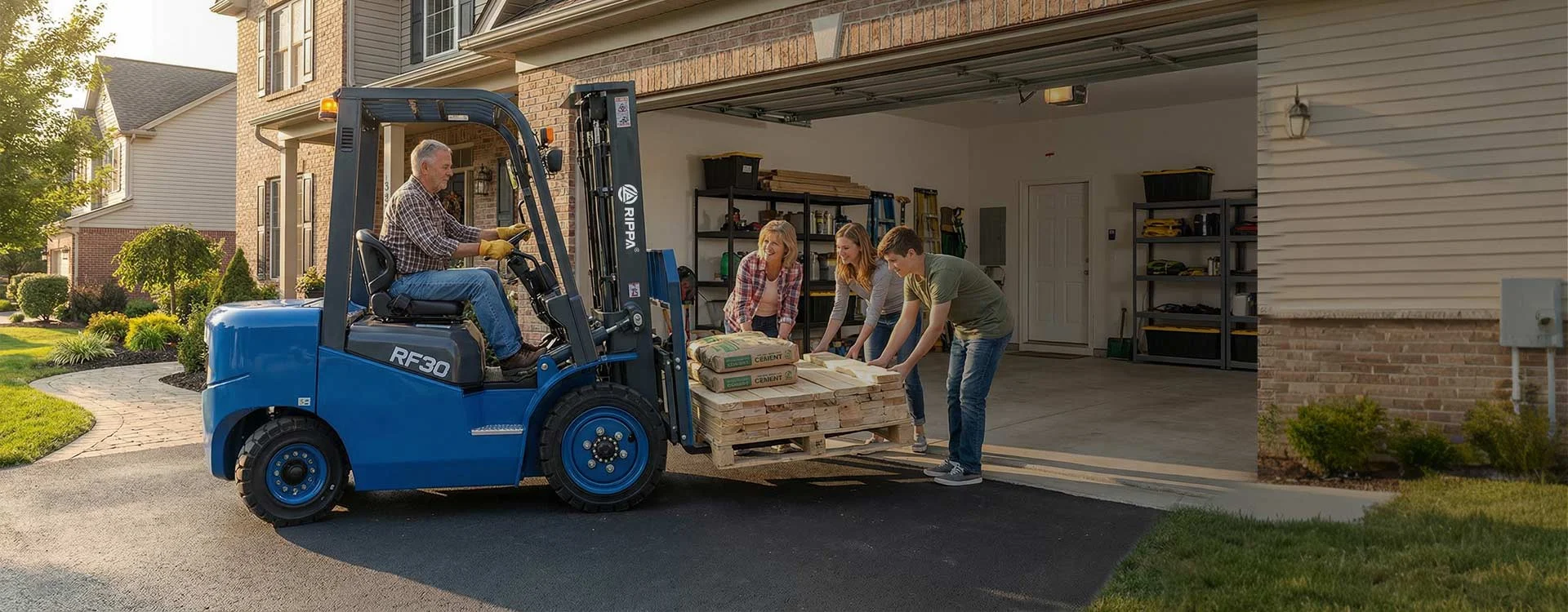
Forklifts are primarily material-handling products.
They may make sense when the dealership serves:
The main application is different from excavation.
A forklift should be added because customers need:
not simply because the dealer wants another product category.
RIPPA’s current catalog includes both electric, lithium-ion, and other forklift offerings.
Start with existing customer demand.
| Existing Customer Group | Possible Product Direction |
|---|---|
| 시공업체 | Mini 굴삭기, skid steer |
| 렌터카 업체 | Mini excavator, skid steer, selected loaders |
| 농장 | Mini excavator, wheel loader |
| 조경사 | Mini excavator, skid steer |
| Material yards | Wheel loader, forklift |
| 창고 | 지게차 |
| Machinery resellers | Products supported by their local demand |
This keeps expansion customer-led.
Every product adds responsibility.
A new category may require:
A dealer can easily create too much complexity.
For example, selling:
all at once means supporting four different equipment environments.
A focused expansion is often easier to manage.
A used machinery dealer could follow a staged approach.
Example:
Develop:
Examples:
Attachments can expand existing machine sales without adding another power unit.
If excavator customers frequently request loading and cleanup:
If farm customers need loose-material movement:
If the business develops more warehouse or material-handling customers:
This creates controlled product expansion.
Yes.
Fleet customers often value repeatability.
A rental company may want:
A contractor may want:
A reseller may want:
Used inventory cannot always provide identical or similar machines on demand.
A new equipment supply relationship can help the dealer pursue this type of customer.
Potentially.
An established used machinery dealer may already know:
If the business grows beyond retail sales, some customers may become:
This is particularly relevant for businesses with logistics and inventory capacity.
A used machinery dealer may already have years of customer history.
That database can include:
Rather than launching a new equipment line to strangers, the dealer can first ask existing customers:
This produces much better market information.
Ask what they currently rent or plan to purchase.
Record customers the dealer could not serve because suitable used machines were unavailable.
Use them to test contractor and fleet interest.
Examples:
Measure business buyers rather than generic website traffic.
Yes.
May emphasize:
Can emphasize:
The sales story should reflect what the buyer is actually purchasing.
Attachments bridge the gap between machine sales and repeat business.
A customer may purchase a new excavator today.
Later, it may need:
This creates another transaction without requiring another machine.
For a dealer transitioning into new equipment, attachments can be an important part of the business model.
Used equipment buyers sometimes expect greater variability between individual machines.
New-equipment buyers may have stronger expectations around:
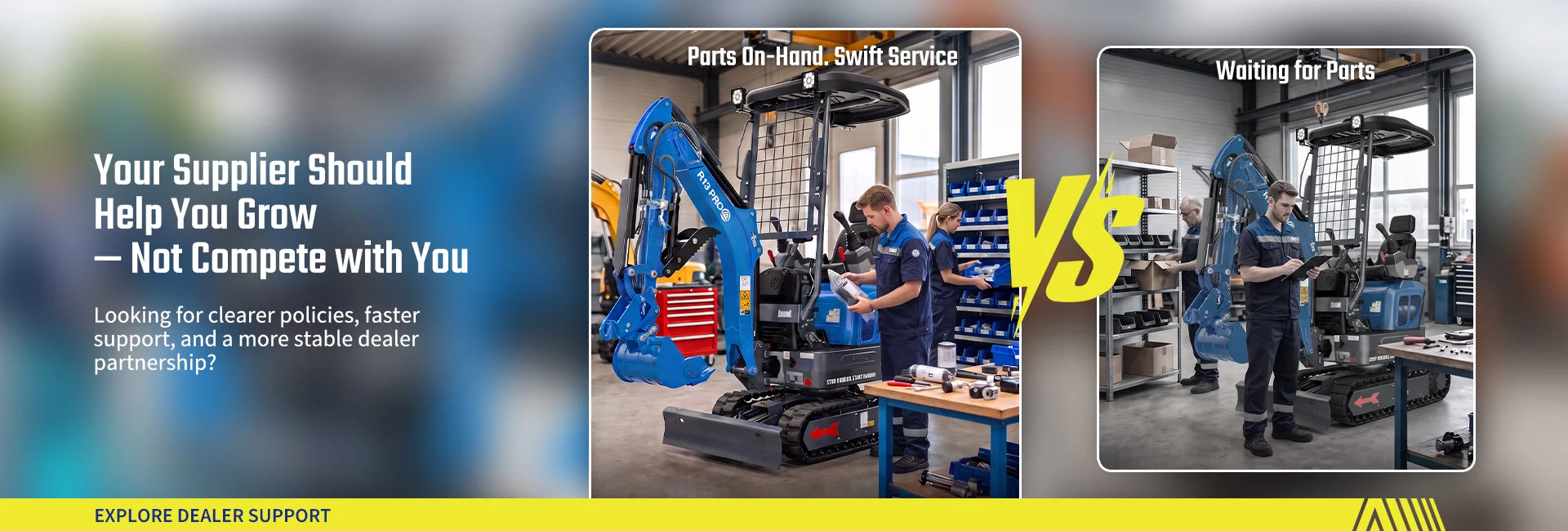
A dealership adding new machinery should therefore professionalize its after-sales process.
At minimum, the business should understand:
The customer should never hear:
“We sold you the machine, but we do not know who handles support.”
Possibly, depending on their qualifications and the machine.
Used machinery dealerships may already have people familiar with:
This can provide a useful foundation.
However, technicians still need current model-specific information and should not assume that experience with one brand or machine applies directly to another.
Supplier training and documentation can help close that gap.
Questions should include:
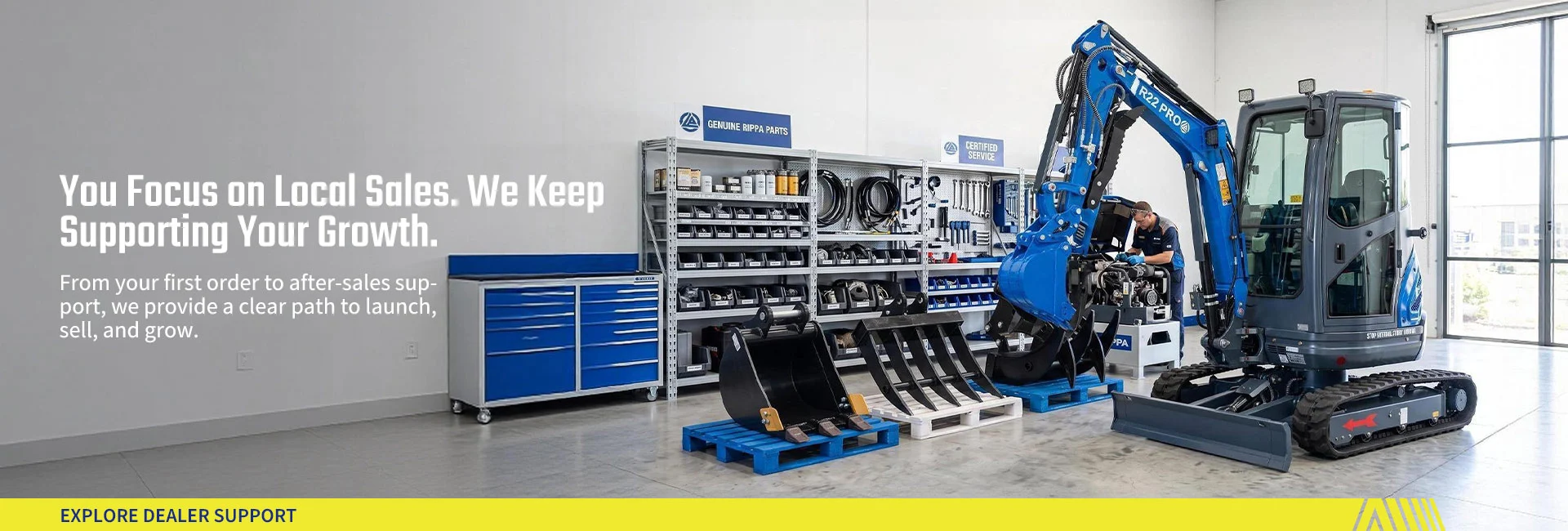
RIPPA’s current dealer-program pages describe dealer training and flexible stocking structures, while its product catalog currently spans excavators, skid steers, wheel loaders, forklifts, and additional machinery.
Specific commercial conditions should be confirmed directly for the dealer’s market.
It may be better to wait when the business has:
Simply obtaining access to new equipment does not create customer demand automatically.
The dealer still needs to build the market.
It may make sense when existing customers are asking for new machines, fleet quantities, repeat configurations, or equipment categories that are difficult to source reliably as used inventory.
For dealers serving contractors, rental companies, farms, and landscapers, mini excavators can provide a practical starting category.
They may be useful when existing customers regularly need loading, grading, cleanup, or material movement.
When customers frequently move loose materials such as gravel, soil, sand, or mulch.
When the dealership serves customers with palletized-material and warehouse-handling needs.
No. A staged expansion based on proven demand can reduce inventory and support complexity.
A used machinery dealer can use new RIPPA equipment to expand the business without abandoning its existing strengths.
The dealer already understands:
New equipment can add:
For many dealers, the logical path is:
Used equipment → new mini excavators → attachments → complementary equipment → broader B2B distribution.
The best expansion decision should always begin with the same question:
What are our existing customers already asking us to supply?

저작권: 산동 리파 기계 그룹 유한공사.
법정 대표자: 옌 화이구오 | 등록번호: 913708000509206491
주소: 산동성 지닝시 하이테크 구 류항 지구 광안로 39호

 홈
홈
 제품
제품
 이메일
이메일
 WhatsApp