Aug 29, 2026
Skid steer loaders are among the most versatile compact machines used in job sites, farms, landscaping projects, rental fleets, and property maintenance work. They are designed for loading, grading, cleanup, material movement, and attachment-based applications.
While mini excavators focus on digging and trenching, skid steer loaders focus on moving, loading, and handling materials in compact work areas. This makes them a useful machine for customers who need flexible job-site support rather than only excavation.
For dealers and rental companies, skid steer loaders can also become a valuable product category because they serve many of the same customer groups as mini excavators, but solve different work problems.
RIPPA skid steer loaders can be considered by customers who need compact equipment for landscaping, farm work, construction support, rental fleets, material handling, and property maintenance. Before purchase or promotion, buyers should confirm current configuration, attachment compatibility, spare parts support, warranty policy, delivery arrangement, documentation, and service terms.
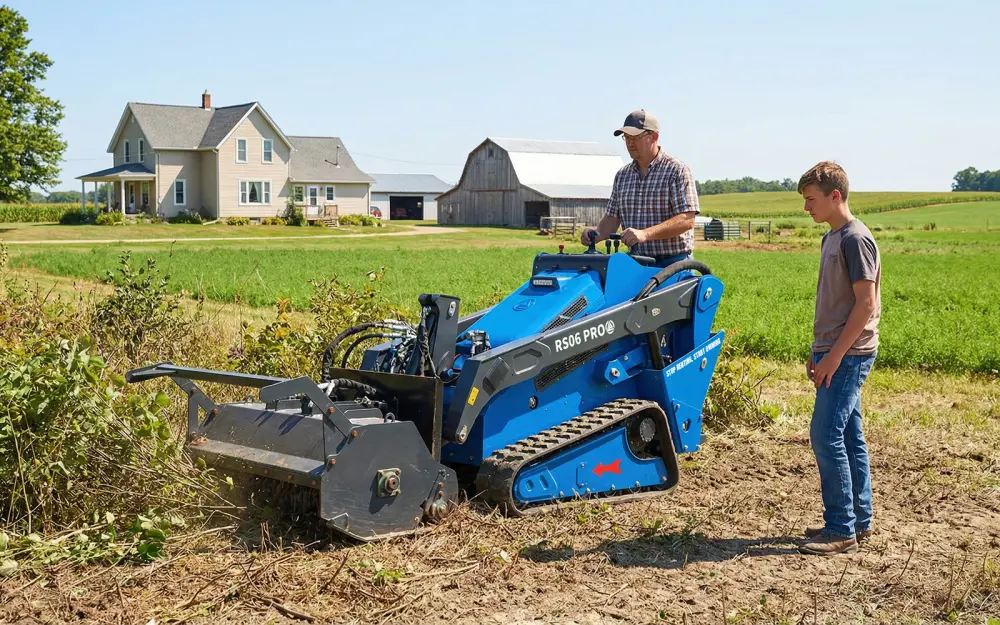
A skid steer loader is a compact machine designed for loading, pushing, carrying, grading, and operating different attachments. It is commonly used in work environments where maneuverability and flexibility are important.
Skid steer loaders are often used in:
The machine’s value comes from its ability to perform many tasks with a compact footprint.
Skid steer loaders are used for many practical tasks, including:
A skid steer loader is not the same as an excavator. It is not primarily designed for trenching or deep digging. Instead, it is strongest when the job requires material movement, loading, cleanup, grading, or attachment-based work.
Landscaping businesses often need machines that can move materials quickly. A skid steer loader can help handle soil, mulch, stone, gravel, plants, and debris during outdoor projects.
Common landscaping applications include:
| Landscaping Application | How a Skid Steer Loader Helps |
|---|---|
| Yard preparation | Moves soil and materials |
| Landscape renovation | Removes debris and old material |
| Hardscape support | Moves base material, stone, and gravel |
| Mulch handling | Loads and spreads material where suitable |
| Grading | Helps shape surfaces |
| Cleanup | Clears job-site debris |
| Property improvement | Supports outdoor work areas |
For landscapers, a skid steer loader can reduce manual labor and improve project speed.
A mini excavator may dig trenches or prepare drainage, while a skid steer loader moves material and supports cleanup. Together, the two machines can create a more complete landscaping workflow.
Farms often require compact machines for repeated material movement. A skid steer loader can help with many yard and maintenance tasks.
Farm applications may include:
For farmers, the value of a skid steer loader is practical daily support. It can help reduce manual work and increase efficiency around the property.
Farm equipment dealers may consider skid steer loaders as a complement to tractors, mini excavators, wheel loaders, and attachments.
Contractors often need compact machines that can help clean, move, and organize materials. A skid steer loader is useful for construction support because it can work in smaller spaces and handle multiple tasks.
Common contractor applications include:
On many job sites, a mini excavator may complete digging work while a skid steer loader helps move material away. This combination can improve site efficiency.
For small contractors, a skid steer loader can be useful when the business frequently handles cleanup, loading, grading, or material movement.
Rental companies often need machines that can serve many short-term customer needs. Skid steer loaders fit this model because they are useful for contractors, landscapers, farms, property owners, and small businesses.
Rental customers may use skid steer loaders for:
For rental companies, the key factors are uptime, parts support, attachment compatibility, and maintenance access. A rental skid steer loader must be easy to inspect, service, and prepare for the next customer.
Before adding skid steer loaders to a rental fleet, companies should confirm current configuration, common spare parts, warranty process, technical support, and attachment options.
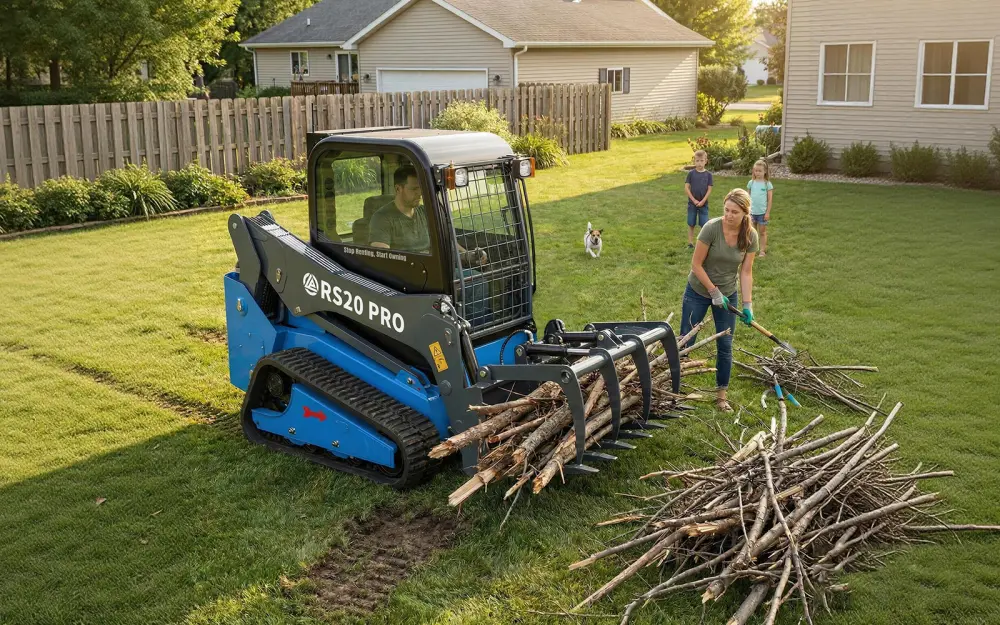
Attachments are one of the main reasons skid steer loaders are valuable. A skid steer loader can perform more tasks when paired with the right attachments.
Possible attachment directions include:
Attachment compatibility should always be confirmed according to the current machine model and official product information.
For dealers, attachments can create additional revenue and help customers build machine packages around specific work needs.
Skid steer loaders and mini excavators are both compact machines, but they serve different core purposes.
| Machine | Main Function | Common Applications |
|---|---|---|
| Mini excavator | Digging and trenching | Drainage, excavation, ditching, planting, site prep |
| Skid steer loader | Loading and material movement | Cleanup, grading, loading, landscaping, farmyard work |
A customer who needs to dig drainage trenches may need a mini excavator.
A customer who needs to move mulch, clean a job site, or load gravel may need a skid steer loader.
Many dealers and rental companies can benefit from offering both because they solve different customer problems.
Before buying or reselling a skid steer loader, buyers should confirm:
| Item to Confirm | Why It Matters |
|---|---|
| Current machine configuration | Ensures accurate product information |
| Application suitability | Matches machine to real work |
| Attachment compatibility | Expands use cases |
| Rated operating information | Helps evaluate workload fit |
| Maintenance access | Supports long-term use |
| Spare parts support | Reduces downtime |
| Warranty policy | Clarifies responsibility |
| Technical support | Helps solve issues |
| Delivery arrangement | Supports purchase planning |
| Documentation | Helps resale or customer education |
Buyers should avoid choosing based only on price. The machine must be suitable for the customer’s work and supportable over time.
RIPPA skid steer loaders can be considered by customers who need compact equipment for loading, grading, cleanup, farmyard support, landscaping, rental fleets, and job-site work.
Potential B2B customer groups include:
RIPPA mini excavators may remain the core product for compact digging demand, while skid steer loaders can support customers who need material movement and job-site flexibility.
A skid steer loader is used for loading, grading, material movement, job-site cleanup, landscaping, farmyard work, property maintenance, and attachment-based applications.
No. A mini excavator is mainly for digging and trenching. A skid steer loader is mainly for loading, cleanup, grading, and material movement.
Yes. Skid steer loaders can help landscapers move soil, mulch, stone, gravel, debris, and other materials during outdoor projects.
Yes. Farms may use skid steer loaders for yard cleanup, moving supplies, loading materials, and seasonal maintenance work where suitable.
Attachments expand what the machine can do, but compatibility must always be confirmed by model and configuration.
Buyers should confirm current configuration, attachment compatibility, parts support, maintenance access, warranty policy, delivery arrangement, documentation, and technical support.
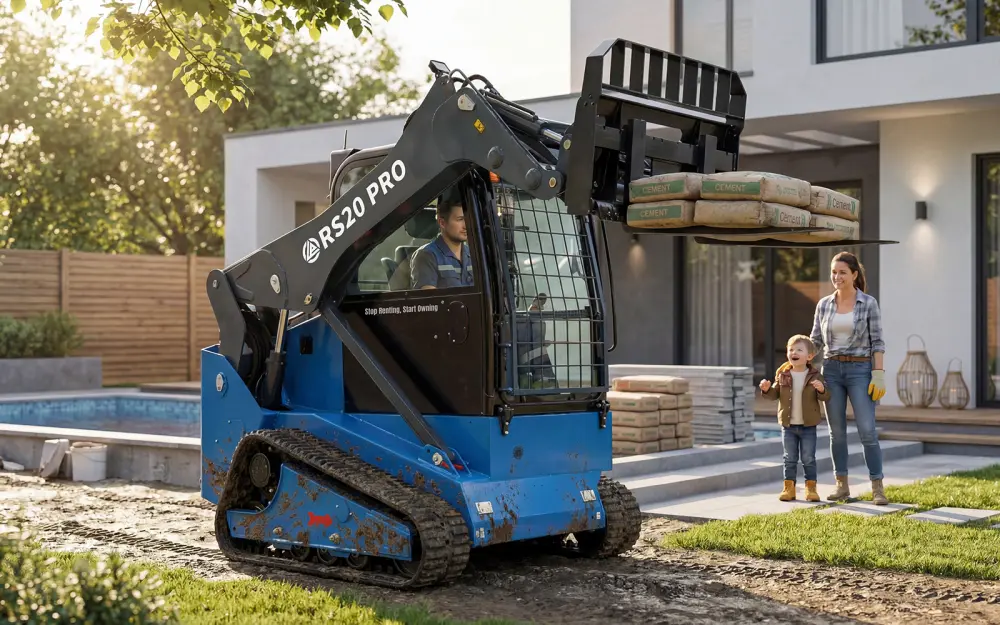
Skid steer loaders are practical compact machines for landscaping, farming, construction, rental fleets, property maintenance, and job-site work. They help customers move materials, clean work areas, grade surfaces, and use compatible attachments for different applications.
They do not replace mini excavators. Instead, they complement them. Mini excavators handle digging and trenching, while skid steer loaders handle loading, cleanup, and material movement.
RIPPA skid steer loaders can be considered by businesses that need compact equipment for flexible worksite applications. Before purchase or promotion, all current product, attachment, support, warranty, delivery, documentation, and service details should be confirmed through official RIPPA channels.

Copyright: Shandong Rippa Machinery Group Co., Ltd.
Legal Representative: Yan Huaiguo | License No.: 913708000509206491
Address: No. 39 Guangan Road, Liuhang Subdistrict, High-tech Zone, Jining City, Shandong Province

 Home
Home
 Products
 Email
Email
 WhatsApp