Quick Answer: What Size Skid Steer Do You Need?
Most contractors choose a 700–1,000 lb ROC machine – the sweet spot for versatility and cost. Wheeled is better for hard surfaces; tracked for soft ground and traction.
1. Wheeled vs Tracked – Which Is Right for You?
Choose wheeled if: You work mainly on pavement, concrete, or hard-packed dirt. You need to travel longer distances between job sites. You are on a tight budget.
Choose tracked if: You work on soft ground, mud, snow, or turf. You need maximum traction and low ground pressure. You value a smoother ride and don’t mind slower travel.
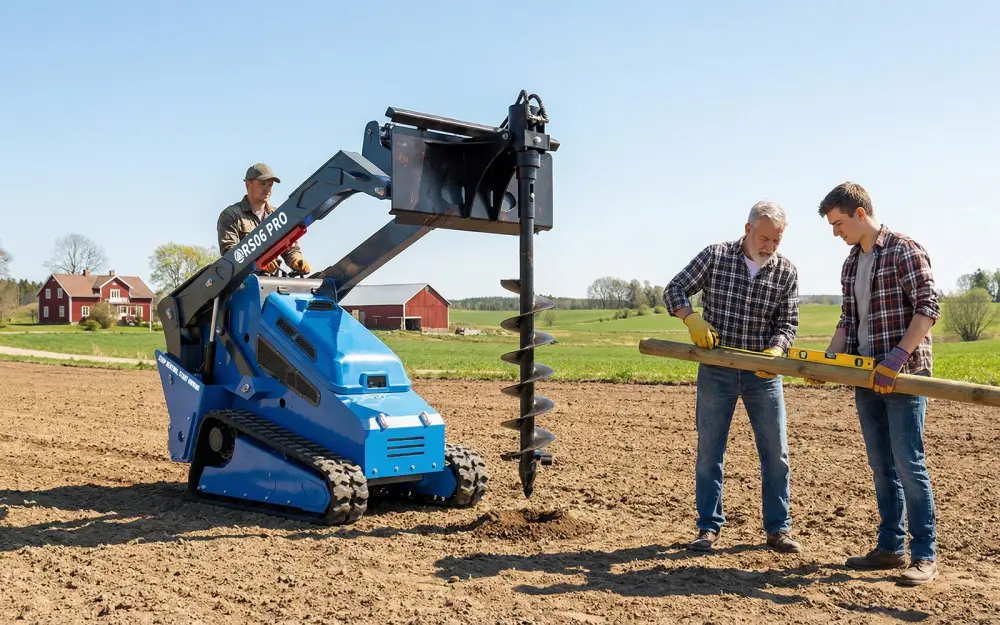
2. Understanding Rated Operating Capacity (ROC)
ROC is the maximum load the machine can safely lift. It is typically 50% of the tipping load. Do not exceed ROC.
Rule of thumb: Choose a machine with ROC at least 20% higher than your heaviest expected load. For example, if you lift 800 lb pallets, get a 1,000 lb ROC machine.
3. Hydraulic Flow – Critical for Attachments
Different attachments require different hydraulic flow rates (measured in gallons per minute, GPM).
Standard flow (15–20 GPM) works for most attachments. High flow (30–40 GPM) is needed for mulchers, planers, and large breakers. If you plan to use high‑flow attachments, ensure your machine has a high‑flow option.
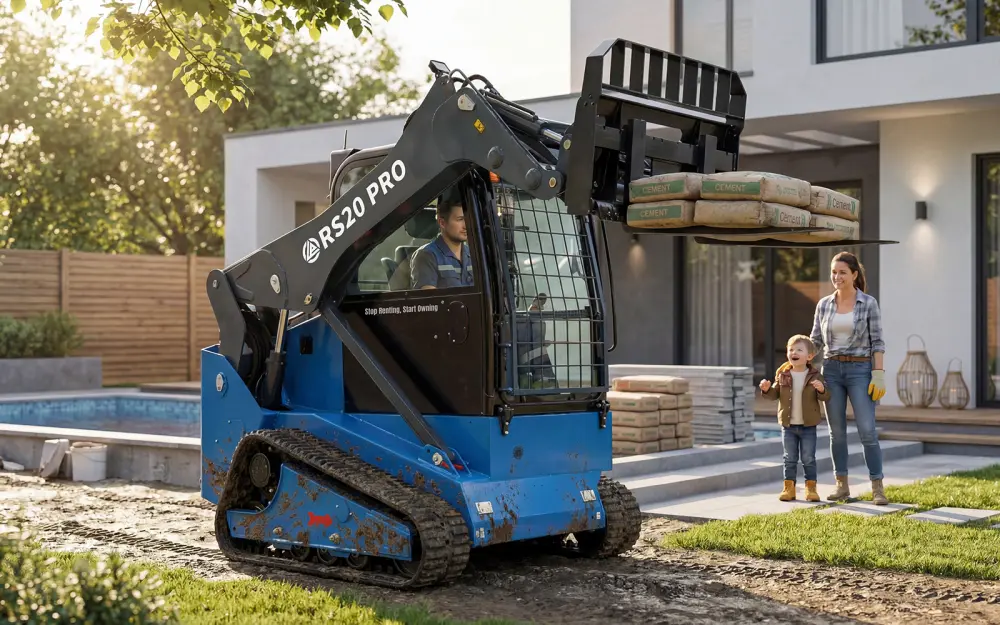
RIPPA models: RS06 and RS07 offer standard flow with high‑flow optional. RS20 features dual‑pump high‑flow standard (108+108 L/min).
4. Lift Arm Design – Radial vs Vertical
Radial lift has an arced path. It provides good breakout force at ground level but less reach at maximum height.
Vertical lift keeps the load close to the machine as it rises, offering better reach and stability at full height.
Recommendation: If you frequently load dump trucks or stack pallets, choose vertical lift. For general earthmoving, radial lift is fine and usually less expensive.
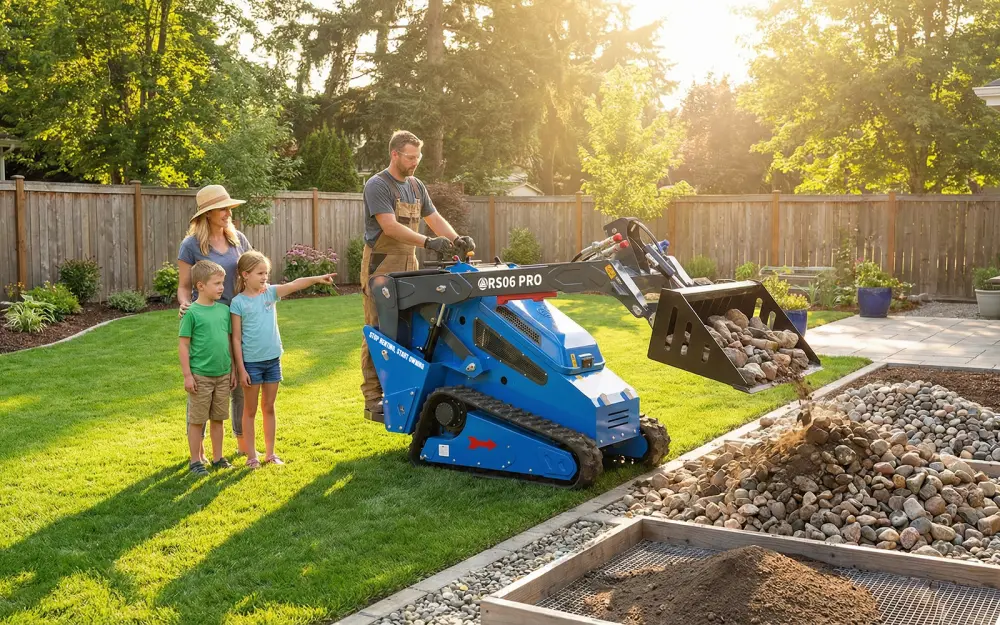
5. Attachments – The Real Value of a Skid Steer
A skid steer is only as useful as its attachments. Start with these essentials:
Quick coupler: A hydraulic quick coupler (standard on many RIPPA models) allows 30‑second attachment changes from the cab. Without it, changes take 10‑15 minutes with tools. Add it if not standard.
6. New vs Used – Which Is Better?
Recommendation: For contractors using the machine 500+ hours/year, buy new with warranty. For homeowners or light use (under 200 hours/year), a well‑maintained used machine offers excellent value.
Used inspection checklist: Check hour meter, look for leaks, test all functions, inspect undercarriage (tracks or tires), and ask for service records. A machine with complete records is worth 10‑20% more.
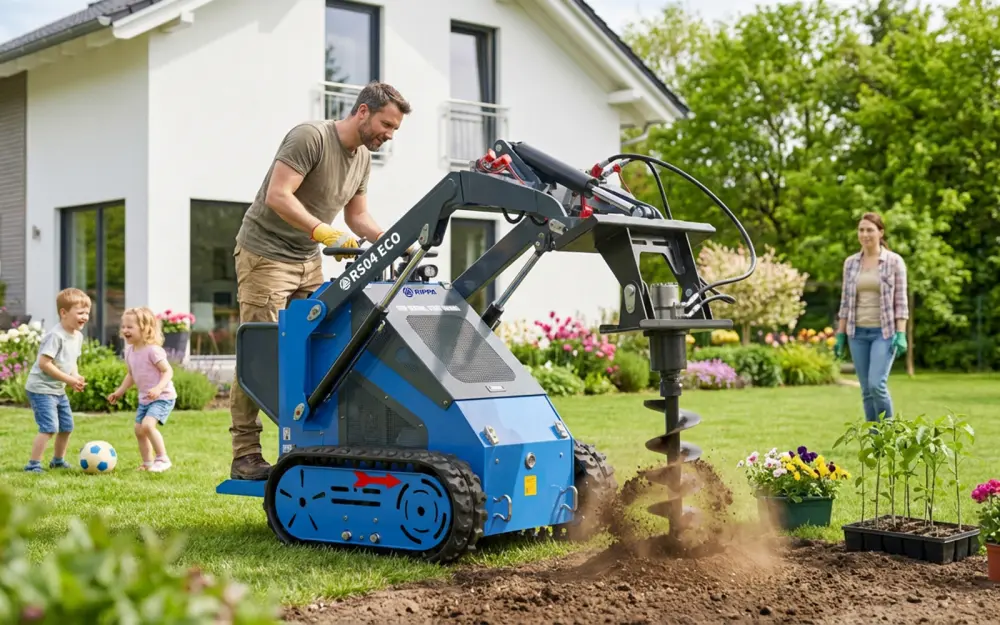
7. Total Cost of Ownership (TCO)
The purchase price is only part of the equation. Over 5 years of typical contractor use (500 hours/year):
Payback period: A contractor charging $800‑1,200 per day can recover the machine cost in 30‑45 billable days – roughly 2‑3 months of steady work.
8. الأسئلة الشائعة
Q: What is the best skid steer for a first‑time buyer?
A: A 700‑800 lb ROC wheeled machine is the most popular entry point. It is versatile, easier to transport, and less expensive than tracked models.
Q: How much does a skid steer cost?
A: New: $25,000–$55,000 depending on size and features. Used: $15,000–$35,000 for a 3‑5 year old machine with 1,000‑2,000 hours.
Q: How long do skid steer tracks last?
A: Rubber tracks typically last 1,000‑2,000 hours depending on terrain. Rocky ground wears them faster. Steel tracks last longer but are heavier and more expensive.
Q: Can I use a skid steer in winter?
A: Yes. Use winter‑grade fuel, check coolant freeze protection, and use tire chains (wheeled) or rubber tracks (tracked) for snow traction. A heated cab is optional.
Q: What is the best brand of skid steer?
A: Premium brands like Bobcat, Caterpillar, and Kubota have strong resale value. Value brands like RIPPA offer similar performance and standard features (quick coupler, high‑flow hydraulics) at 30‑40% lower cost – ideal for budget‑conscious buyers.
9. الخاتمة
Choosing the right skid steer loader comes down to five questions:
-
What surfaces will you work on? Hard surfaces → wheeled. Soft ground → tracked.
-
What attachments will you use? Check hydraulic flow requirements.
-
How heavy are your loads? ROC should be 20% above max load.
-
Do you load trucks? Vertical lift is better.
-
What’s your budget? New for daily use, used for occasional.
For most contractors and serious property owners, a 700‑1,000 lb ROC machine with standard flow, radial lift, and a quick coupler is the sweet spot. Add a bucket, forks, and a grapple, and you can handle 80% of common tasks.
Ready to start your search? Contact a RIPPA dealer for a demonstration. Bring your project list and attachment wish list. The right machine is waiting.


 الصفحة الرئيسية
 المنتجات
 البريد الإلكتروني
 واتساب