سبتمبر 30, 2026
A compact equipment dealership can serve several industries through a relatively focused product portfolio.
Construction contractors may need excavation and cleanup equipment. Farms may need digging and material movement. Landscaping businesses may need excavation, grading, and loading capability. Warehouses and material suppliers may need pallet handling. Rental companies may need equipment across several categories.
A practical product line can therefore include:
However, building a successful dealership requires more than offering all of these products.
The stronger strategy is to understand the role of each machine, match products to specific customer groups, develop parts and support systems, and expand according to actual demand.
A compact equipment dealer may serve:
These customers should not all receive the same sales message.
The dealer should match equipment to the customer’s workflow.
| Equipment | Main Role |
|---|---|
| Mini حفارة | الحفر وحفر الخنادق |
| جرافة انزلاقية التوجيه | Loading, grading, cleanup |
| Compact Wheel Loader | Loose-material movement |
| رافعة شوكية | Palletized-material handling |
| المرفقات | Application expansion |
This simple structure helps both sales teams and customers understand where each machine fits.
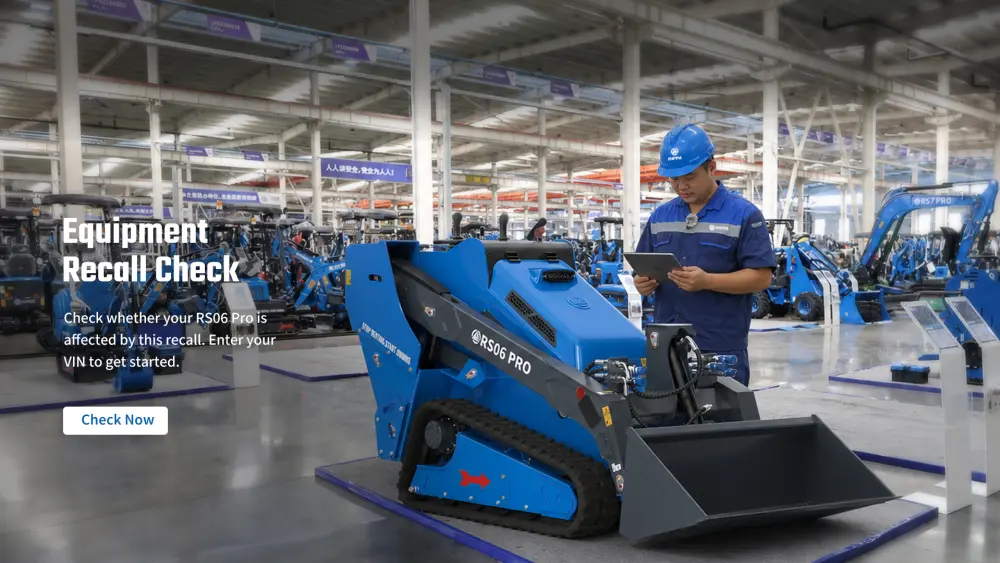
For many dealers, mini excavators can remain the strongest core category.
They may support:
Potential customers include contractors, farms, landscapers, rental businesses, and rural service companies.
Skid steer loaders may be suitable for:
They often complement excavators.
On a construction or landscaping project:
حفارة: digs.
Skid steer: moves, grades, and cleans.
This makes cross-selling logical when customers genuinely need both functions.
Compact wheel loaders can be relevant for customers handling:
Potential customer groups include:
The machine should be positioned around material movement rather than excavation.
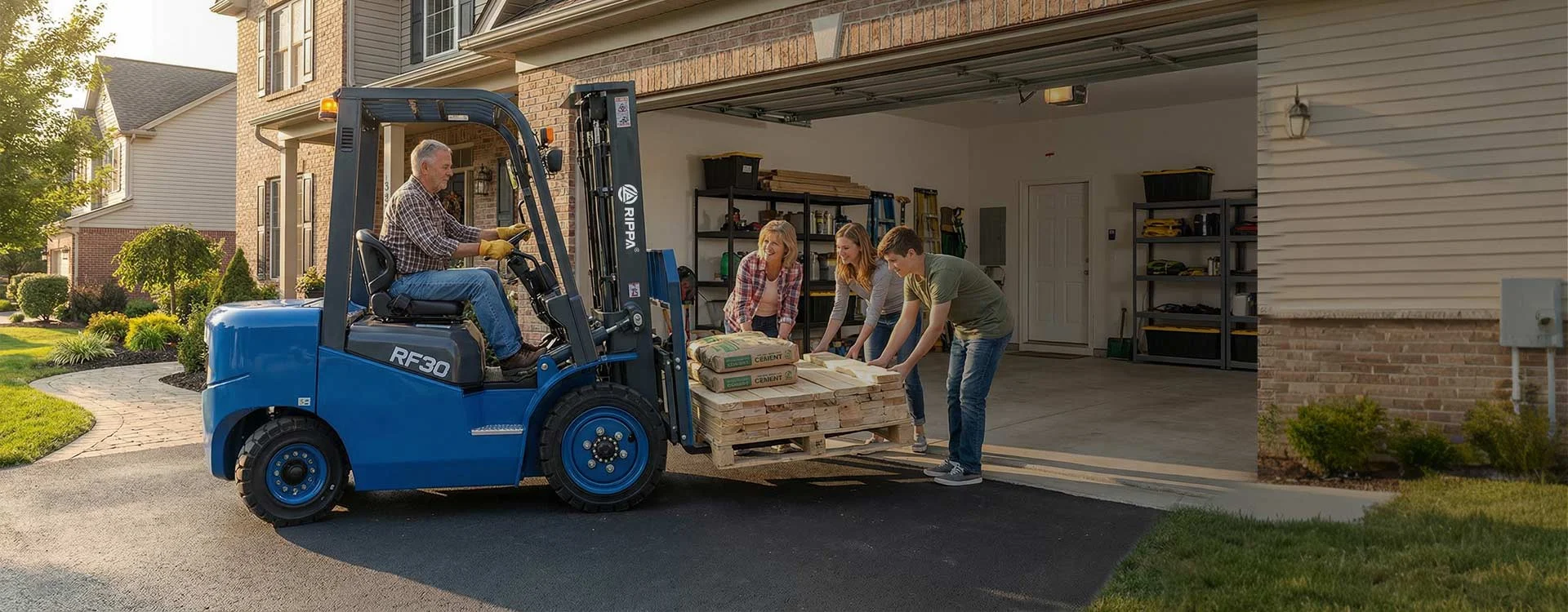
Forklifts serve a different need.
They may be used for:
Potential customers may include:
Forklifts allow the dealer to reach customers beyond traditional construction applications.
Potential equipment:
Potential equipment:
Potential equipment:
Potential equipment:
Potential equipment:
These are planning directions, not fixed bundles.
Customers should only purchase equipment that matches actual work.
Product descriptions are important, but application content can help attract more relevant customers.
Dealers can create content around questions such as:
This helps customers find solutions rather than simply browsing machinery.
Every machine sold creates future support requirements.
A dealer should understand:
As machine volume grows, parts planning becomes increasingly important.
Customers may contact the dealer with:
A dealer should establish a process for collecting useful information, such as:
This makes communication with technical support more efficient.
Salespeople should understand more than machine names.
They should know:
Application knowledge produces better customer conversations.
A dealer should not recommend:
Matching equipment correctly builds customer trust.
A strong B2B customer may purchase equipment over several years.
For example:
Customer purchases:
Adds:
Adds:
Adds:
This can create greater long-term value than trying to sell several machines at the first meeting.
Possible content directions include:
This creates a more focused marketing system.
Dealers should confirm current information regarding:
Do not make customer commitments based on outdated or unverified information.
Depending on current availability and customer demand, dealers may consider mini excavators, skid steer loaders, compact wheel loaders, forklifts, and attachments.
For dealers serving contractors, farms, landscapers, and rental companies, mini excavators can provide a practical core category.
No. Forklifts are most relevant when customers have pallet or warehouse handling needs.
Attachments expand machine applications and can create repeat business.
A good dealership combines the right products with application knowledge, spare parts, maintenance support, technical communication, and long-term customer development.
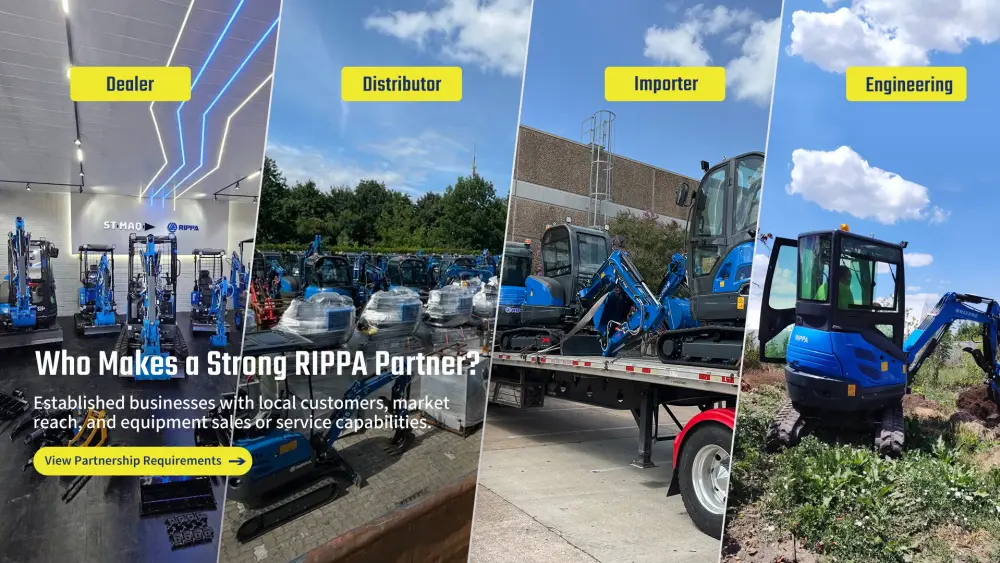
Building a compact equipment dealer business with RIPPA should begin with customer needs rather than product quantity.
Mini excavators can serve as the core digging product.
Skid steer loaders can support loading and cleanup.
Compact wheel loaders can support loose-material movement.
Forklifts can support pallet handling.
Attachments can expand the usefulness of the core machines.
The strongest dealer business is not the one with the longest product list. It is the one that understands what customers are trying to accomplish, recommends the right equipment, supports the machines after the sale, and grows with customers over time.

حقوق النشر: شركة شاندونغ ريبا ماشينري جروب المحدودة.
الممثل القانوني: يان هوايغو | رقم الترخيص: 913708000509206491
العنوان: رقم 39 شارع غوانغوان، حي ليوهانغ، منطقة التكنولوجيا المتقدمة، مدينة جينينغ، مقاطعة شاندونغ

 الصفحة الرئيسية
 المنتجات
 البريد الإلكتروني
 واتساب