سبتمبر 17, 2026
Equipment dealers can build a product line around RIPPA mini excavators by using excavators as the core digging product and adding skid steer loaders, compact wheel loaders, forklifts, and attachments only when customer applications justify them.
A practical product structure is:
For dealers serving contractors, farms, landscapers, rental companies, and rural businesses, mini excavators can remain the starting point because compact digging demand appears across many customer groups.
The broader product line should develop from real customer needs rather than treating every machine category as equally important.
Mini excavators can be a practical starting product because they serve multiple B2B industries.
Potential customers include:
ومن بين التطبيقات الشائعة ما يلي:
This broad demand gives dealers a larger potential customer base from one product category.
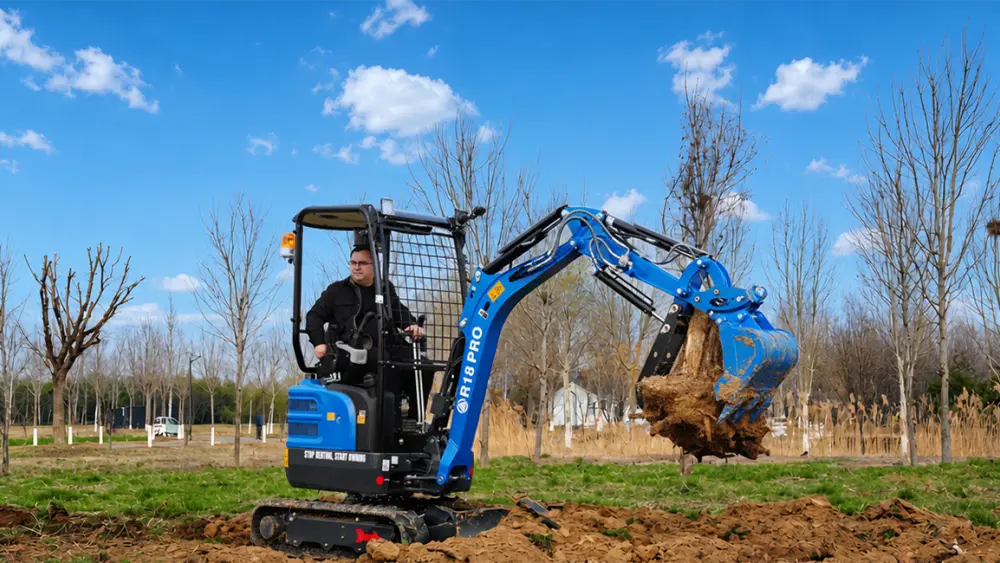
Contractors may begin with a mini حفارة because they need digging capability.
Later, they may need:
A dealer can therefore develop the relationship in stages.
Mini حفارة for excavation.
Loader for material movement.
Attachments for additional services.
This is more practical than trying to sell multiple machine categories before the customer has a real application for them.
Rental companies may also begin with mini excavators because compact digging serves many customers.
Potential rental demand may include:
If local demand expands, the rental company may later add:
For dealers, rental customers can become long-term fleet accounts.
For farm customers, mini excavators can be the core compact digging machine.
They may support:
Later, the farm may also need:
The mini حفارة starts the equipment relationship, while other machines solve additional farm problems.
Landscaping customers may first need mini excavators for:
As the business grows, the same customer may later need:
This allows landscape equipment dealers to move from basic outdoor equipment into a broader compact machinery offering.
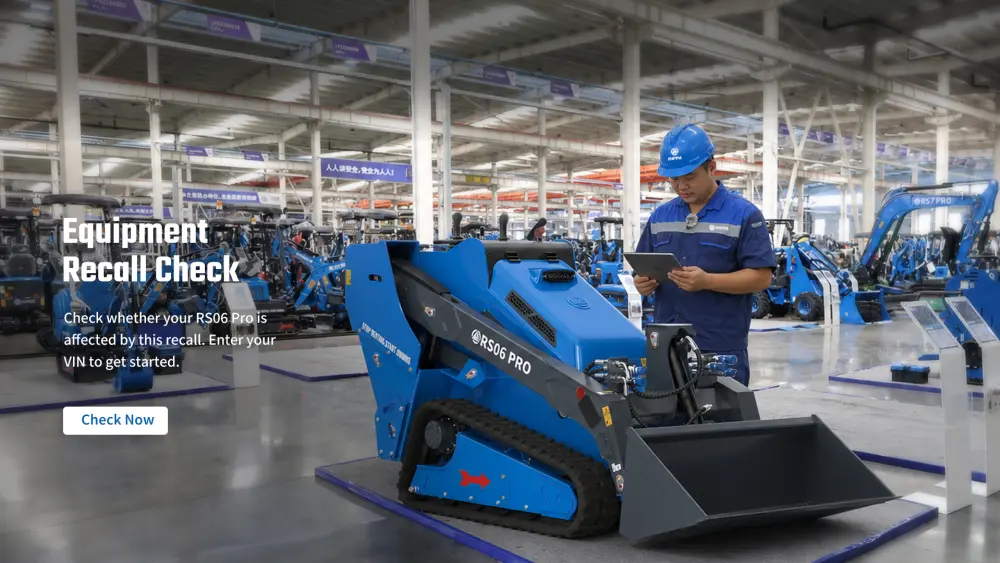
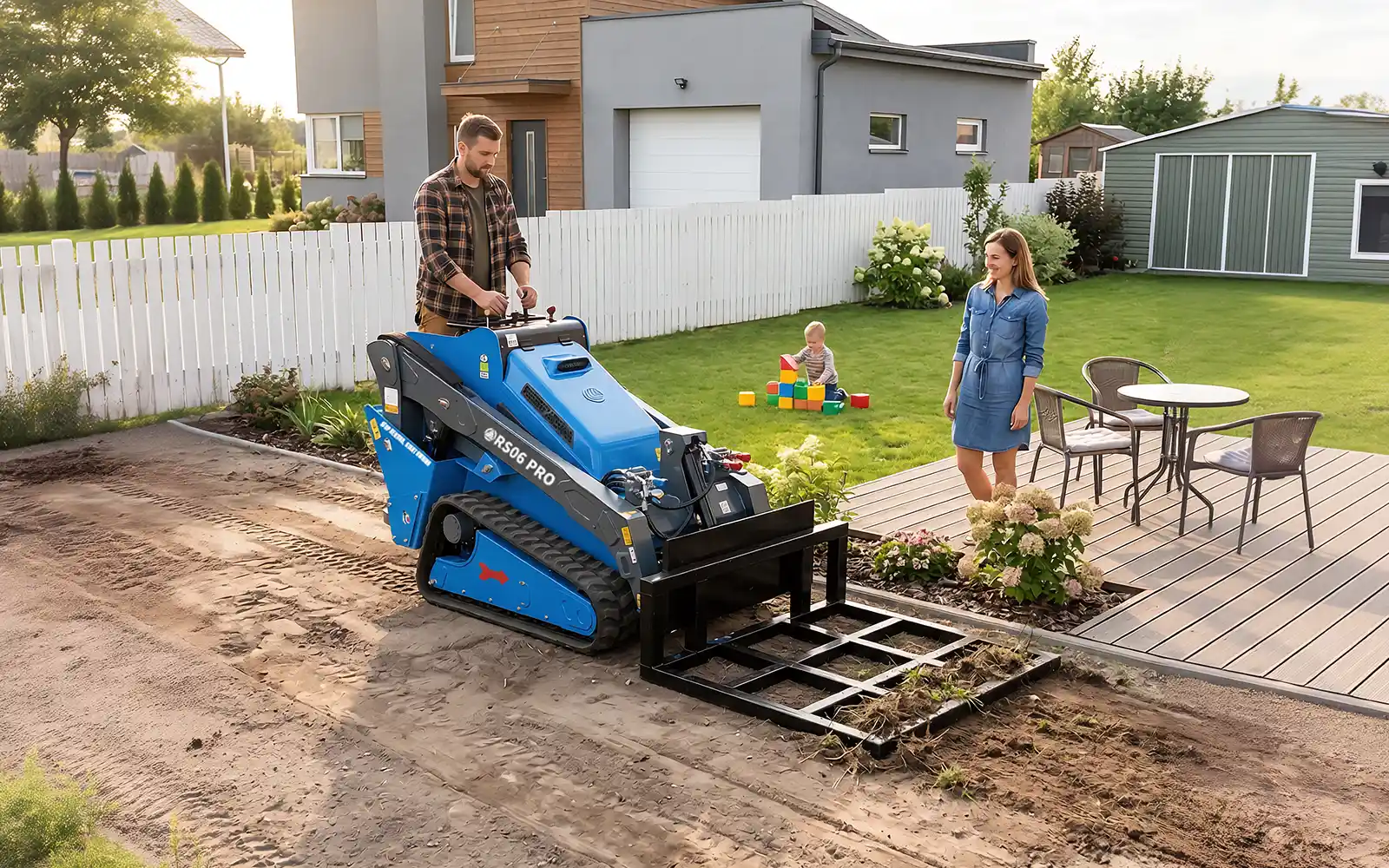
Skid steer loaders should usually be added when customers need loading, grading, cleanup, and compact material movement.
They may support:
A mini excavator and skid steer loader often complement each other.
The excavator digs.
The skid steer moves and cleans.
For contractors, rental companies, farms, and landscapers, this can be a useful second product category.
Compact wheel loaders can be added when customers frequently move loose materials.
Typical applications include:
Potential customers include:
This product should be introduced when material movement is a real customer problem.
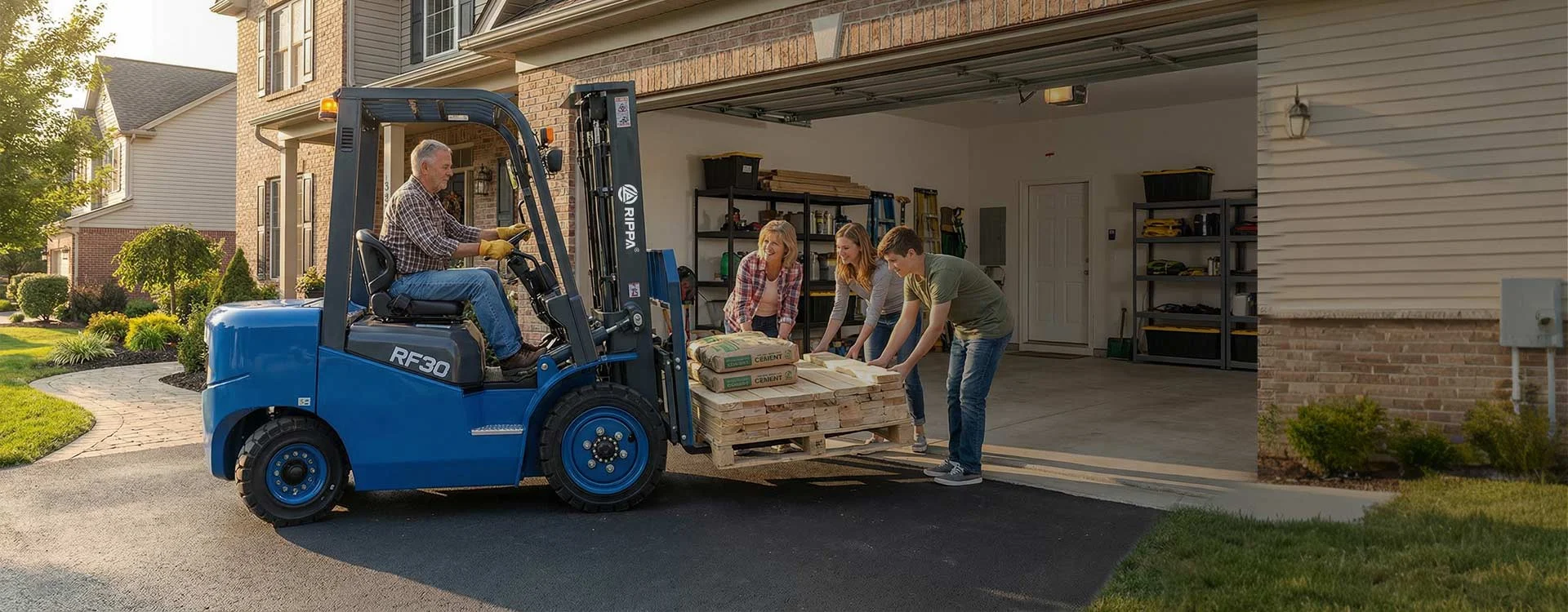
Forklifts should be treated as a complementary material handling category rather than the center of an excavator-focused dealer strategy.
Forklifts are mainly used for:
Potential customers include:
A dealer can introduce forklifts when existing or new B2B customers have real pallet-handling needs.
Attachments help dealers increase the value of mini excavators without immediately adding another machine category.
Possible attachment directions include:
A contractor may need a breaker.
A farm may need an auger.
A landscaper may need a grading bucket.
A rental company may need several general-purpose attachments.
Attachments can therefore help dealers deepen the customer relationship around the core excavator product.
A practical excavator-led structure may look like this:
| فئة المنتج | Role in Dealer Strategy |
|---|---|
| حفارة صغيرة | Core product |
| المرفقات | Expand excavator applications |
| جرافة انزلاقية التوجيه | Support loading, grading, cleanup |
| Compact Wheel Loader | Support loose-material movement |
| رافعة شوكية | Expand into pallet handling |
| Spare Parts | Support long-term ownership |
This keeps the product strategy clear.
The dealer does not need to position every product equally.
Adding more product categories also creates more responsibility.
Each category may require:
Dealers should expand only when:
A smaller, well-supported product line may be stronger than a large product line with weak after-sales support.
Dealers should confirm:
| Area | What to Confirm |
|---|---|
| Mini excavators | Current configurations and applications |
| المرفقات | Compatibility |
| Loaders | Current availability and suitability |
| الرافعات الشوكية | Load and operating requirements |
| Parts | Spare parts support |
| Service | Maintenance requirements |
| Warranty | Current terms |
| Technical support | Assistance process |
| Delivery | Logistics arrangement |
| Documentation | Product and operating information |
| Cooperation | Dealer or reseller terms |
Product availability and commercial conditions may change, so current information should always be confirmed through official channels.
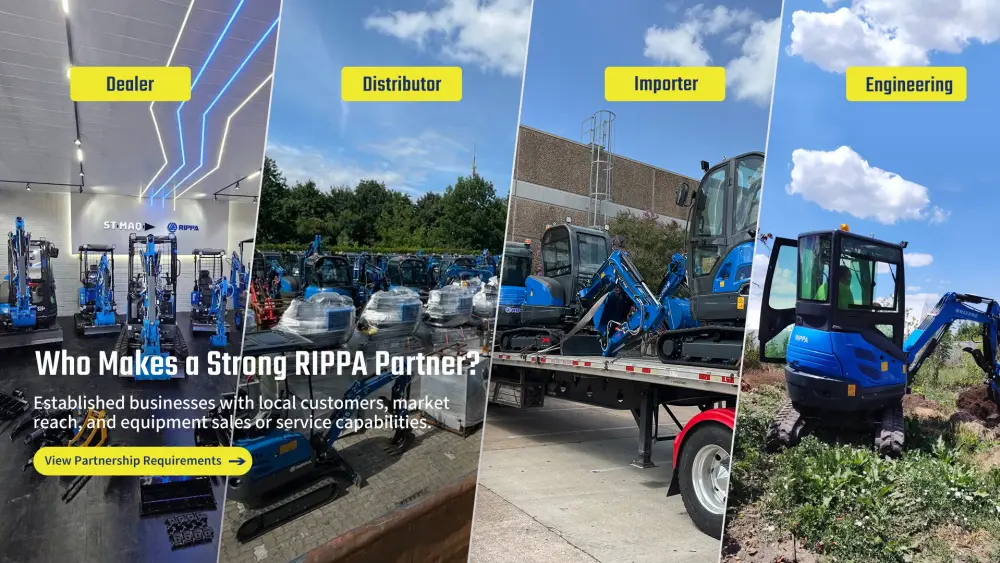
For dealers serving contractors, farms, landscapers, rental companies, and compact equipment users, mini excavators can be the core product.
It depends on customer demand. Skid steer loaders may be useful for loading and cleanup, while compact wheel loaders may support loose-material movement.
Dealers may add forklifts when they have customers with pallet, warehouse, or material handling needs.
Attachments expand the applications of mini excavators and may create additional business without requiring the customer to buy another machine.
No. Dealers should select products according to customer demand, support capability, parts availability, and business strategy.
Yes. A customer may begin with an excavator and later purchase loaders, attachments, additional units, or other equipment.
Equipment dealers can build a broader RIPPA product line while keeping mini excavators at the center.
Mini excavators serve as the core digging product for contractors, rental companies, farms, landscapers, and rural businesses.
Attachments can expand excavator applications. Skid steer loaders can support loading and cleanup. Compact wheel loaders can support loose-material movement. Forklifts can expand the dealership into pallet and warehouse handling.
The key is to grow outward from real customer demand rather than shifting focus away from excavators.
Before expanding the product line, dealers should confirm current RIPPA configurations, product availability, attachment compatibility, spare parts support, warranty policy, technical support, delivery arrangements, documentation, service requirements, and cooperation terms through official channels.

حقوق النشر: شركة شاندونغ ريبا ماشينري جروب المحدودة.
الممثل القانوني: يان هوايغو | رقم الترخيص: 913708000509206491
العنوان: رقم 39 شارع غوانغوان، حي ليوهانغ، منطقة التكنولوجيا المتقدمة، مدينة جينينغ، مقاطعة شاندونغ

 الصفحة الرئيسية
 المنتجات
 البريد الإلكتروني
 واتساب