jun 09, 2026
The 10 most important safety rules for wheel loader operation are: wear your seatbelt, never carry passengers in the bucket, keep the bucket low when traveling, avoid operating on steep slopes, never walk under a raised bucket, use handrails when entering and exiting, stay visible with lights and warning signals, shut down before servicing, know your machine’s dimensions, and get proper training. Following these rules prevents the most common causes of loader accidents and fatalities.
The Rippa documentation includes specific safety warnings at the end of each product brochure. These warnings are not suggestions. They are requirements.
The documentation states: Please read the instruction manual carefully and use the machine correctly. Always wear a seat belt when working on ROPS specifications only.
It also states: If you are operating construction machinery with a machine mass of less than 3 tons, you must take the Special Training for Vehicle-Mounted Construction Machinery Operation course beforehand. If the machine mass is 3 tons or more, you must take the Vehicle-Mounted Construction Machinery Operation Skills Course.
These training requirements are legal obligations in many countries.
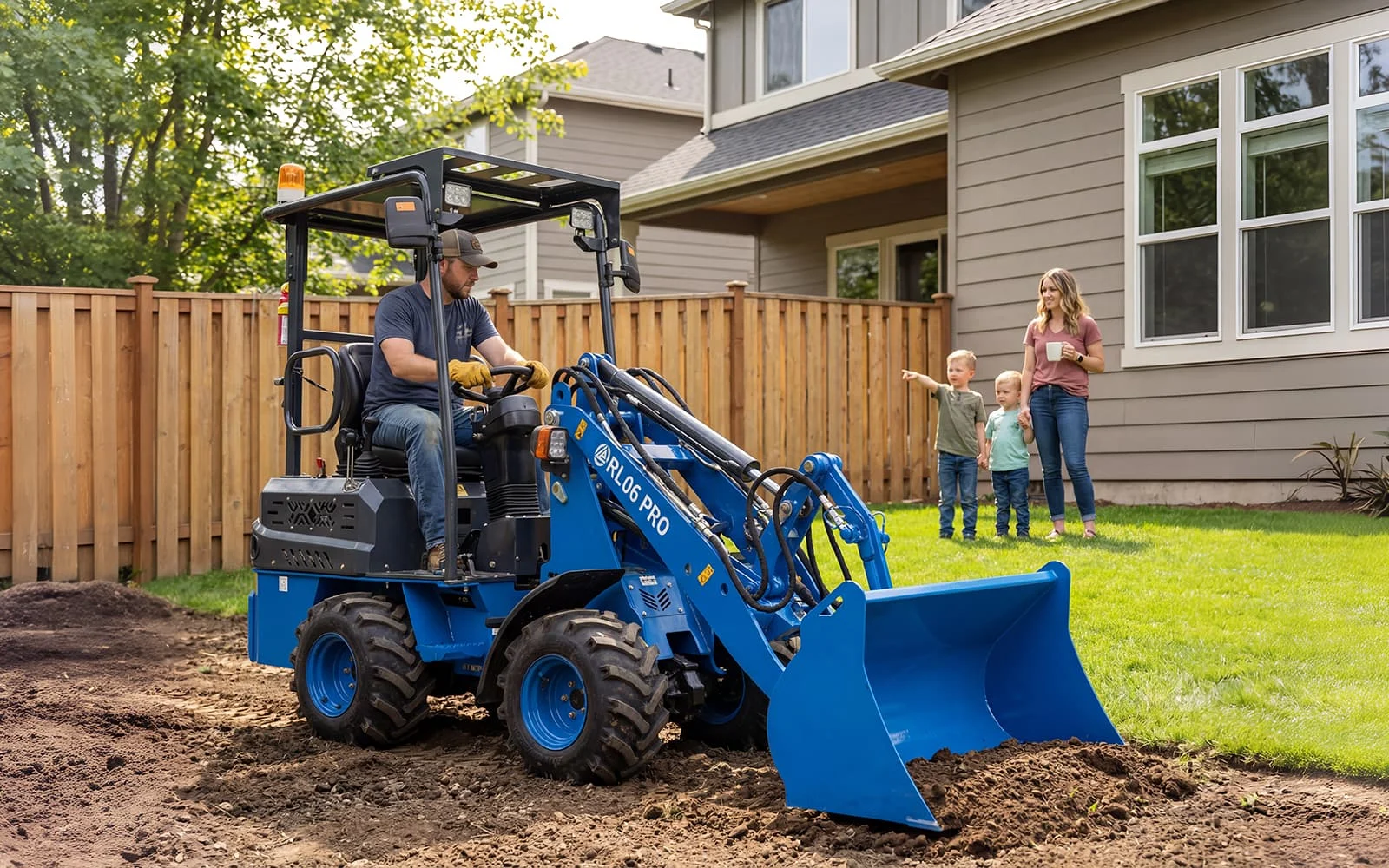
A wheel loader without a seatbelt is dangerous in two ways. First, in a tip-over accident, the operator can be thrown from the cab and crushed by the rollover protective structure or the machine itself. Second, even in normal operation, rough terrain can bounce the operator out of the seat.
The Rippa documentation repeatedly emphasizes this rule. Always wear a seat belt when working appears in every specification section.
The RL06 and RL15 include suspension seats with extendable seatbelts. The seat allows each operator to find the optimal hip support, backrest tilt angle, and seat position.
Adjust the seatbelt to fit snugly across your lap. The belt should be low on your hips, not across your stomach. Never click the seatbelt behind you. Replace any seatbelt with fraying or damaged webbing.
The bucket is for material, not people. Riders in the bucket have no seatbelt, no rollover protection, and no way to escape if the bucket is raised. Fatalities from this practice are tragically common.
Never allow anyone to ride in the bucket. Never allow anyone to ride on the fenders or steps. Only the operator belongs in the cab. If you need to lift a person, use an approved aerial work platform attachment like the RL06 can accept.
A raised bucket shifts the machine’s center of gravity forward and upward. This makes the machine more likely to tip forward during braking or on downhill slopes. It also reduces rear axle weight, reducing steering traction.
When traveling with a loaded bucket, carry the bucket no more than 300 to 400mm or 12 to 16 inches above the ground. When traveling empty, keep the bucket just above the ground to avoid hitting obstacles. Only raise the bucket when you are ready to dump.
Every wheel loader has a maximum gradeability rating. The Rippa RL10 and RL15 are rated for 30 degrees. The RL20 is rated for 35 degrees. Exceeding these ratings risks tip-over.
Know your machine’s maximum gradeability. When operating on slopes, keep the heavy end uphill. For a loaded loader, drive up slopes forward and down slopes backward. For an empty loader, drive up slopes backward and down slopes forward. Avoid crossing slopes sideways whenever possible. Reduce speed before entering a slope. Do not turn on a slope.
Hydraulic systems can fail. Hoses can burst. Cylinder seals can blow. When a raised bucket falls, there is no time to escape.
Never walk under a raised bucket for any reason. If you must work under the bucket for maintenance, use mechanical locks or props to secure the bucket. The RL20 includes a safety hydraulic cylinder with multi-level sealing to prevent sudden bucket drop, but even this is not a substitute for mechanical locks.
Most loader accidents happen during entry and exit, not during operation. Wet or muddy boots slip on steps. A missed handhold leads to a fall.
Use the three-point contact rule. Keep two hands and one foot or two feet and one hand on the machine at all times. Face the machine, not away from it. Clean mud and grease from steps and handrails. The RL06 includes a safety guardrail on the seat that prevents the operator from accidentally falling off in scenarios such as operating on complex terrain.
On many job sites, loaders work alongside trucks, other equipment, and pedestrians. If they cannot see you, they cannot avoid you.
Keep your headlights and work lights on at all times, not just at night. The RL series LED lighting has high brightness and wide range, reducing blind spots and improving night operation safety and accuracy. Use the warning light on the RL10 to alert surrounding personnel and equipment in complex work environments, adverse weather conditions, and nighttime situations. Use the horn before moving from a stop and at blind corners.
A machine that starts unexpectedly can kill. A bucket that lowers unexpectedly can kill. A fan that spins unexpectedly can remove fingers.
Before performing any maintenance: Park on level ground. Lower the bucket to the ground. Engage the parking brake. Shut off the engine. Remove the key. Wait for all moving parts to stop. For work under raised components, use mechanical locks.
Loaders are wide, tall, and have blind spots. Overhead power lines, doorways, and nearby equipment are constant hazards.
Know your machine’s height with the ROPS or cab. Know your machine’s width at the tires and at the bucket. Know your machine’s turning radius. The Rippa RL10 dimensions are 4692mm in length, 1600mm in width, and 2480mm in height. The RL15 is 5500mm by 1800mm by 2800mm. The RL20 is 6800mm by 2250mm by 2870mm. Always look in the direction of travel. Use a spotter in tight spaces. Be aware of overhead hazards including power lines, tree branches, and door headers.
Untrained operators are the leading cause of loader accidents. They do not know what they do not know.
The Rippa documentation is explicit about training requirements. If you are operating construction machinery with a machine mass of less than 3 tons, you must take the Special Training for Vehicle-Mounted Construction Machinery Operation course beforehand. If the machine mass is 3 tons or more, you must take the Vehicle-Mounted Construction Machinery Operation Skills Course.
Even if your region does not require these specific courses, get training. Read the operator’s manual. Practice in an open area before working in tight spaces. Ask experienced operators to watch you and provide feedback.
Print this card and keep it in the cab.
Rule 1: Always wear your seatbelt.
Rule 2: Never carry passengers in the bucket.
Rule 3: Keep the bucket low when traveling.
Rule 4: Avoid operating on steep slopes.
Rule 5: Never walk under a raised bucket.
Rule 6: Use handrails when entering and exiting.
Rule 7: Stay visible with lights and warning signals.
Rule 8: Shut down before servicing.
Rule 9: Know your machine’s dimensions.
Rule 10: Get proper training.
Stay in the cab. Do not jump. Brace yourself against the seat. Hold onto the steering wheel. Lean away from the direction of tip.
Pull the fuel shutoff if equipped. Block the air intake with a solid object. Do not use your hand.
Shut down the engine immediately. Do not operate until the hose is replaced. Hot oil can penetrate skin and cause serious burns.
Do not climb on the bucket. Do not go under the bucket. Use mechanical props if available. Call for service.
| Machine Mass | Required Training |
|---|---|
| Less than 3 tons | Special Training for Vehicle-Mounted Construction Machinery Operation |
| 3 tons or more | Vehicle-Mounted Construction Machinery Operation Skills Course |
The RL10 has a rated load of 1200kg but its operating weight is not specified in the documentation. Check your machine’s weight plate. The RL15 and RL20 likely exceed 3 tons.
The Rippa documentation states: To prevent breakdowns and accidents, be sure to inspect the machinery regularly. Specific voluntary inspections are required to be carried out by an inspection company registered with the Minister of Health, Labor and Welfare or the Director-General of the Labor Standards Inspection Bureau.
This applies to machines in certain jurisdictions. Check your local regulations.


 Hem
Hem
 Produkter
 E-post
 WhatsApp