6월 06, 2026
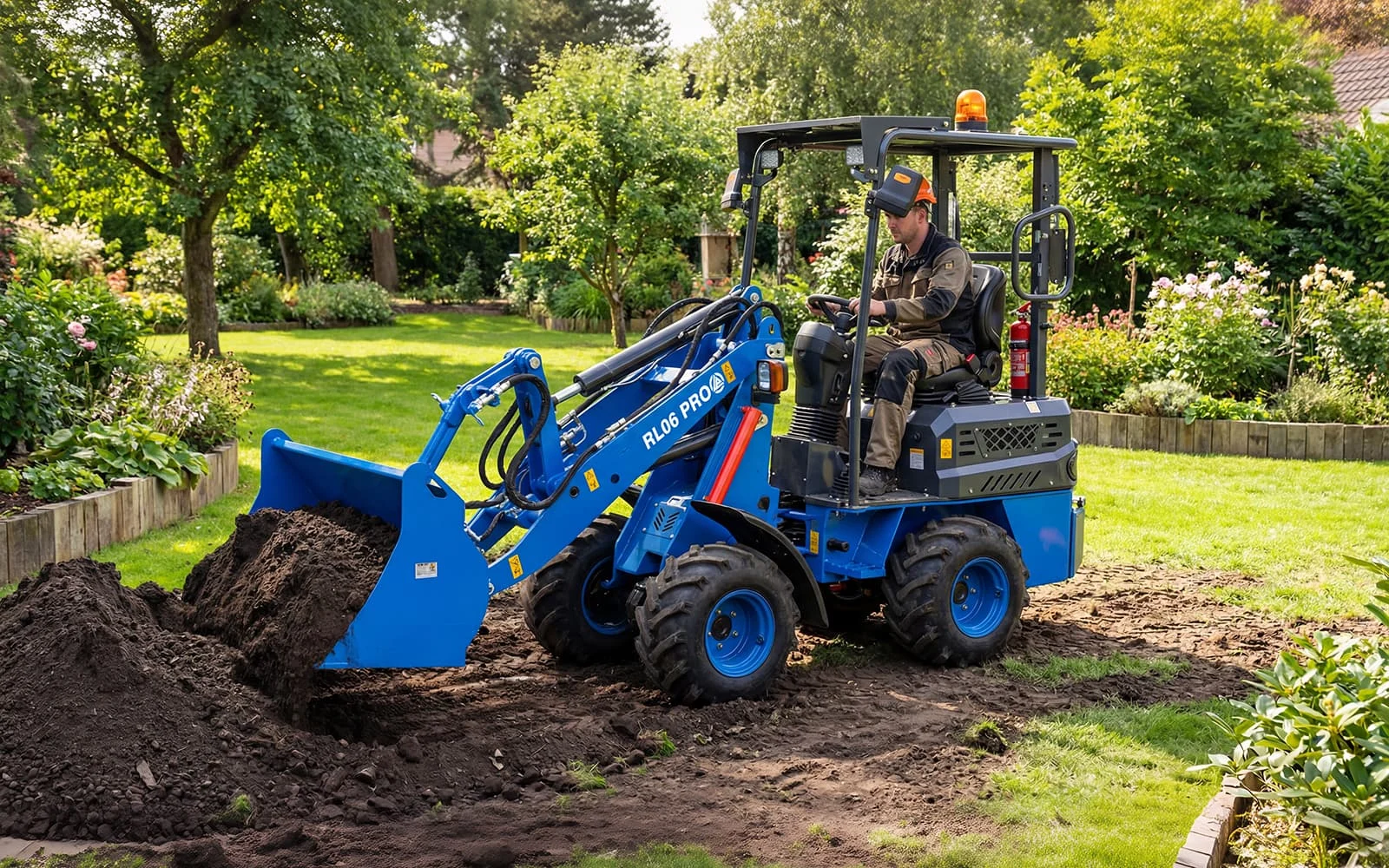
Off-road tires for wheel loaders are specifically designed for complex terrains with deep tread patterns for strong grip, reinforced sidewalls for puncture resistance, and durable compounds for long wear. Rippa RL series loaders come standard with off-road tires because they are essential for performance in dirt, gravel, mud, and snow. The core advantage is adapting to various complex terrains while providing strong grip and reduced idling in slippery environments.
A wheel loader is not a truck. It pushes into piles, digs into dirt, and carries heavy loads over uneven ground. The tires must provide traction for digging, flotation for soft ground, and durability for rough surfaces.
Rippa documentation states the core advantage of loader off-road tires is that they can adapt to various complex terrains. They provide strong grip, reduced idling in slippery environments, and guaranteed effective transmission of power. They also significantly improve loader trafficability on unpaved pavements for more stable and efficient operation.
Deep tread bars provide grip in soft materials. The tread bars are widely spaced so they self-clean. Mud and dirt do not pack between the bars.
Rippa’s off-road tires use tread patterns designed for:
Dirt and loose soil
Gravel and crushed rock
Mud and wet clay
Snow and ice
Off-road tires have thicker sidewalls than highway tires. This resists cuts from rocks and stumps. It also prevents pinch flats when hitting sharp edges.
The rubber compound balances wear resistance with cut resistance. Hard compounds wear longer on rock. Soft compounds grip better in mud.
Rippa RL series use tire sizes like 23.5-16 and 16/70-20. The first number is tire width in inches. The second number is rim diameter in inches.
RL10: 23.5-16 or 12-16.5
RL15: 23.5-16
RL20: 23.5-16 or 16/70-20
 Tire Types by Application
Best for: General purpose dirt, gravel, and earthmoving.
Tread depth: Moderate, approximately 25 to 35mm.
Compound: Balanced for wear and cut resistance.
Rippa RL series come standard with this type.
Best for: Quarries, mines, and rocky terrain.
Tread depth: Deeper than L-2, approximately 35 to 45mm.
Compound: Harder for abrasion resistance.
Features: Extra sidewall protection against cuts.
Best for: Soft mud, snow, and loose material.
Tread depth: Very deep, approximately 50 to 65mm.
Compound: Softer for grip.
Features: Self-cleaning tread pattern.
Best for: Sand, soft soil, and turf protection.
Tread depth: Shallow.
Compound: Soft.
Features: Wide footprint to reduce ground pressure.
Recommended tire: Standard off-road L-2.
Why: Balanced performance for most conditions.
Rippa model compatibility: All RL series.
Recommended tire: Rock service L-3 with optional tire chains.
Why: Cut resistance and puncture protection.
Rippa model compatibility: RL15 and RL20 recommended due to heavier construction.
Recommended tire: Traction L-4.
Why: Deep tread self-cleans and provides grip.
Rippa model compatibility: RL06 and RL10 due to lighter weight.
Recommended tire: Traction L-4 or snow-specific tire.
Why: Deep tread provides grip on packed snow.
Rippa model compatibility: RL20 for municipal snow removal.
Recommended tire: Flotation.
Why: Wide footprint prevents sinking.
Rippa model compatibility: RL06 for beach and dune work.
Recommended tire: Smooth tread or solid tire.
Why: Prevents pavement damage.
Note: Rippa loaders are primarily for off-road use.
Tire chains provide additional traction in extreme conditions.
Ice and hard-packed snow
Steep slopes in wet conditions
Loading logs in muddy forests
Traction chains: Standard ladder pattern for snow.
Ice chains: Studded chains for ice.
Protection chains: Heavy chains for rock protection.
Check that chains clear the machine frame and articulation joint. The Rippa articulated design means chains must not interfere with the hinge.
Proper tire pressure is critical for loader tires.
Too low: Tire overheats, sidewall damage, poor fuel economy.
Too high: Poor traction, harsh ride, center tread wear.
The correct pressure depends on load and speed. Consult your operator’s manual.
Decrease pressure for soft ground to increase footprint.
Increase pressure for heavy loads on hard ground.
Decrease pressure for rock work to absorb impacts.
Check tire pressure daily when tires are cold. A tire that is 20 percent low looks normal but is already failing.
Cause: Overinflation.
Fix: Reduce tire pressure to specification.
Cause: Underinflation.
Fix: Increase tire pressure. Also check for overloaded machine.
Cause: Alignment or articulation issue.
Fix: Check axle alignment. Check articulation joint.
Cause: Imbalance or suspension issue.
Fix: Balance tires. Check for worn bearings.
Cause: Old age or ozone damage.
Fix: Replace tires. Do not operate with cracked sidewalls.
Check pressure with a gauge. Not by sight.
Inspect for cuts, embedded objects, and bulges.
Check for loose lug nuts.
Measure tread depth. Record in log.
Check sidewalls for cracking.
Inspect valve stems for damage.
Rotate tires if recommended by manufacturer.
Check for unusual wear patterns.
Verify lug nut torque with torque wrench.
Replace tires when tread depth reaches 20 percent of new.
Replace tires when sidewall cracking is severe.
Replace tires when repairs exceed two per tire.
Cause: Contact with sharp rock or debris.
Prevention: Use rock service tires or tire chains in rocky conditions.
Solution: Sidewall cuts are usually not repairable. Replace the tire.
Cause: Hitting a rock or curb at speed.
Prevention: Reduce speed on rough ground.
Solution: Replacement required. Internal damage may not be visible.
Cause: Overinflation.
Prevention: Maintain correct tire pressure.
Solution: Adjust pressure. Tire may still have life if wear is not severe.
Cause: Underinflation or overloading.
Prevention: Maintain correct pressure. Do not exceed rated load.
Solution: Adjust pressure and loading. Tire may still have life.
Cause: Locked brakes or sliding.
Prevention: Avoid skidding.
Solution: Flat spots may wear smooth with use. Severe cases require replacement.
Puncture in tread area under 6mm diameter. Puncture not in sidewall. No internal damage.
Sidewall puncture or cut. Tread puncture over 6mm diameter. Run-flat damage. Impact break with internal damage. Tread separation.
A professional repair costs 30 to 50 USD plus removal and installation. A new off-road tire for a loader costs 300 to 800 USD. Repair is worthwhile for the first one or two punctures.
If you remove tires for seasonal changes, store them properly.
Stack tires vertically, not horizontally. Keep away from sunlight and ozone sources like electric motors. Store in a cool, dry location. Cover with opaque tarp. Do not store near solvents or fuels.
Question 1: How many hours do loader tires last?
Answer: Tire life varies dramatically by application. In clean dirt, 2,000 to 3,000 hours is typical. In rock, 500 to 1,000 hours. Proper pressure and operation extend tire life.
Question 2: Can I use truck tires on my loader?
Answer: No. Truck tires lack sidewall strength and tread depth for loader applications. They will fail quickly and dangerously.
Question 3: What is the correct tire pressure for my Rippa loader?
Answer: Consult your operator’s manual. Pressure depends on tire size and load. A typical range is 30 to 50 psi.
Question 4: Are foam-filled tires available?
Answer: Foam filling eliminates flats but increases tire weight and creates a harsh ride. It is used in waste handling and demolition where punctures are frequent.
Question 5: When should I replace tires?
Answer: Replace when tread depth reaches 20 percent of new, when sidewall cracking is severe, or when the tire has multiple repairs in the same area.


 홈
홈
 제품
제품
 이메일
이메일
 WhatsApp